


Identification of novel pathways involved in the pathogenesis of human adamantinomatous craniopharyngioma
- PMID: 22349813
- PMCID: PMC3400760
- DOI: 10.1007/s00401-012-0957-9
Identification of novel pathways involved in the pathogenesis of human adamantinomatous craniopharyngioma
Abstract
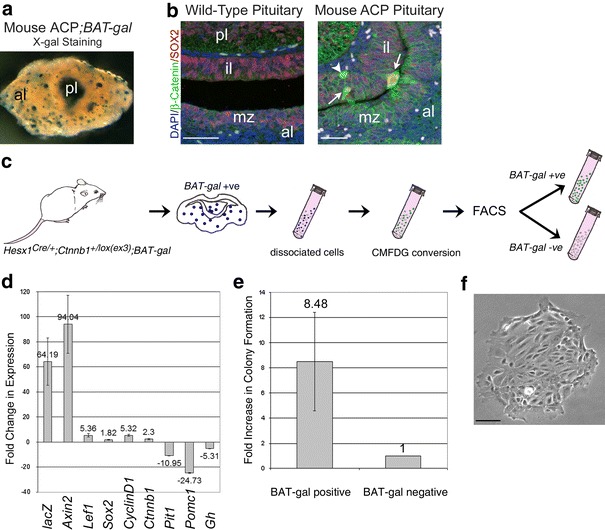
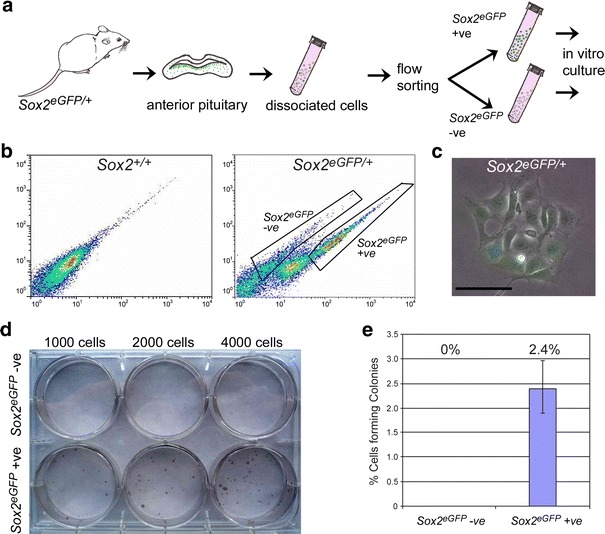
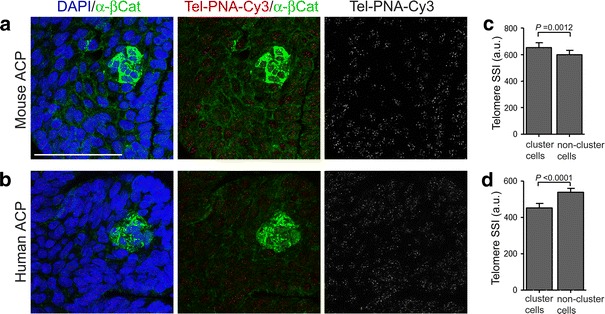
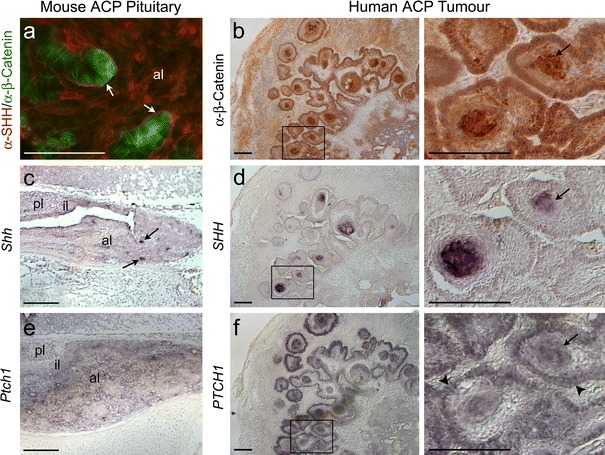
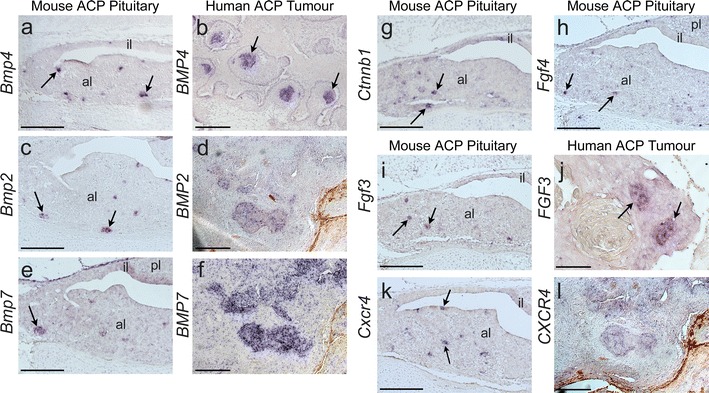
Activating mutations in the gene encoding β-catenin have been identified in the paediatric form of human craniopharyngioma (adamantinomatous craniopharyngioma, ACP), a histologically benign but aggressive pituitary tumour accounting for up to 10% of paediatric intracranial tumours. Recently, we generated an ACP mouse model and revealed that, as in human ACP, nucleocytoplasmic accumulation of β-catenin (β-cat(nc)) and over-activation of the Wnt/β-catenin pathway occurs only in a very small proportion of cells, which form clusters. Here, combining mouse genetics, fluorescence labelling and flow-sorting techniques, we have isolated these cells from tumorigenic mouse pituitaries and shown that the β-cat(nc) cells are enriched for colony-forming cells when cultured in stem cell-promoting media, and have longer telomeres, indicating shared properties with normal pituitary progenitors/stem cells (PSCs). Global gene profiling analysis has revealed that these β-cat(nc) cells express high levels of secreted mitogenic signals, such as members of the SHH, BMP and FGF family, in addition to several chemokines and their receptors, suggesting an important autocrine/paracrine role of these cells in the pathogenesis of ACP and a reciprocal communication with their environment. Finally, we highlight the clinical relevance of these findings by showing that these pathways are also up-regulated in the β-cat(nc) cell clusters identified in human ACP. As well as providing further support to the concept that pituitary stem cells may play an important role in the oncogenesis of human ACP, our data reveal novel disease biomarkers and potential pharmacological targets for the treatment of these devastating childhood tumours.
Figures
References
-
- Andoniadou CL, Signore M, Sajedi E, Gaston-Massuet C, Kelberman D, Burns AJ, Itasaki N, Dattani M, Martinez-Barbera JP. Lack of the murine homeobox gene Hesx1 leads to a posterior transformation of the anterior forebrain. Development. 2007;134(8):1499–1508. doi: 10.1242/dev.02829. - DOI - PMC - PubMed
-
- Andoniadou CL, Signore M, Young RM, Gaston-Massuet C, Wilson SW, Fuchs E, Martinez-Barbera JP. HESX1- and TCF3-mediated repression of Wnt/beta-catenin targets is required for normal development of the anterior forebrain. Development. 2011;138(22):4931–4942. doi: 10.1242/dev.066597. - DOI - PMC - PubMed
-
- Barbieri F, Bajetto A, Stumm R, Pattarozzi A, Porcile C, Zona G, Dorcaratto A, Ravetti JL, Minuto F, Spaziante R, Schettini G, Ferone D, Florio T. Overexpression of stromal cell-derived factor 1 and its receptor CXCR4 induces autocrine/paracrine cell proliferation in human pituitary adenomas. Clin Cancer Res. 2008;14(16):5022–5032. doi: 10.1158/1078-0432.CCR-07-4717. - DOI - PubMed
Publication types
MeSH terms
Substances
Grants and funding
LinkOut - more resources
Full Text Sources
Medical
Research Materials
Miscellaneous
