


A systematic review of community-based participatory research to enhance clinical trials in racial and ethnic minority groups
- PMID: 22353031
- PMCID: PMC3418827
- DOI: 10.1111/j.1475-6773.2012.01386.x
A systematic review of community-based participatory research to enhance clinical trials in racial and ethnic minority groups
Abstract
Objective: To examine the effectiveness of current community-based participatory research (CBPR) clinical trials involving racial and ethnic minorities.
Data source: All published peer-reviewed CBPR intervention articles in PubMed and CINAHL databases from January 2003 to May 2010.
Study design: We performed a systematic literature review.
Data collection/extraction methods: Data were extracted on each study's characteristics, community involvement in research, subject recruitment and retention, and intervention effects.
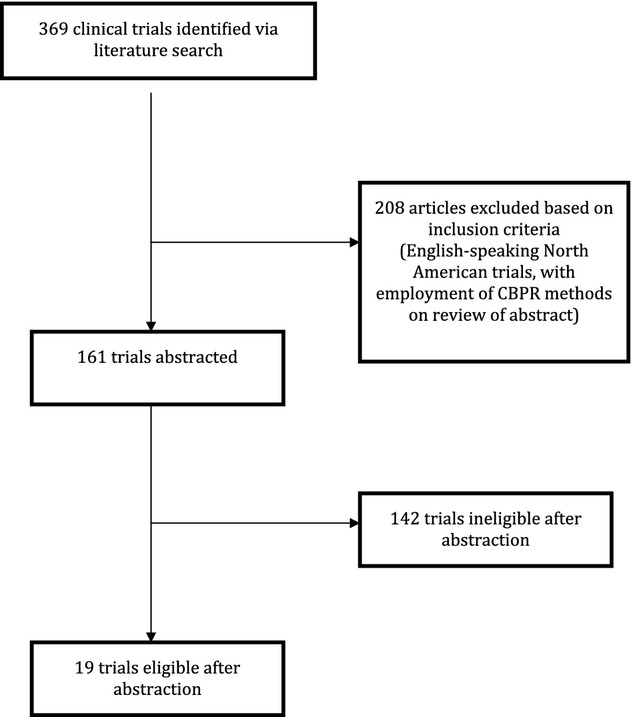
Principle findings: We found 19 articles meeting inclusion criteria. Of these, 14 were published from 2007 to 2010. Articles described some measures of community participation in research with great variability. Although CBPR trials examined a wide range of behavioral and clinical outcomes, such trials had very high success rates in recruiting and retaining minority participants and achieving significant intervention effects.
Conclusions: Significant publication gaps remain between CBPR and other interventional research methods. CBPR may be effective in increasing participation of racial and ethnic minority subjects in research and may be a powerful tool in testing the generalizability of effective interventions among these populations. CBPR holds promise as an approach that may contribute greatly to the study of health care delivery to disadvantaged populations.
© Health Research and Educational Trust.
Figures
References
-
- Balcazar HG, Byrd TL, Ortiz M, Tondapu SR, Chavez M. “A Randomized Community Intervention to Improve Hypertension Control among Mexican Americans: Using the Promotoras de Salud Community Outreach Model”. Journal of Health Care for the Poor and Underserved. 2009;20((4)):1079–94. - PubMed
-
- Dhanani S, Damron-Rodriguez J, Leung M, Villa V, Washington DL, Makinodan T, Harada N. “Community-Based Strategies for Focus Group Recruitment of Minority Veterans”. Military Medicine. 2002;167((6)):501–5. - PubMed
-
- Emerson GB, Warme WJ, Wolf FM, Heckman JD, Brand RA, Leopold SS. “Testing for the Presence of Positive-Outcome Bias in Peer Review: A Randomized Controlled Trial”. Archives of Internal Medicine. 2010;170((21)):1934–9. - PubMed
Publication types
MeSH terms
LinkOut - more resources
Full Text Sources
Medical
