


Empathy for the social suffering of friends and strangers recruits distinct patterns of brain activation
- PMID: 22355182
- PMCID: PMC3624958
- DOI: 10.1093/scan/nss019
Empathy for the social suffering of friends and strangers recruits distinct patterns of brain activation
Abstract
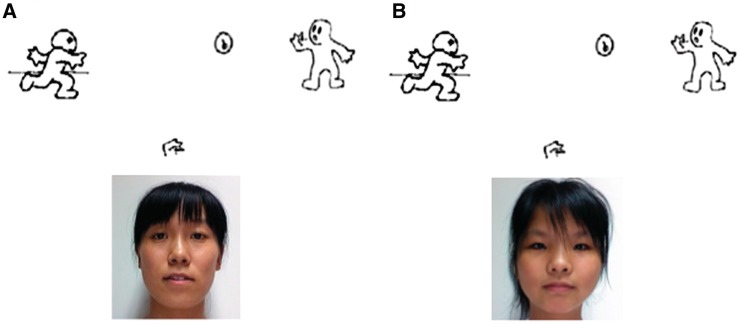
Humans observe various peoples' social suffering throughout their lives, but it is unknown whether the same brain mechanisms respond to people we are close to and strangers' social suffering. To address this question, we had participant's complete functional magnetic resonance imaging (fMRI) while observing a friend and stranger experience social exclusion. Observing a friend's exclusion activated affective pain regions associated with the direct (i.e. firsthand) experience of exclusion [dorsal anterior cingulate cortex (dACC) and insula], and this activation correlated with self-reported self-other overlap with the friend. Alternatively, observing a stranger's exclusion activated regions associated with thinking about the traits, mental states and intentions of others ['mentalizing'; dorsal medial prefrontal cortex (DMPFC), precuneus, and temporal pole]. Comparing activation from observing friend's vs stranger's exclusion showed increased activation in brain regions associated with the firsthand experience of exclusion (dACC and anterior insula) and with thinking about the self [medial prefrontal cortex (MPFC)]. Finally, functional connectivity analyses demonstrated that MPFC and affective pain regions activated in concert during empathy for friends, but not strangers. These results suggest empathy for friends' social suffering relies on emotion sharing and self-processing mechanisms, whereas empathy for strangers' social suffering may rely more heavily on mentalizing systems.
Figures


References
-
- Ames DL, Jenkins AC, Banaji MR, Mitchell JP. Taking another’s perspective increases self-referential neural processing. Psychological Science. 2008;19:642–4. - PubMed
-
- Aron A, Aron EN, Tudor M, Nelson G. Close relationships as including other in the self. Journal of Personality and Social Psychology. 1991;60:241–53.
-
- Aron A, Aron E, Smollan D. Inclusion of other in the self scale and the structure of interpersonal closeness. Journal of Personality and Social Psychology. 1992;63:596–612.
-
- Bond MH, Cheung TS. College students’ spontaneous self-concept: the effect of culture among respondents in Hong Kong, Japan and the United States. Journal of Cross-cultural Psychology. 1983;14:153–71.
-
- Carp J, Halenar MJ, Quandt LC, Sklar A, Compton RJ. Perceived similarity and neural mirroring: evidence from vicarious error processing. Social Neuroscience. 2009;4:85–96. - PubMed
