


Next generation sequencing has lower sequence coverage and poorer SNP-detection capability in the regulatory regions
- PMID: 22355574
- PMCID: PMC3216542
- DOI: 10.1038/srep00055
Next generation sequencing has lower sequence coverage and poorer SNP-detection capability in the regulatory regions
Abstract
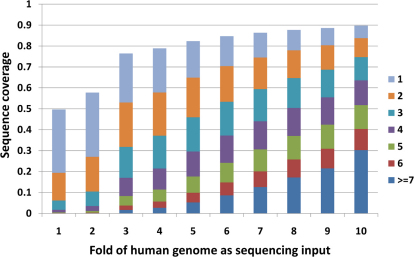
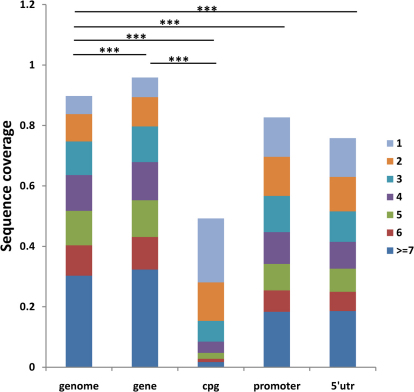
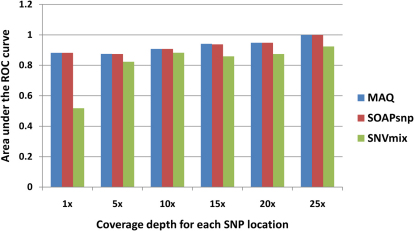
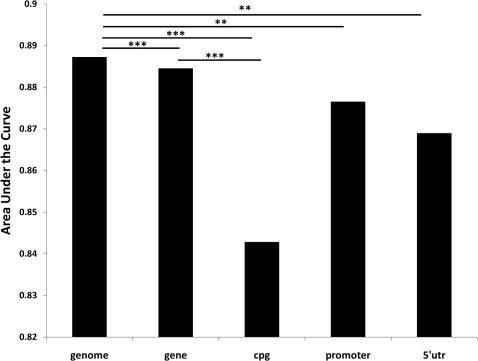
The rapid development of next generation sequencing (NGS) technology provides a new chance to extend the scale and resolution of genomic research. How to efficiently map millions of short reads to the reference genome and how to make accurate SNP calls are two major challenges in taking full advantage of NGS. In this article, we reviewed the current software tools for mapping and SNP calling, and evaluated their performance on samples from The Cancer Genome Atlas (TCGA) project. We found that BWA and Bowtie are better than the other alignment tools in comprehensive performance for Illumina platform, while NovoalignCS showed the best overall performance for SOLiD. Furthermore, we showed that next-generation sequencing platform has significantly lower coverage and poorer SNP-calling performance in the CpG islands, promoter and 5'-UTR regions of the genome. NGS experiments targeting for these regions should have higher sequencing depth than the normal genomic region.
Figures
References
-
- Flicek P. & Birney E. Sense from sequence reads: methods for alignment and assembly (vol 6, pg S6, 2009). Nat Methods 7, 479–479 (2010). - PubMed
-
- Mardis E. R. The impact of next-generation sequencing technology on genetics. Trends Genet 24, 133–141 (2008). - PubMed
-
- Mardis E. R. Next-generation DNA sequencing methods. Annu Rev Genomics Hum Genet 9, 387–402 (2008). - PubMed
-
- Bonetta L. Genome sequencing in the fast lane. Nat Methods 3, 141–147 (2006).
Publication types
MeSH terms
Substances
LinkOut - more resources
Full Text Sources
Other Literature Sources
