


SIRT1 associates with eIF2-alpha and regulates the cellular stress response
- PMID: 22355666
- PMCID: PMC3252071
- DOI: 10.1038/srep00150
SIRT1 associates with eIF2-alpha and regulates the cellular stress response
Abstract
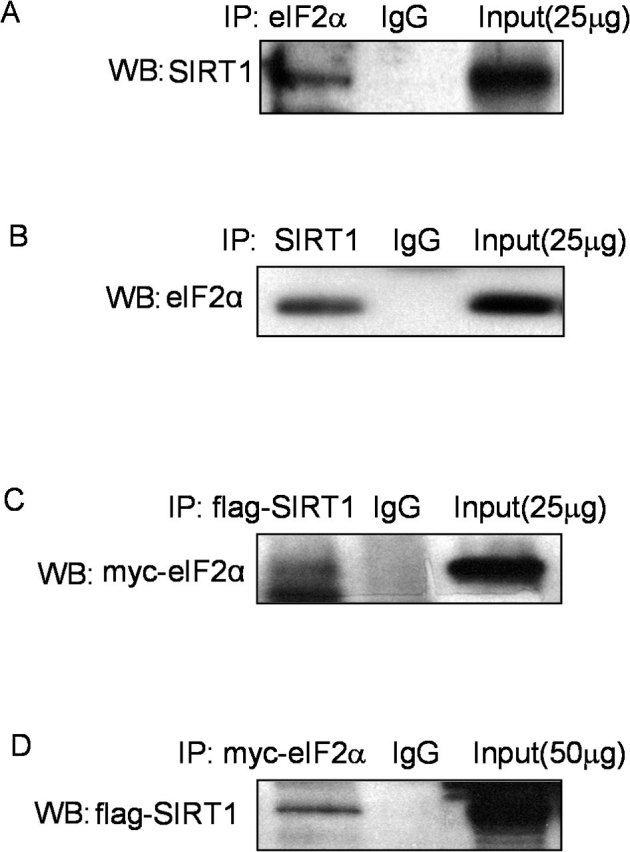
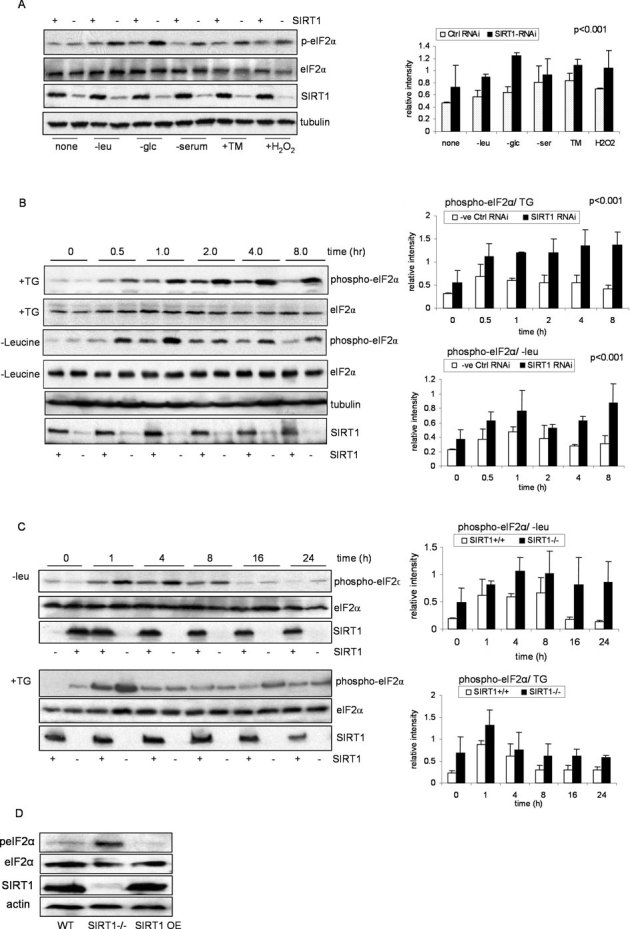
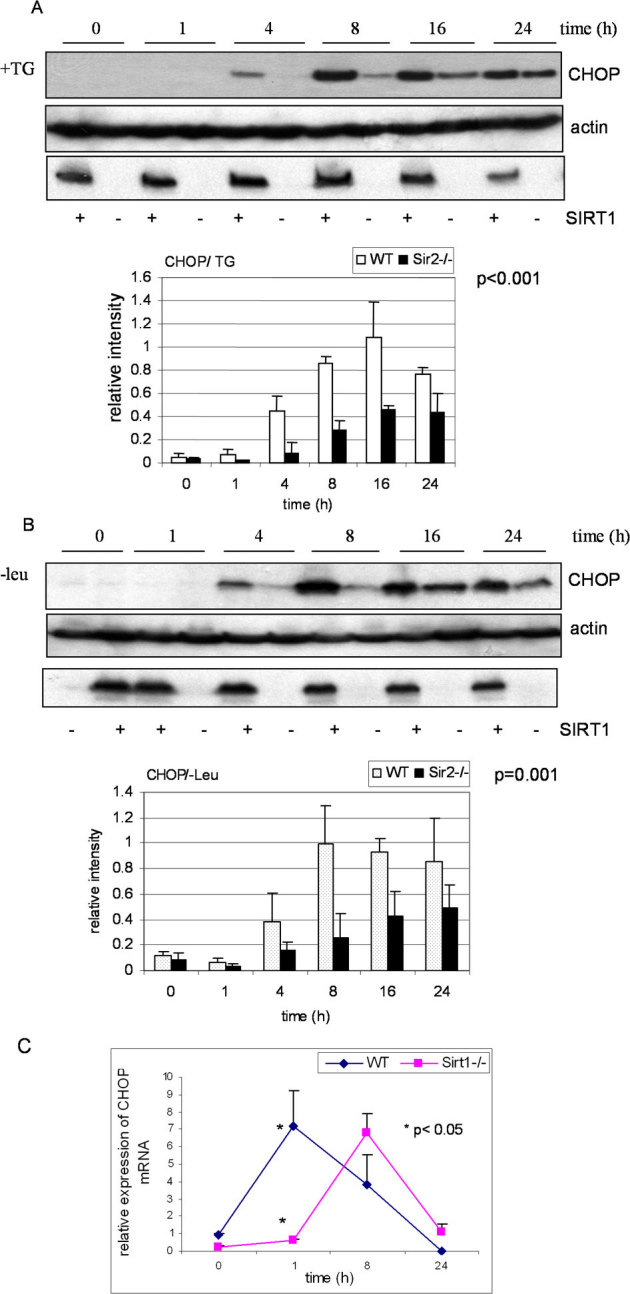
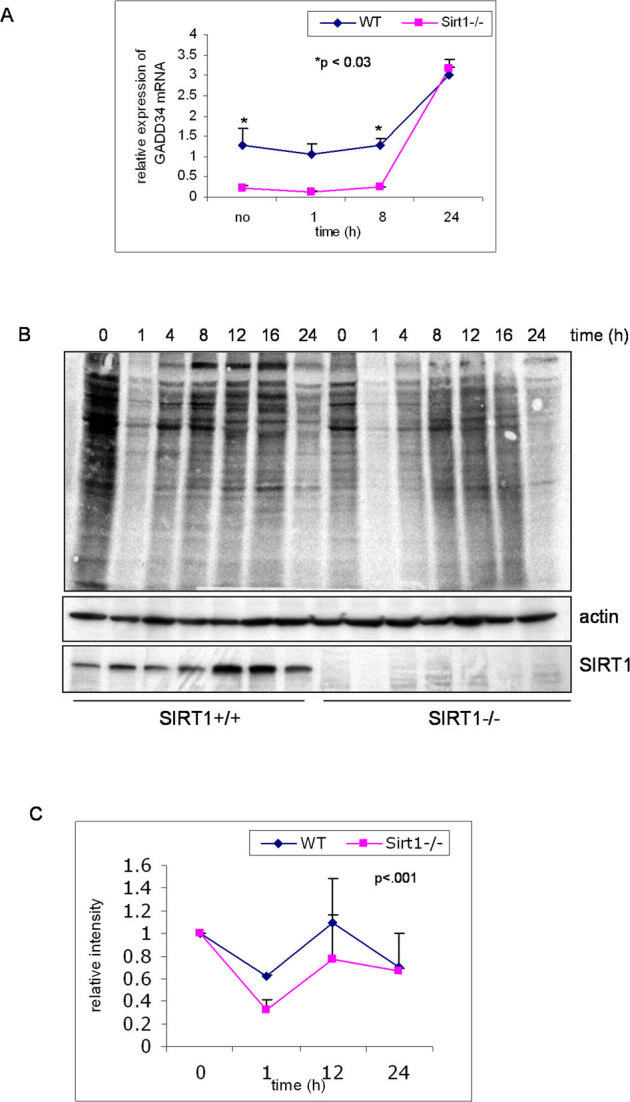
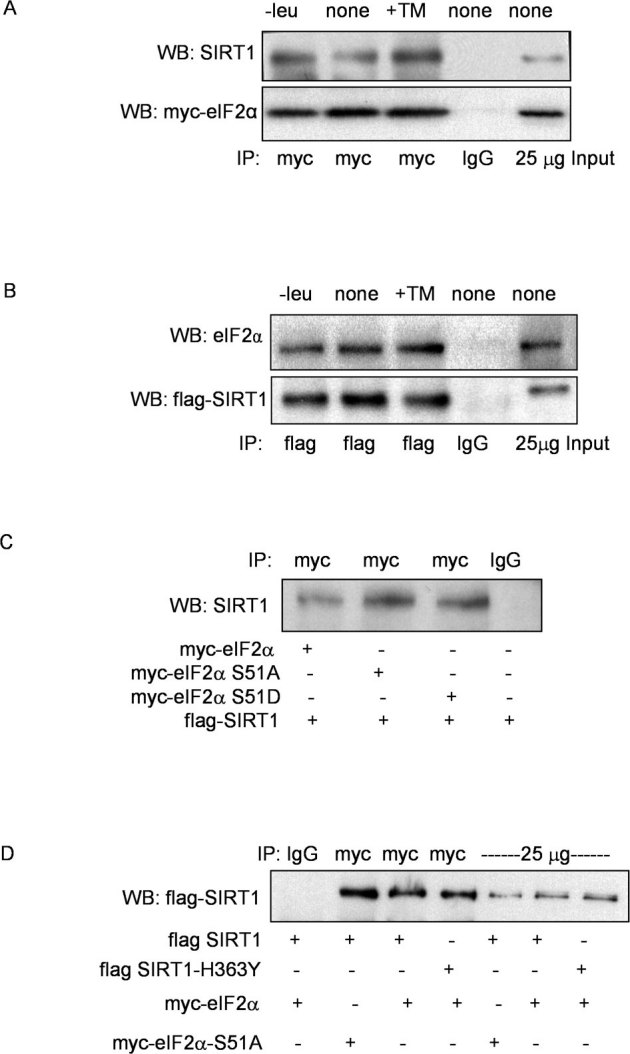
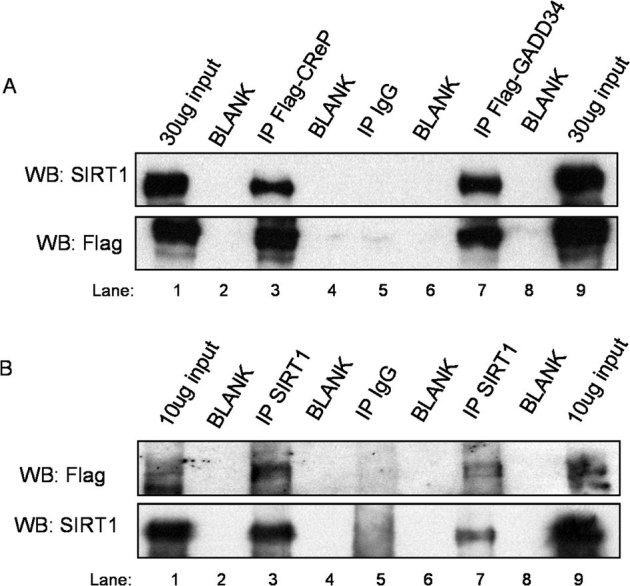
SIRT1 is a NAD+ dependent protein deacetylase known to increase longevity in model organisms. SIRT1 regulates cellular response to oxidative and/or genotoxic stress by regulating proteins such as p53 and FOXO. The eukaryotic initiation factor-2, eIF2, plays a critical role in the integrated stress response pathway. Under cellular stress, phosphorylation of the alpha subunit of eIF2 is essential for immediate shut-off of translation and activation of stress response genes. Here we demonstrate that SIRT1 interacts with eIF2α. Loss of SIRT1 results in increased phosphorylation of eIF2α. However, the downstream stress induced signaling pathway is compromised in SIRT1-deficient cells, indicated by delayed expression of the downstream target genes CHOP and GADD34 and a slower post-stress translation recovery. Finally, SIRT1 co-immunoprecipitates with mediators of eIF2α dephosphorylation, GADD34 and CreP, suggesting a role for SIRT1 in the negative feedback regulation of eIF2α phosphorylation.
Figures
References
-
- Alcendor R. R. et al.. Sirt1 regulates aging and resistance to oxidative stress in the heart. Circ Res 100, 1512–21 (2007). - PubMed
-
- Sinclair D. A. & Guarente L. Extrachromosomal rDNA circles--a cause of aging in yeast. Cell 91, 1033–42 (1997). - PubMed
-
- Tissenbaum H. A. & Guarente L. Increased dosage of a sir-2 gene extends lifespan in Caenorhabditis elegans. Nature 410, 227–30 (2001). - PubMed
-
- Qin W. et al.. Neuronal SIRT1 activation as a novel mechanism underlying the prevention of Alzheimer disease amyloid neuropathology by calorie restriction. J Biol Chem 281, 21745–54 (2006). - PubMed
Publication types
MeSH terms
Substances
Grants and funding
LinkOut - more resources
Full Text Sources
Molecular Biology Databases
Research Materials
Miscellaneous
