


Cross priming amplification: mechanism and optimization for isothermal DNA amplification
- PMID: 22355758
- PMCID: PMC3271364
- DOI: 10.1038/srep00246
Cross priming amplification: mechanism and optimization for isothermal DNA amplification
Abstract
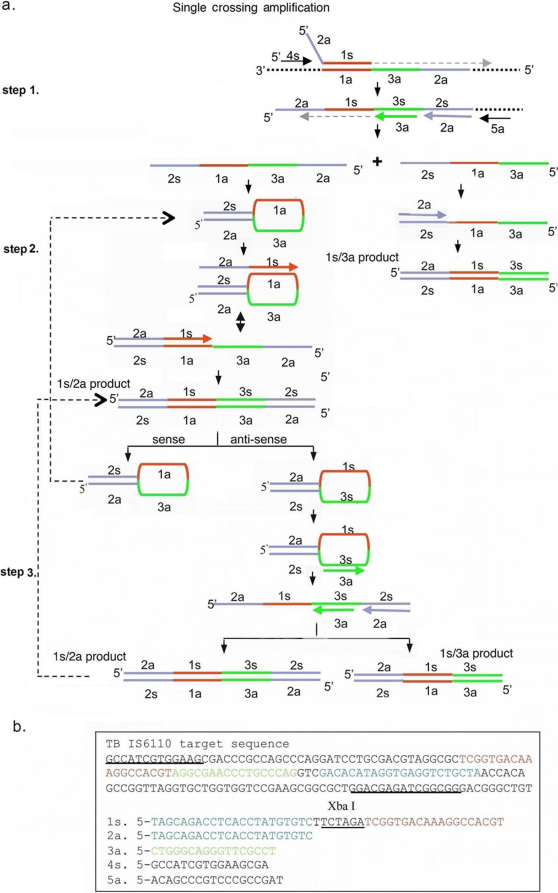
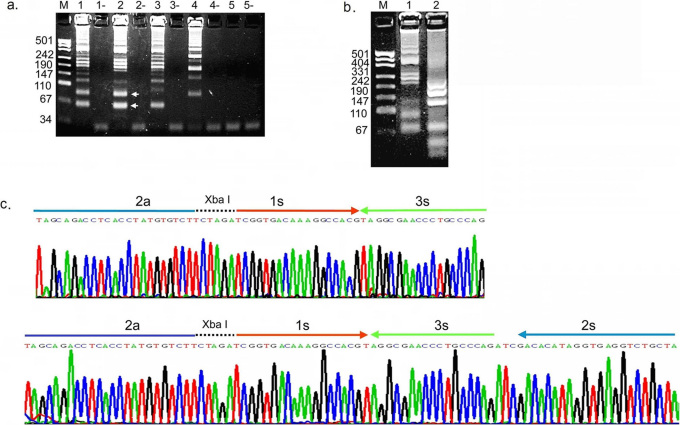
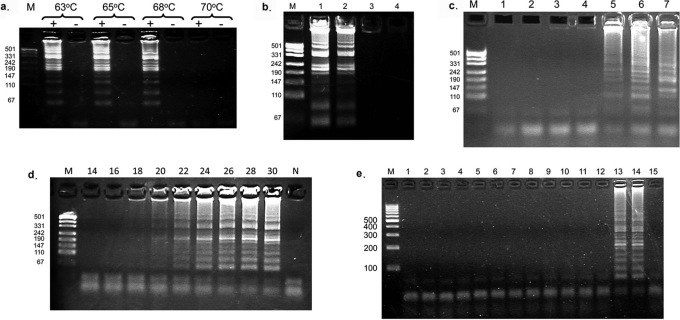
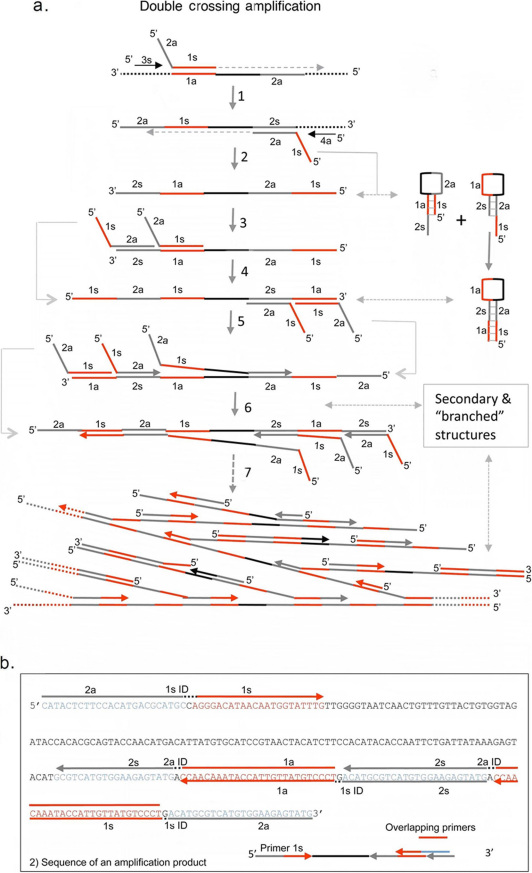
CPA is a class of isothermal amplification reactions that is carried out by a strand displacement DNA polymerase and does not require an initial denaturation step or the addition of a nicking enzyme. At the assay temperature of 63°C, the formation of a primer-template hybrid at transient, spontaneous denaturation bubbles in the DNA template is favored over re-annealing of the template strands by the high concentration of primer relative to template DNA. Strand displacement is encouraged by the annealing of cross primers with 5' ends that are not complementary to the template strand and the binding of a displacement primer upstream of the crossing primer. The resulting exponential amplification of target DNA is highly specific and highly sensitive, producing amplicons from as few as four bacterial cells. Here we report on the basic CPA mechanism - single crossing CPA - and provide details on alternative mechanisms.
Figures
References
-
- Saiki R. K. et al. Enzymatic amplification of beta-globin genomic sequences and restriction site analysis for diagnosis of sickle cell anemia. Science 230, 1350–4 (1985). - PubMed
-
- Sooknanan R. & Malek L. T. NASBA. Nat Biotechnol 13, 563–564 (1995).
-
- Fahy E., Kwoh D. Y. & Gingeras T. R. Self-sustained sequence replication (3SR): an isothermal transcription-based amplification system alternative to PCR. Genome Res 1, 25–33 (1991). - PubMed
Publication types
MeSH terms
Substances
LinkOut - more resources
Full Text Sources
Other Literature Sources
