


Efficacy of early neonatal vitamin A supplementation in reducing mortality during infancy in Ghana, India and Tanzania: study protocol for a randomized controlled trial
- PMID: 22361251
- PMCID: PMC3337818
- DOI: 10.1186/1745-6215-13-22
Efficacy of early neonatal vitamin A supplementation in reducing mortality during infancy in Ghana, India and Tanzania: study protocol for a randomized controlled trial
Abstract
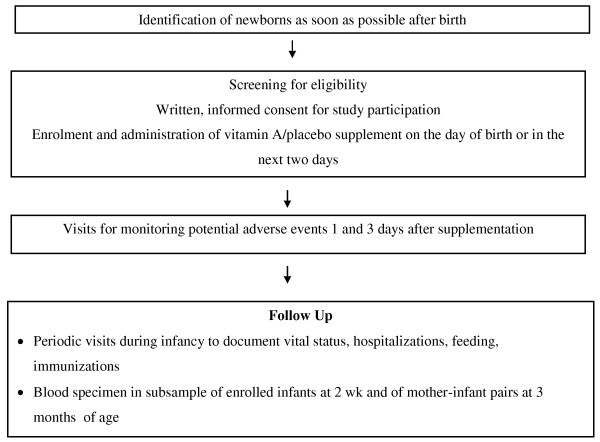
Background: Vitamin A supplementation of 6-59 month old children is currently recommended by the World Health Organization based on evidence that it reduces mortality. There has been considerable interest in determining the benefits of neonatal vitamin A supplementation, but the results of existing trials are conflicting. A technical consultation convened by WHO pointed to the need for larger scale studies in Asia and Africa to inform global policy on the use of neonatal vitamin A supplementation. Three trials were therefore initiated in Ghana, India and Tanzania to determine if vitamin A supplementation (50,000 IU) given to neonates once orally on the day of birth or within the next two days will reduce mortality in the period from supplementation to 6 months of age compared to placebo.
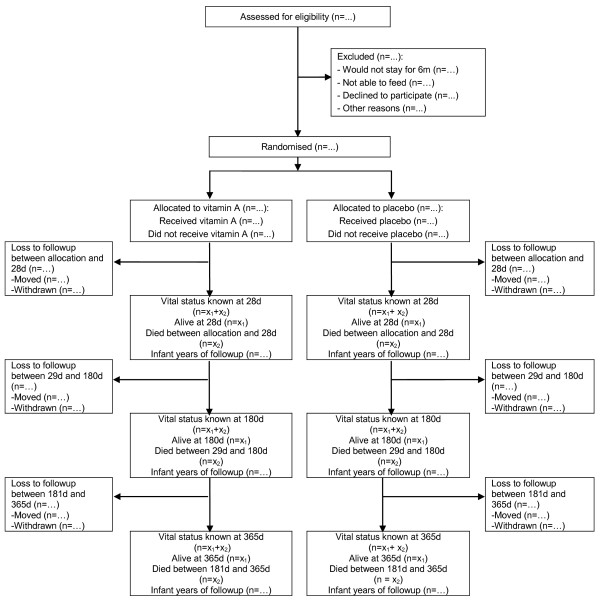
Methods/design: The trials are individually randomized, double masked, and placebo controlled. The required sample size is 40,200 in India and 32,000 each in Ghana and Tanzania. The study participants are neonates who fulfil age eligibility, whose families are likely to stay in the study area for the next 6 months, who are able to feed orally, and whose parent(s) provide informed written consent to participate in the study. Neonates randomized to the intervention group receive 50,000 IU vitamin A and the ones randomized to the control group receive placebo at the time of enrollment. Mortality and morbidity information are collected through periodic home visits by a study worker during infancy. The primary outcome of the study is mortality from supplementation to 6 months of age. The secondary outcome of the study is mortality from supplementation to 12 months of age. The three studies will be analysed independent of each other. Subgroup analysis will be carried out to determine the effect by birth weight, sex, and timing of DTP vaccine, socioeconomic groups and maternal large-dose vitamin A supplementation.
Discussion: The three ongoing studies are the largest studies evaluating the efficacy of vitamin A supplementation to neonates. Policy formulation will be based on the results of efficacy of the intervention from the ongoing randomized controlled trials combined with results of previous studies.
Trial registration: ClinicalTrials.gov NCT01138449.
Figures
References
-
- WHO. Global prevalence of vitamin A deficiency in populations at risk 1995-2005: WHO global database on vitamin A deficiency. Geneva: World Health Organization; 2009.
-
- Beaton GH, Martorell R, Aronson KJ. ACC/SCN State-of-the-Art Series Policy Discussion Paper No 13. Geneva: World Health Organization; 1993. Effectiveness of vitamin A supplementation in the control of young child morbidity and mortality in developing countries.
