. 2012;7(2):e31535.
doi: 10.1371/journal.pone.0031535. Epub 2012 Feb 20.

Severe pandemic H1N1 2009 infection is associated with transient NK and T deficiency and aberrant CD8 responses

Affiliations

Severe pandemic H1N1 2009 infection is associated with transient NK and T deficiency and aberrant CD8 responses

Annette Fox et al. PLoS One. 2012.

Abstract

Background: It is unclear why the severity of influenza varies in healthy adults or why the burden of severe influenza shifts to young adults when pandemic strains emerge. One possibility is that cross-protective T cell responses wane in this age group in the absence of recent infection. We therefore compared the acute cellular immune response in previously healthy adults with severe versus mild pandemic H1N1 infection.

Methods and principal findings: 49 previously healthy adults admitted to the National Hospital of Tropical Diseases, Viet Nam with RT-PCR-confirmed 2009 H1N1 infection were prospectively enrolled. 39 recovered quickly whereas 10 developed severe symptoms requiring supplemental oxygen and prolonged hospitalization. Peripheral blood lymphocyte subset counts and activation (HLADR, CD38) and differentiation (CD27, CD28) marker expression were determined on days 0, 2, 5, 10, 14 and 28 by flow cytometry. NK, CD4 and CD8 lymphopenia developed in 100%, 90% and 60% of severe cases versus 13% (p<0.001), 28%, (p = 0.001) and 18% (p = 0.014) of mild cases. CD4 and NK counts normalized following recovery. B cell counts were not significantly associated with severity. CD8 activation peaked 6-8 days after mild influenza onset, when 13% (6-22%) were HLADR+CD38+, and was accompanied by a significant loss of resting/CD27+CD28+ cells without accumulation of CD27+CD28- or CD27-CD28- cells. In severe influenza CD8 activation peaked more than 9 days post-onset, and/or was excessive (30-90% HLADR+CD38+) in association with accumulation of CD27+CD28- cells and maintenance of CD8 counts.

Conclusion: Severe influenza is associated with transient T and NK cell deficiency. CD8 phenotype changes during mild influenza are consistent with a rapidly resolving memory response whereas in severe influenza activation is either delayed or excessive, and partially differentiated cells accumulate within blood indicating that recruitment of effector cells to the lung could be impaired.


Conflict of interest statement

Competing Interests: The authors have declared that no competing interests exist.

Figures

Figure 1
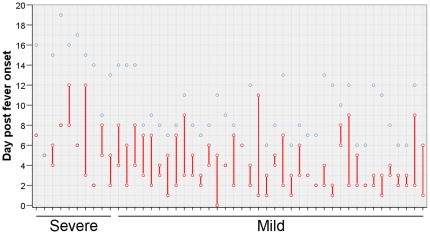
Figure 1. Detection of influenza virus RNA in respiratory specimens from patients with severe versus mild influenza.
Nose and throat swabs were assessed for the presence of viral RNA as described in the methods. Red dots/lines indicate the first and last days from fever onset when viral RNA was detected, the first day being when the first sample was collected. Blue dots represent the last day that samples were tested.
Figure 2
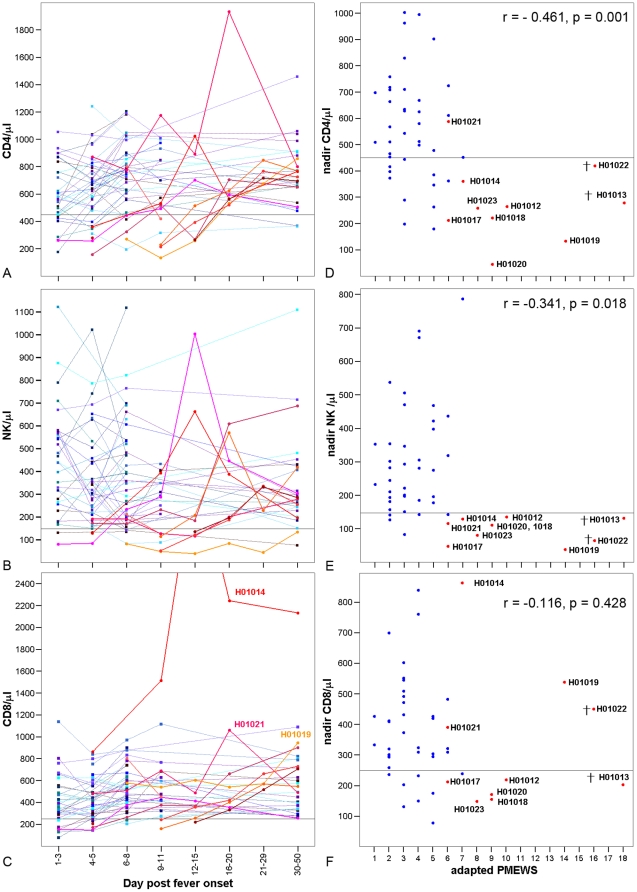
Figure 2. T and NK cell counts in severe versus mild influenza.
Panel's a–c show lymphocyte subset counts by time interval since onset with each line representing an individual patient. Horizontal solid lines represent the lower limit of the normal range. Panels d–f show nadir values for lymphocyte subset counts versus pandemic medical early warning score (PMEWS) with Spearman's correlation coefficients. The 2 patients that died are indicated ( ) because they were only assessed at one or two time points. Results are shown for 10 patients with severe illness (red tone symbols and lines) and 39 patients with mild illness (blue tone symbols and lines).
Figure 3
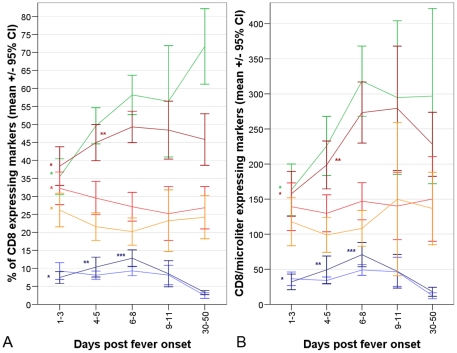
Figure 3. Activation, differentiation and extravasation marker expression by CD8 T cells over the course of mild influenza A illness.
The percentages (a) and absolute count (b) of CD8 T cells with the phenotypes CXCR3high (green lines); CD27+CD28+ (brown lines); CD27+CD28−(red lines); CD27−CD28− (yellow lines); CD38+HLA-DR- (light blue lines) and CD38+HLADR+ (dark blue lines) is shown for 39 patients with mild influenza illness at different time intervals post-fever onset. The number tested during each time interval was 28, 34, 39, 19 and 9. Asterisks indicate where values differ significantly via paired t-Test from levels at recovery (*), or at recovery and day 1–3 (**), or at recovery and at earlier time intervals (***).
Figure 4
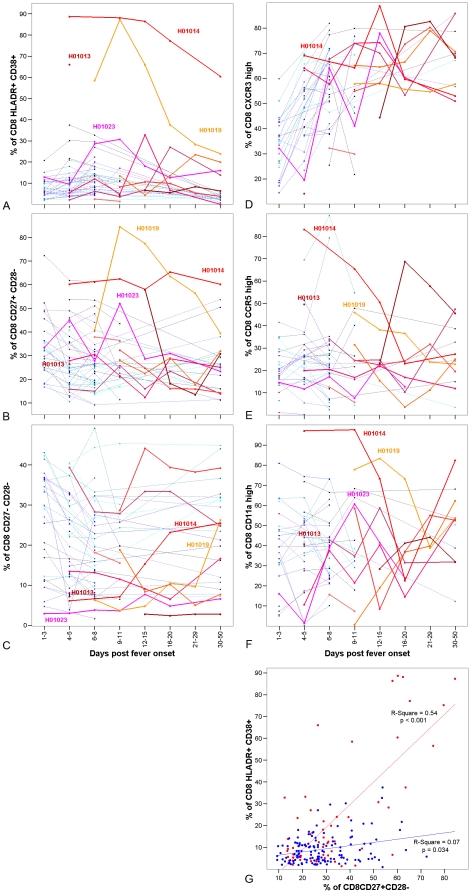
Figure 4. Activation and differentiation marker expression by CD8 T cells from patients with severe versus mild influenza.
Panels a–f show the percentages of cells expressing the markers indicated on the vertical axis by time interval since onset. Each line represents an individual patient. Panel g shows the relationship between the percentages of CD8 T cells that are CD38+HLADR+ and CD27+CD28− and includes results for all time points. Results are shown for 10 patients with severe influenza (red tones symbols and lines) and 39 patients with mild influenza (blue tone symbols and lines).

References

    1. Hien TT, Boni MF, Bryant JE, Ngan TT, Wolbers M, et al. Early pandemic influenza (2009 H1N1) in Ho Chi Minh City, Vietnam: a clinical virological and epidemiological analysis. PLoS Med. 2010;7:e1000277. - PMC - PubMed
    1. Garten RJ, Davis CT, Russell CA, Shu B, Lindstrom S, et al. Antigenic and genetic characteristics of swine-origin 2009 A(H1N1) influenza viruses circulating in humans. Science. 2009;325:197–201. - PMC - PubMed
    1. Marcelin G, Bland HM, Negovetich NJ, Sandbulte MR, Ellebedy AH, et al. Inactivated seasonal influenza vaccines increase serum antibodies to the neuraminidase of pandemic influenza A(H1N1) 2009 virus in an age-dependent manner. J Infect Dis. 2010;202:1634–1638. - PMC - PubMed
    1. Itoh Y, Shinya K, Kiso M, Watanabe T, Sakoda Y, et al. In vitro and in vivo characterization of new swine-origin H1N1 influenza viruses. Nature. 2009;460:1021–1025. - PMC - PubMed
    1. Miller E, Hoschler K, Hardelid P, Stanford E, Andrews N, et al. Incidence of 2009 pandemic influenza A H1N1 infection in England: a cross-sectional serological study. Lancet. 2010;375:1100–1108. - PubMed

Publication types

MeSH terms