Review
. 2012 Feb 24;36(2):166-74.
doi: 10.1016/j.immuni.2012.01.011.

Constitutive type I interferon modulates homeostatic balance through tonic signaling

Affiliations
Review

Constitutive type I interferon modulates homeostatic balance through tonic signaling

Daniel J Gough et al. Immunity. .

Abstract

Interferons (IFNs) were discovered as cytokines induced during and protecting from viral infection. They have been documented to play essential roles in numerous physiological processes beyond antiviral and antimicrobial defense, including immunomodulation, cell cycle regulation, cell survival, and cell differentiation. Recent data have also uncovered a potentially darker side to IFN, including roles in inflammatory diseases, such as autoimmunity and diabetes. IFN can have effects in the absence of acute infection, highlighting a physiologic role for constitutive IFN. Type I IFNs are constitutively produced at vanishingly low quantities and yet exert profound effects, mediated in part through modulation of signaling intermediates required for responses to diverse cytokines. We review evidence for a yin-yang of IFN function through its role in modulating crosstalk between multiple cytokines by both feedforward and feedback regulation of common signaling intermediates and postulate a homeostatic role for IFN through tonic signaling in the absence of acute infection.


Figures

Figure 1
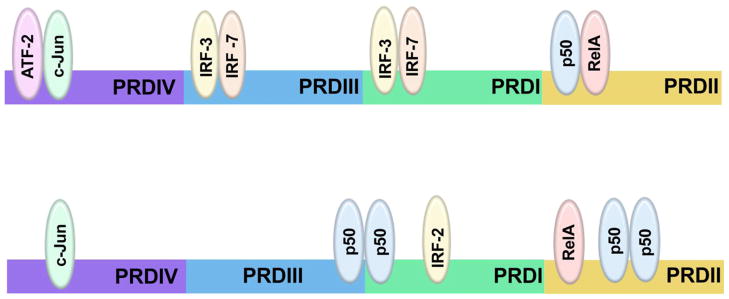
Figure 1. Transcription factors for inducible and constitutive IFNβ promoter activity
The IFNβ promoter contains four positive regulatory domains (PRDI-IV). (Upper) Stimulation-dependent induction of IFNβ expression requires cooperative recruitment of a number of transcription factor complexes to its promoter: IRF-3 and/or IRF-7, ATF-2 and c-Jun, p50 and RelA, and the architectural protein HMGA1 (not pictured). The binding of these factors to their specific regions (IRF-3 and IRF-7 bind PRDI and III; ATF-2 and c-Jun bind PRDIV; p50 and RelA bind PRDII) leads to rapid and robust induction of IFNβ expression. (Lower) In the absence of stimulation the IFNβ promoter is occupied by c-Jun at PRDIV and RelA at PRDII, which promote basal IFNβ expression; and IRF-2 at PRDI and p50 homodimers at PRDI, PRDII and III, which negatively regulate IFNβ production. Involvement of additional transcription factors, particularly partners for c-Jun and RelA in unstimulated cells, remain to be identified.
Figure 2
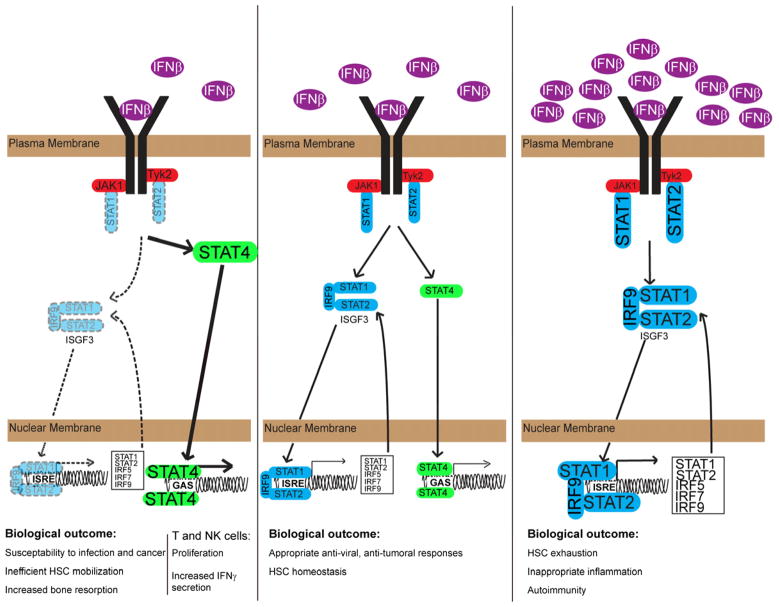
Figure 2. Constitutive IFNβ signaling sets the balance of signaling intermediaries
In a healthy organism, low amounts of IFNβ are constitutively secreted, which maintains appropriate expression of IFN-inducible signaling intermediaries, including the transcription factors STAT1, STAT2, IRF5, IRF7, and IRF9 (center). Appropriate expression allows a balance between STAT1 or ISGF3 signaling and signaling through other STAT proteins (e.g., STAT4). Diminished constitutive IFNβ secretion (left) results in decreased expression of ISGF3 subunit proteins, altering the balance of signaling (e.g., between ISGF3 and STAT4) and culminating in susceptibility to infection and cancer, inefficient hematopoietic stem cell (HSC) mobilization, and increased bone resorption. Excessive expression of IFNβ (right) drives over-expression of ISGF3 proteins, initiating an inflammatory environment that can result in autoimmunity and exhaustion of the HSC niche.

References

    1. Arakura F, Hida S, Ichikawa E, Yajima C, Nakajima S, Saida T, Taki S. Genetic control directed toward spontaneous IFN-alpha/IFN-beta responses and downstream IFN-gamma expression influences the pathogenesis of a murine psoriasis-like skin disease. J Immunol. 2007;179:3249–3257. - PubMed
    1. Bach EA, Aguet M, Schreiber RD. The IFN gamma receptor: a paradigm for cytokine receptor signaling. Annu Rev Immunol. 1997;15:563–591. - PubMed
    1. Balachandran S, Beg AA. Defining emerging roles for NF-kappaB in antivirus responses: revisiting the interferon-beta enhanceosome paradigm. PLoS Pathog. 2011;7:e1002165. - PMC - PubMed
    1. Basagoudanavar SH, Thapa RJ, Nogusa S, Wang J, Beg AA, Balachandran S. Distinct roles for the NF-kappa B RelA subunit during antiviral innate immune responses. J Virol. 2011;85:2599–2610. - PMC - PubMed
    1. Billard C, Sigaux F, Castaigne S, Valensi F, Flandrin G, Degos L, Falcoff E, Aguet M. Treatment of hairy cell leukemia with recombinant alpha interferon: II. In vivo down-regulation of alpha interferon receptors on tumor cells. Blood. 1986;67:821–826. - PubMed

Publication types