


Many patients continue using proton pump inhibitors after negative results from tests for reflux disease
- PMID: 22366177
- PMCID: PMC3547497
- DOI: 10.1016/j.cgh.2012.02.012
Many patients continue using proton pump inhibitors after negative results from tests for reflux disease
Abstract
Background & aims: Ambulatory reflux testing is used to evaluate symptoms of gastroesophageal reflux disease (GERD) refractory to protein pump inhibitors (PPIs). We investigated the prevalence of PPI use in patients with negative results from Bravo pH or multichannel intraluminal impedance-pH (MII-pH) tests and factors that might predict the use of PPIs.
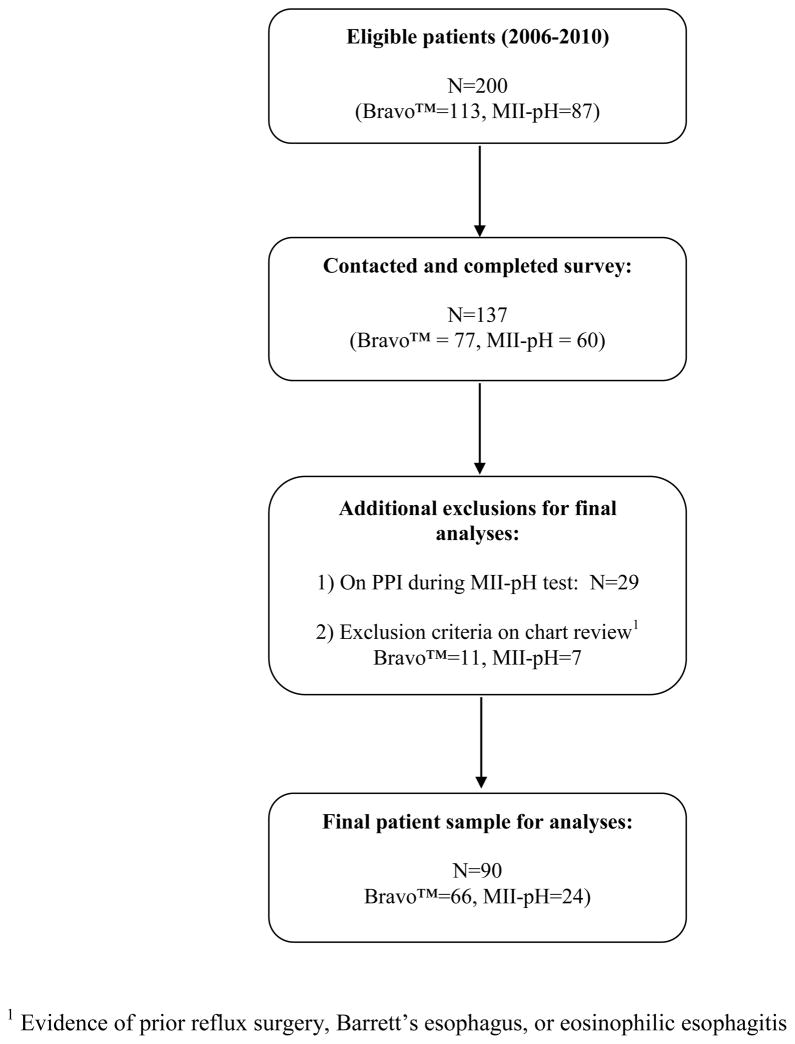
Methods: We analyzed data from patients who had undergone Bravo pH monitoring or MII-pH testing at Northwestern University, without evidence of reflux disease. Demographics, endoscopy findings, pathology results, and provider recommendations were obtained via chart review. Eligible patients (n = 90) were contacted by telephone, and a cross-sectional survey was administered with questions about symptom severity, demographics, medication use, and health behaviors. Patients were compared by current PPI use, and statistical analyses were performed by using SAS version 9.2 software.
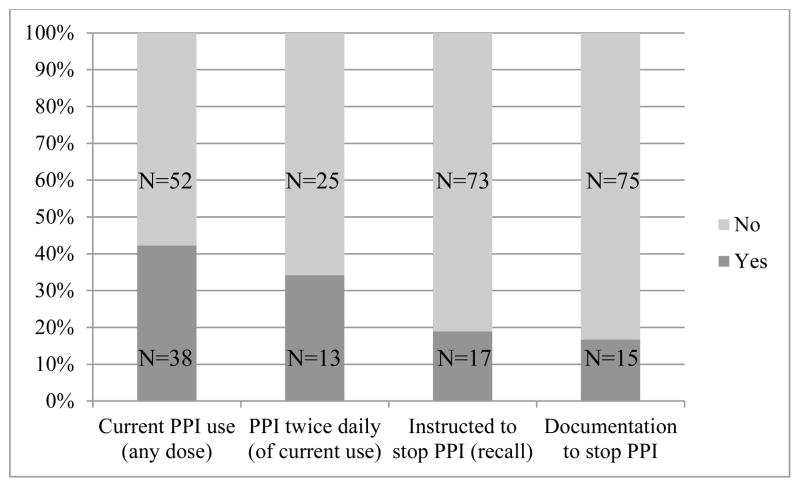
Results: Thirty-eight patients (42.2%) reported current PPI use despite a negative result from a pH study. Only 17 patients (18.9%) recalled being instructed to stop taking PPIs; chart review showed documented instructions to stop PPI therapy for 15 patients (16.7%). There were no significant differences in demographic or clinical characteristics among patients compared by current PPI use. Patients taking a PPI were more likely than those not taking a PPI to report troublesome symptoms that affected their daily life, as measured by a questionnaire for the diagnosis of GERD (the GerdQ).
Conclusions: More than 42% of patients with negative results from pH monitoring studies continue PPI therapy despite physiological data that they do not have GERD.
Copyright © 2012 AGA Institute. Published by Elsevier Inc. All rights reserved.
Figures
References
-
- Everhart JE, Ruhl CE. Burden of digestive diseases in the United States part I: overall and upper gastrointestinal diseases. Gastroenterology. 2009;136:376–86. - PubMed
-
- Sandler R, Everhart J, Donowitz M, Adams E, Cronin K, Goodman C, Gemmen E, Shah S, Avdic A, Rubin R. The burden of selected digestive diseases in the United States. Gastroenterology. 2002;122:1500–1511. - PubMed
-
- Shaheen N, Hansen R, Morgan D, Gangarosa L, Ringel Y, Thiny M, Russo M, Sandler R. The burden of gastrointestinal and liver diseases, 2006. Am J Gastroenterol. 2006;101:2128–2138. - PubMed
-
- Liker HR, Ducrotte P, Malfertheiner P. Unmet medical needs among patients with gastroesophageal reflux disease: a foundation for improving management in primary care. Dig Dis. 2009;27:62–7. - PubMed
Publication types
MeSH terms
Substances
Grants and funding
LinkOut - more resources
Full Text Sources
Other Literature Sources
Medical
