


Efficacy of biocides used in the modern food industry to control salmonella enterica, and links between biocide tolerance and resistance to clinically relevant antimicrobial compounds
- PMID: 22367085
- PMCID: PMC3346496
- DOI: 10.1128/AEM.07534-11
Efficacy of biocides used in the modern food industry to control salmonella enterica, and links between biocide tolerance and resistance to clinically relevant antimicrobial compounds
Abstract
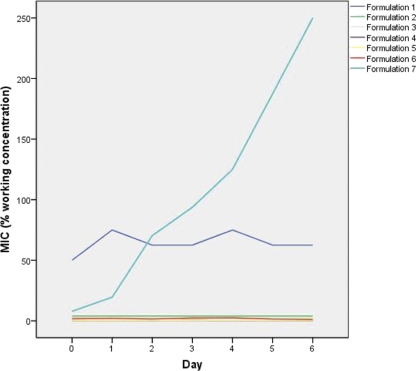
Biocides play an essential role in limiting the spread of infectious disease. The food industry is dependent on these agents, and their increasing use is a matter for concern. Specifically, the emergence of bacteria demonstrating increased tolerance to biocides, coupled with the potential for the development of a phenotype of cross-resistance to clinically important antimicrobial compounds, needs to be assessed. In this study, we investigated the tolerance of a collection of susceptible and multidrug-resistant (MDR) Salmonella enterica strains to a panel of seven commercially available food-grade biocide formulations. We explored their abilities to adapt to these formulations and their active biocidal agents, i.e., triclosan, chlorhexidine, hydrogen peroxide, and benzalkonium chloride, after sequential rounds of in vitro selection. Finally, cross-tolerance of different categories of biocidal formulations, their active agents, and the potential for coselection of resistance to clinically important antibiotics were investigated. Six of seven food-grade biocide formulations were bactericidal at their recommended working concentrations. All showed a reduced activity against both surface-dried and biofilm cultures. A stable phenotype of tolerance to biocide formulations could not be selected. Upon exposure of Salmonella strains to an active biocidal compound, a high-level of tolerance was selected for a number of Salmonella serotypes. No cross-tolerance to the different biocidal agents or food-grade biocide formulations was observed. Most tolerant isolates displayed changes in their patterns of susceptibility to antimicrobial compounds. Food industry biocides are effective against planktonic Salmonella. When exposed to sublethal concentrations of individual active biocidal agents, tolerant isolates may emerge. This emergence was associated with changes in antimicrobial susceptibilities.
Figures
References
-
- Anderson RL, Carr JH, Bond WW, Favero MS. 1997. Susceptibility of vancomycin-resistant Enterococci to environmental disinfectants. Infect. Control Hosp. Epidemiol. 18:195–199 - PubMed
-
- Coburn B, Grassl GA, Finlay BB. 2007. Salmonella, the host and disease: a brief review. Immunol. Cell Biol. 85:112–118 - PubMed
-
- Dewanti R, Wong AL. 1995. Influence of culture conditions on biofilm formation by Escherichia coli O157:H7. Int. J. Food Microbiol. 26:147–164 - PubMed
Publication types
MeSH terms
Substances
LinkOut - more resources
Full Text Sources
Medical
