


Neural encoding and perception of speech signals in informational masking
- PMID: 22367094
- PMCID: PMC3292743
- DOI: 10.1097/AUD.0b013e31823173fd
Neural encoding and perception of speech signals in informational masking
Erratum in
- Ear Hear. 2012 May;33(3):436
Abstract
Objective: To investigate the contributions of energetic and informational masking to neural encoding and perception in noise, using oddball discrimination and sentence recognition tasks.
Design: P3 auditory evoked potential, behavioral discrimination, and sentence recognition data were recorded in response to speech and tonal signals presented to nine normal-hearing adults. Stimuli were presented at a signal to noise ratio of -3 dB in four background conditions: quiet, continuous noise, intermittent noise, and four-talker babble.
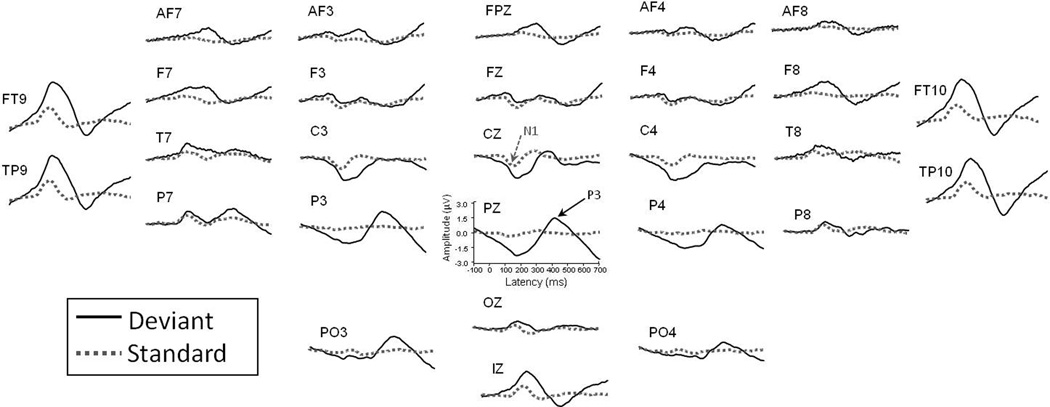
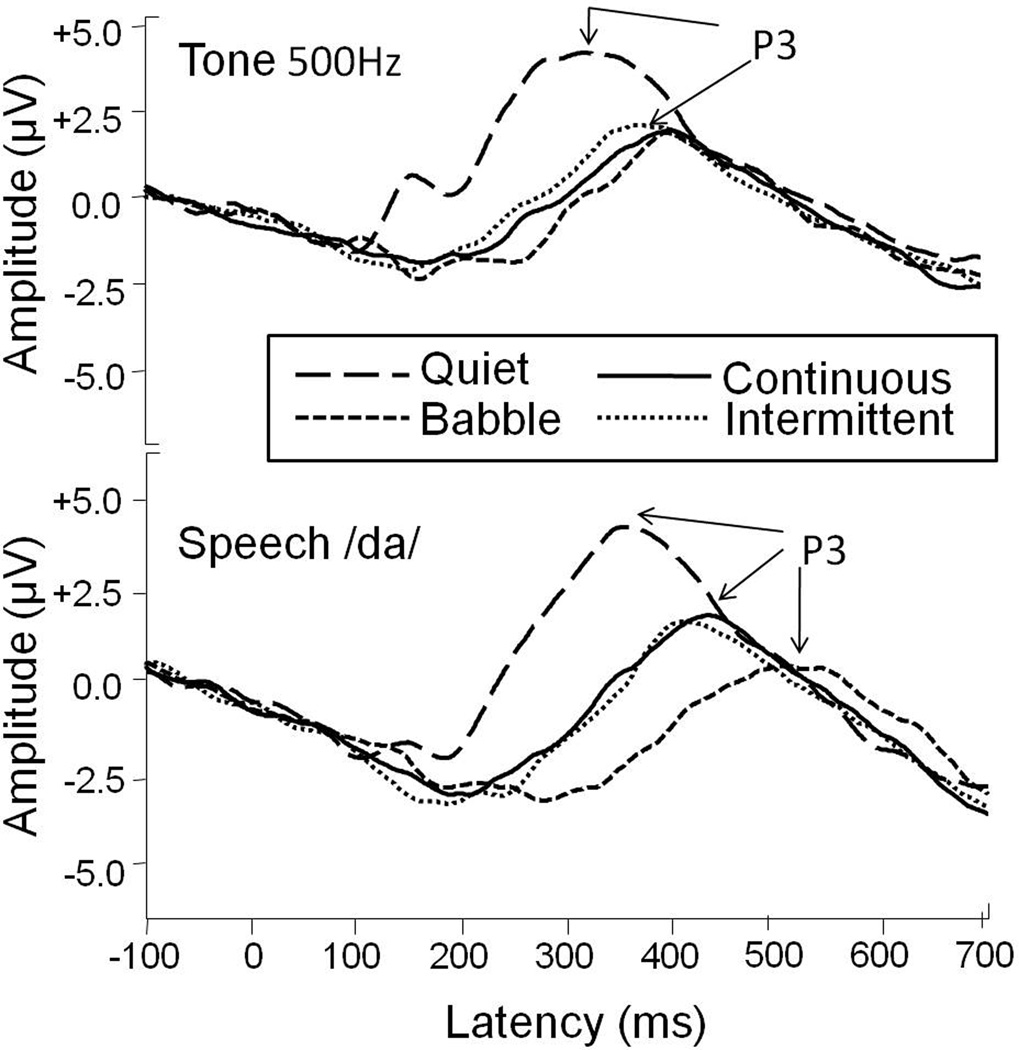
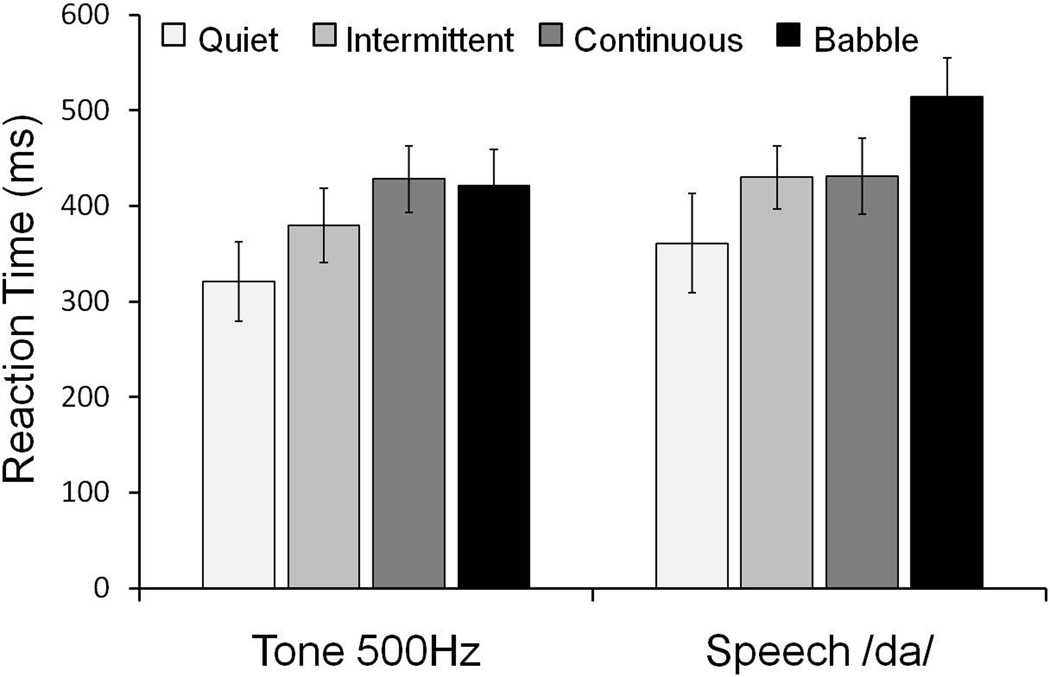
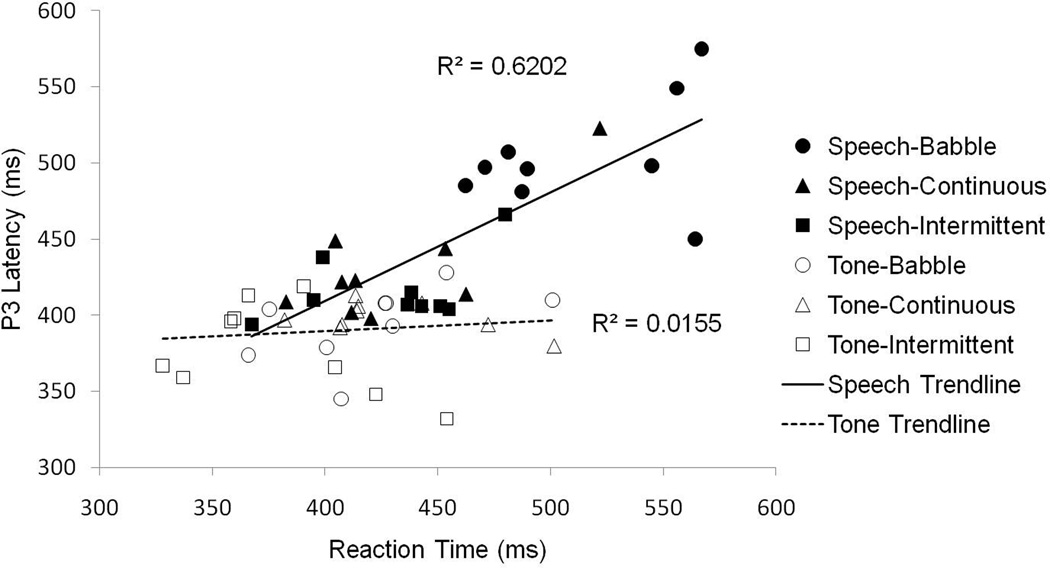
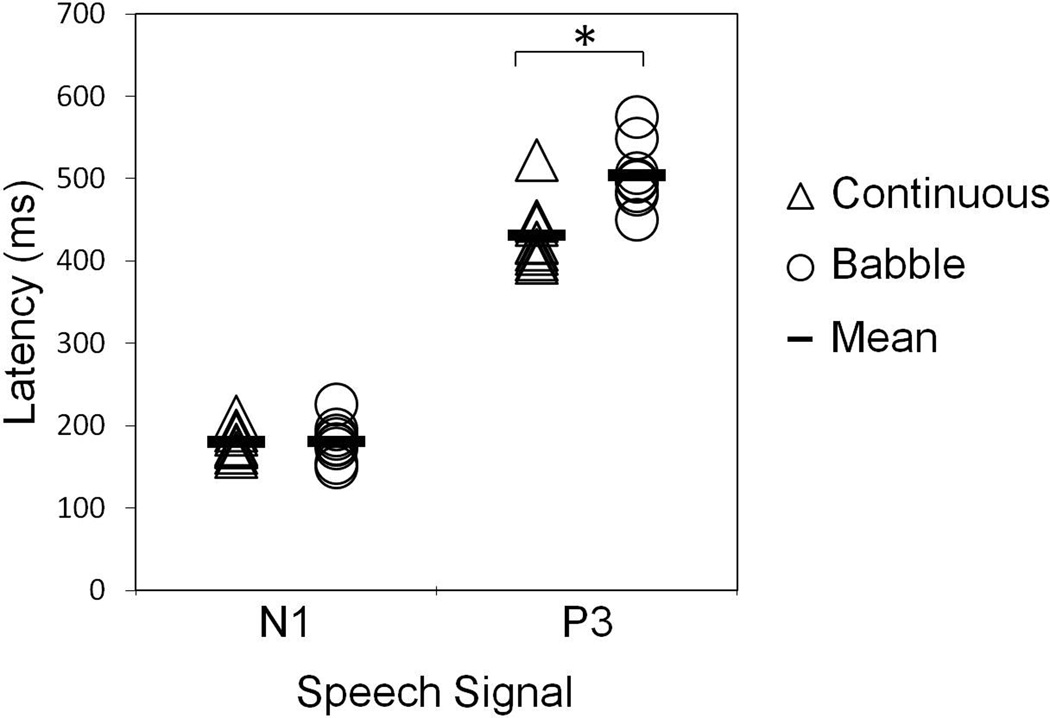
Results: Responses to tonal signals were not significantly different for the three maskers. However, responses to speech signals in the four-talker babble resulted in longer P3 latencies, smaller P3 amplitudes, poorer discrimination accuracy, and longer reaction times than in any of the other conditions. Results also demonstrate significant correlations between physiological and behavioral data. As latency of the P3 increased, reaction times also increased and sentence recognition scores decreased.
Conclusion: The data confirm a differential effect of masker type on the P3 and behavioral responses and present evidence of interference by an informational masker to speech understanding at the level of the cortex. Results also validate the use of the P3 as a useful measure to demonstrate physiological correlates of informational masking.
Figures


References
-
- Androulidakis AG, Jones SJ. Detection of signals in modulated and unmodulated noise observed using auditory evoked potentials. Clin Neurophysiol. 2006;117:1783–1793. - PubMed
-
- American Speech-Language Hearing Association (ASHA) Guidelines for screening for hearing impairments and middle ear disorders. ASHA. 1990;32 Suppl 2:17–24. - PubMed
-
- Dubno JR, Schaefer AB. Comparison of frequency selectivity and consonant recognition among hearing-impaired and masked normal-hearing listeners. J Acoust Soc Am. 1992;91:2110–2121. - PubMed
Publication types
MeSH terms
Grants and funding
LinkOut - more resources
Full Text Sources
Miscellaneous
