


Regulation of cerebral cholesterol metabolism in Alzheimer disease
- PMID: 22367100
- PMCID: PMC3653313
- DOI: 10.2310/JIM.0b013e318246d973
Regulation of cerebral cholesterol metabolism in Alzheimer disease
Abstract
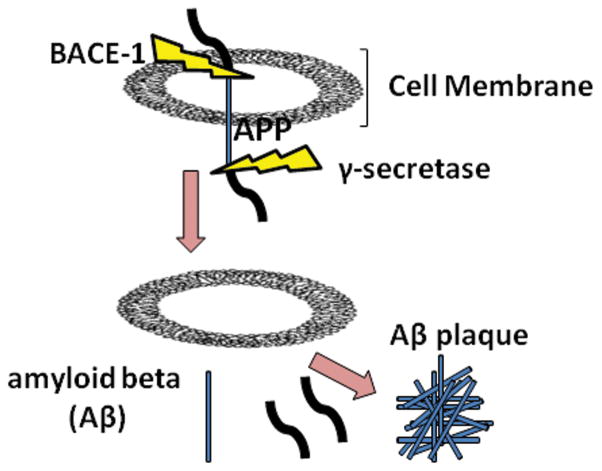
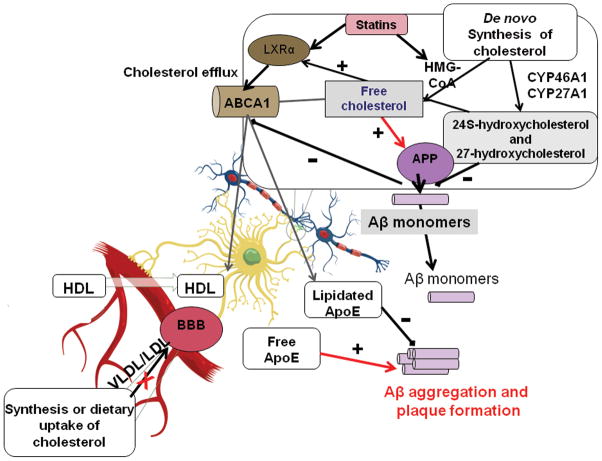
Alzheimer disease (AD) is an age-related neurodegenerative disorder that manifests as a progressive loss of memory and deterioration of higher cognitive functions. Alzheimer disease is characterized by accumulation in the brain of the β-amyloid peptide generated by β- and γ-secretase processing of amyloid precursor protein. Epidemiological studies have linked elevated plasma cholesterol and lipoprotein levels in midlife with AD development. Cholesterol-fed animal models exhibit neuropathologic features of AD including accumulation of β-amyloid peptide. Specific isoforms of the cholesterol transporter apolipoprotein E are associated with susceptibility to AD. Although multiple lines of evidence indicate a role for cholesterol in AD, the exact impact and mechanisms involved remain largely unknown. This review summarizes the current state of our knowledge of the influence of cholesterol and lipid pathways in AD pathogenesis in vitro and in vivo.
Figures
References
-
- Blennow K, de Leon MJ, Zetterberg H. Alzheimer’s disease. Lancet. 2006;368:387–403. - PubMed
-
- Braak H, Braak E. Neuropathological stageing of Alzheimer-related changes. Acta Neuropathol. 1991;82:239–259. - PubMed
-
- Auld DS, Kornecook TJ, Bastianetto S, et al. Alzheimer’s disease and the basal forebrain cholinergic system: relations to beta-amyloid peptides, cognition, and treatment strategies. Prog Neurobiol. 2002;68:209–245. - PubMed
-
- Alzheimer’s Association. Alzheimer’s disease facts and figures. Alzheimers Dement. 2011;7(2):208–244. - PubMed
-
- Canepa E, Borghi R, Vina J, et al. Cholesterol and amyloid-β: evidence for a cross-talk between astrocytes and neuronal cells. J Alzheimer’s Dis. 2011;25(4):645–653. - PubMed
Publication types
MeSH terms
Substances
Grants and funding
LinkOut - more resources
Full Text Sources
Medical
