A randomized controlled trial to determine the effect of spinal stabilization exercise intervention based on pain level and standing balance differences in patients with low back pain
- PMID: 22367128
- PMCID: PMC3560750
- DOI: 10.12659/msm.882522
A randomized controlled trial to determine the effect of spinal stabilization exercise intervention based on pain level and standing balance differences in patients with low back pain
Abstract
Background: A number of studies have evaluated exercise interventions compared with other treatment strategies for subjects with recurrent low back pain (LBP); however, subject pain level and balance were not carefully considered. The purpose of this study was to investigate the effectiveness of spinal stabilization exercises (SSE) for managing pain and increasing balance strategy changes following unexpected perturbations in patients diagnosed with recurrent LBP.
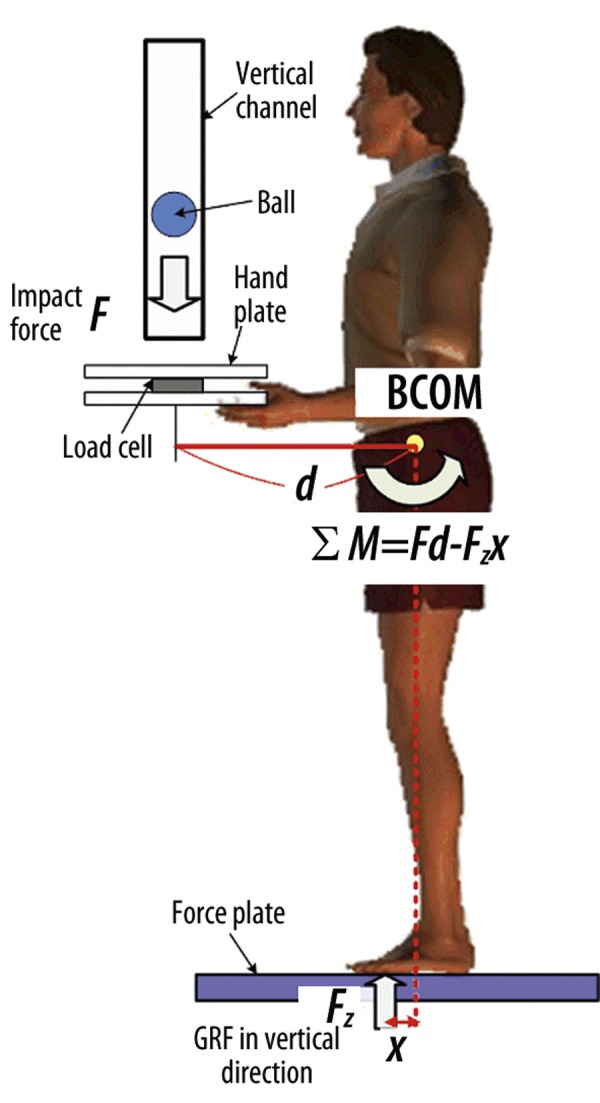
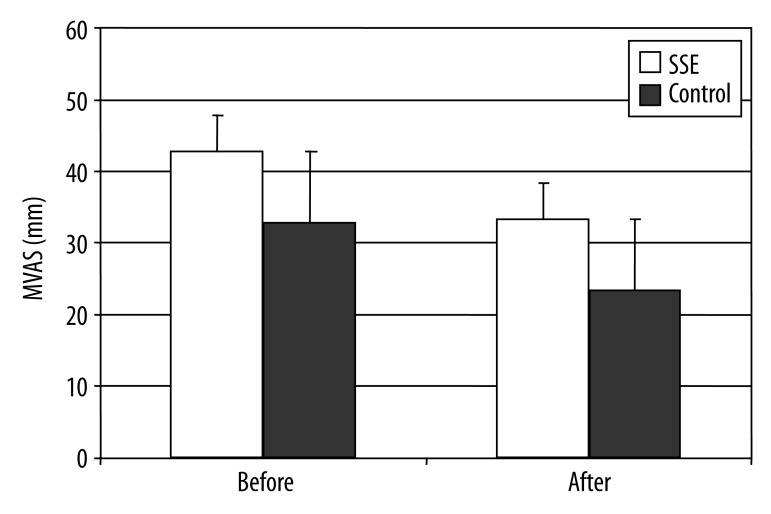
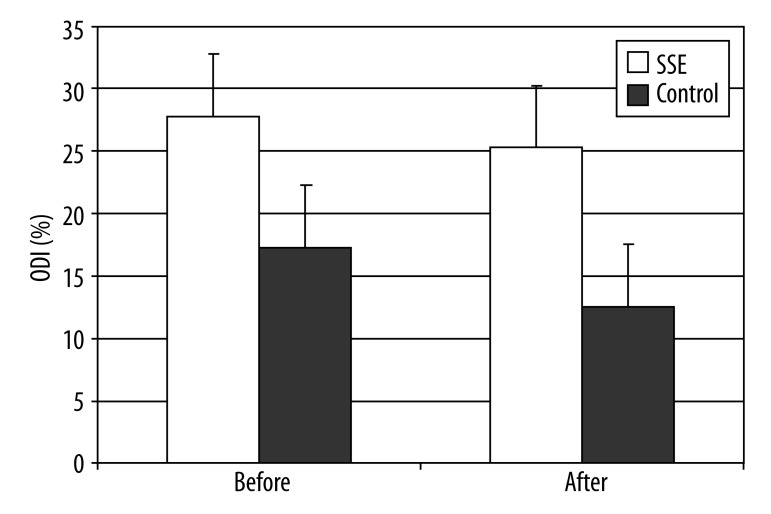
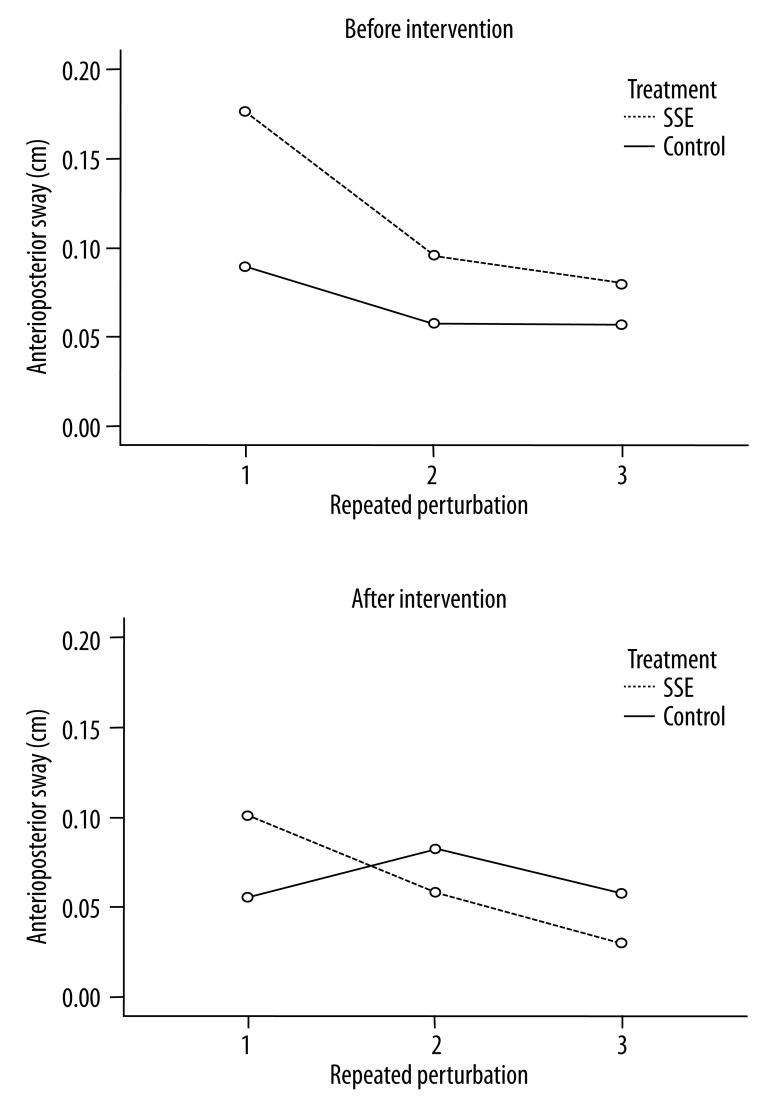
Material/methods: Twenty-one age- and gender-matched patients participated in a supervised SSE or control exercise program 5 times a week over a 4-week period. The Million Visual Analogue Scale (MVAS) and Oswestry Disability Index (ODI) were used to measure each patient's level of pain and disability. Balance measurements were derived from recordings of the anterior-posterior (A/P) and medio-lateral (M/L) center of pressure (COP) displacements during 3 consecutive, unexpected random perturbations.
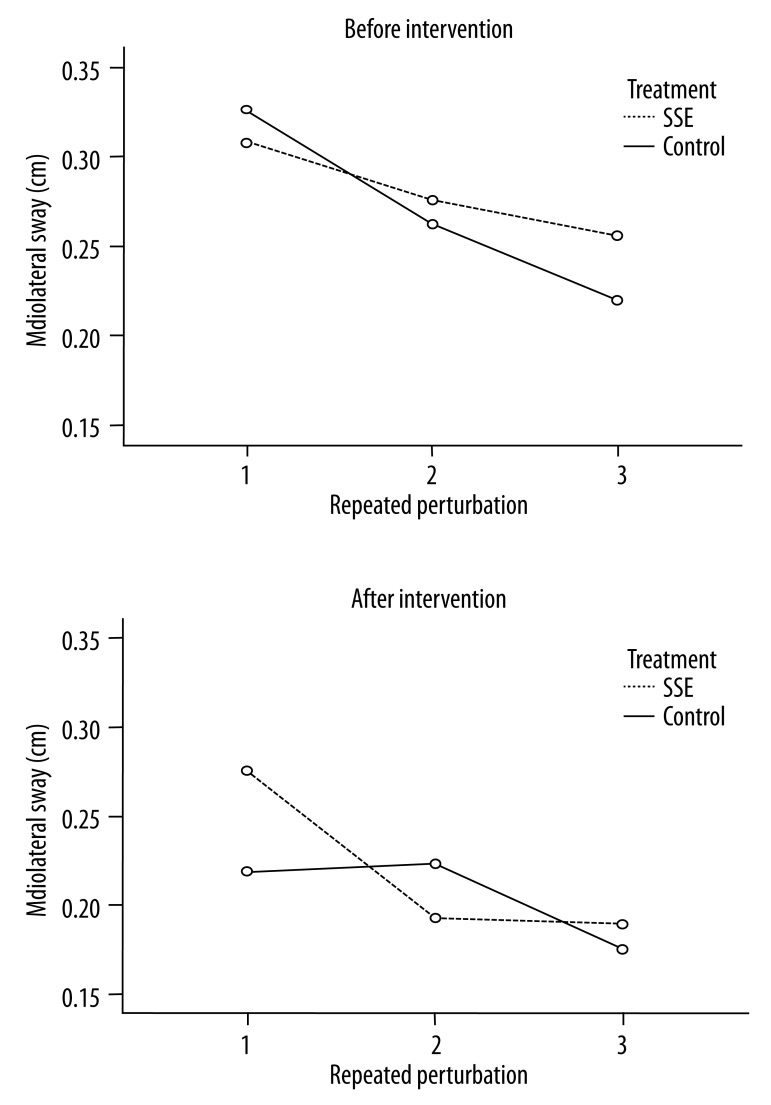
Results: The level of reported pain and disability significantly decreased following treatment for both groups. Although the M/L sway was not significantly different in either group (p=0.86), there was a significant difference between group and measurement time during A/P sway (p=0.04). The A/P displacement of the SSE group significantly decreased compared with the control group. The decreased A/P displacement can be linked to the SSE intervention, which helps prevent further injury by limiting an individual's response rate to external perturbations.
Conclusions: Clinicians might consider SSE for LBP patients as a possible rehabilitation strategy to reduce A/P displacement.
Figures
References
-
- van Tulder MW, Ostelo R, Vlaeyen JW, et al. Behavioral treatment for chronic low back pain: a systematic review within the framework of the Cochrane Back Review Group. Spine. 2001;26:270–81. - PubMed
-
- Abenhaim L, Rossignol M, Valat JP, et al. The role of activity in the therapeutic management of back pain. Report of the International Paris Task Force on Back Pain. Spine (Phila Pa 1976) 2000;25:1S–33S. - PubMed
-
- Sung PS. Multifidi muscles median frequency before and after spinal stabilization exercises. Arch Phys Med Rehabil. 2003;84:1313–18. - PubMed
-
- Borkan JM, Cherkin DC. An agenda for primary care research on low back pain. Spine. 1996;21:2880–84. - PubMed
-
- Lee TR, Kim YH, Sung PS. Spectral and entropy changes for back muscle fatigability following spinal stabilization exercises. J Rehabil Res Dev. 2010;47:133–42. - PubMed
Publication types
MeSH terms
LinkOut - more resources
Full Text Sources
Miscellaneous