


Patent ductus arteriosus device embolization
Affiliations
- PMID: 22368567
- PMCID: PMC3232595
Item in Clipboard
Patent ductus arteriosus device embolization
Images Paediatr Cardiol.
2011 Jan.
Abstract
Nonsurgical closure of patent ductus arteriosus (PDA) using a duct occluder placed percutaneously is currently the first line of therapy and the success rate is quite high. Several devices are currently available. An eight year child underwent device closure of the ductus. However after deployment of the device it, became dislodged into the left pulmonary artery. Several attempts at catheter retrieval failed. The child underwent successful surgical removal of the device without cardiopulmonary bypass.
Keywords: Heart defects; congenital; patent ductus.
Figures
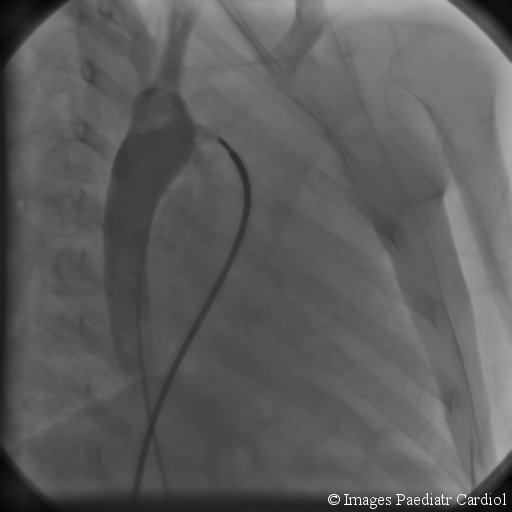
Angiogram in lateral plane showing a small residual left to right shunt with PDA device in place before unscrewing of the stylet
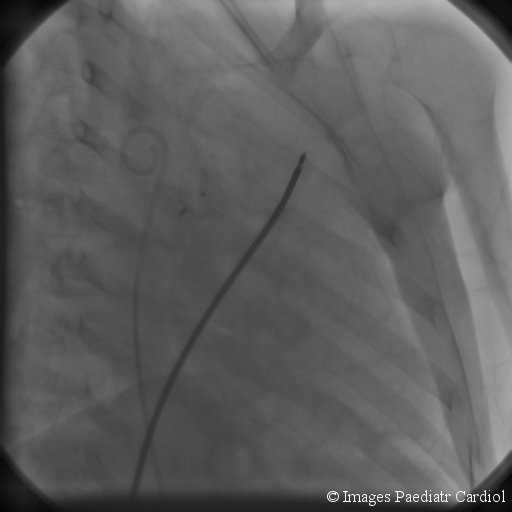
Cine image in lateral plane showing device embolized into left pulmonary artery soon after its release from stylet.

Showing the PDA device being retrieved from left pulmonary artery via left thoracotomy without cardiopulmonary bypass.
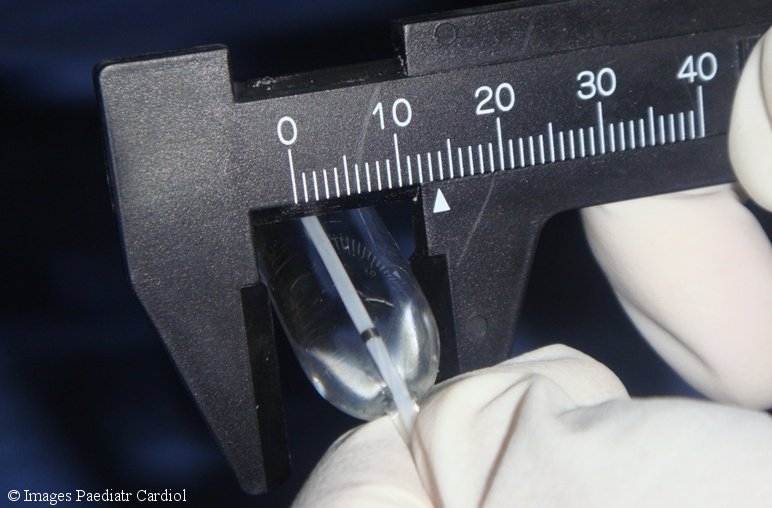
Showing measurement of diameter of inflated Tyshak Balloon by a caliper after inflating it with fixed quantity of contrast.
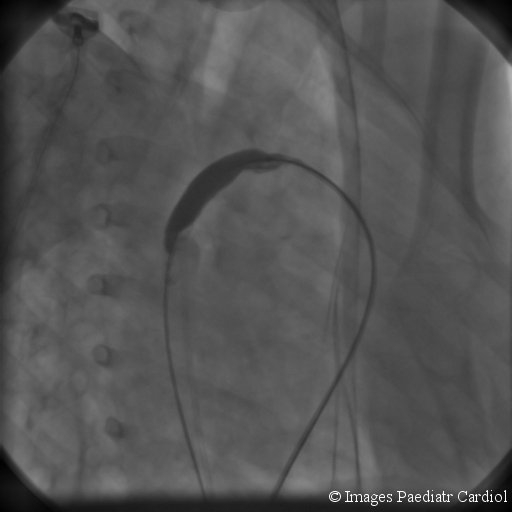
Angiogram in lateral plane showing an inflated Tyshak balloon across the PDA making an impression of the ductus.
References
-
- Faella HJ, Hijazi ZM. Closure of the patent ductus arteriosus with the amplatzer PDA device: immediate results of the international clinical trial. Catheter Cardiovasc Interv. 2000;51:50–4. - PubMed
-
- Vavuranakis M, Tzannos KA, Thanopoulos BD, Vlasis K, Stefanadis C. Severe hemolysis complicating transcatheter occlusion of a patent ductus arteriosus: the importance of elimination of residual flow. Hellenic J Cardiol. 2007;48:373–6. - PubMed
-
- Zhu W, Cao QL, Rhodes J, Hijazi ZM. Measurement of atrial septal defect size: a comparative study between three-dimensional transesophageal echocardiography and the standard balloon sizing methods. Pediatr Cardiol. 2000;21:465–9. - PubMed
LinkOut - more resources
Full Text Sources