The frequency and magnitude of growth failure in a group of HIV-infected children in Cameroon
- PMID: 22368758
- PMCID: PMC3283016
The frequency and magnitude of growth failure in a group of HIV-infected children in Cameroon
Abstract
Background: Growth impairment is a major manifestation of HIV infection in children and has been implicated as a major contributor to both morbidity and mortality. This study the first to be done in this setting, was aimed at comparing the growth of HIV infected children to that of non-infected children in two referral health facilities in Yaoundé, Cameroon.
Methods: A prospective case control study was carried out on 39 HIV infected children in two referral hospitals and followed up for a period of 12 months. Anthropometric measurements were taken and the sociodemographic variables of mothers and infants noted. Thirty nine infected children (mean age 45.3 months ± 41.6 SD) were age and sex matched with 39 non-infected children (mean age 44.4 ± 40.7 months).
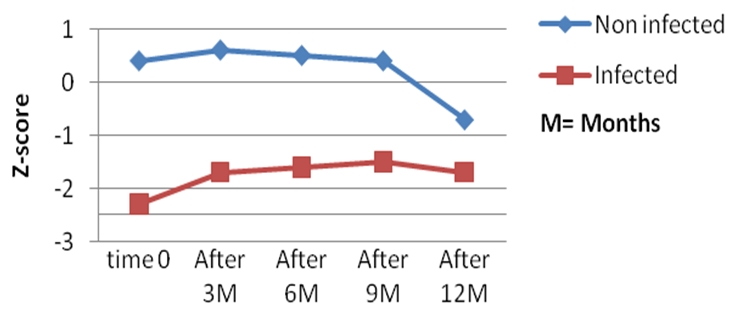
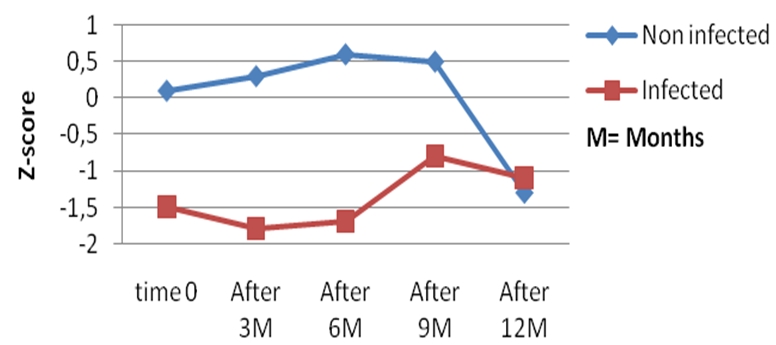
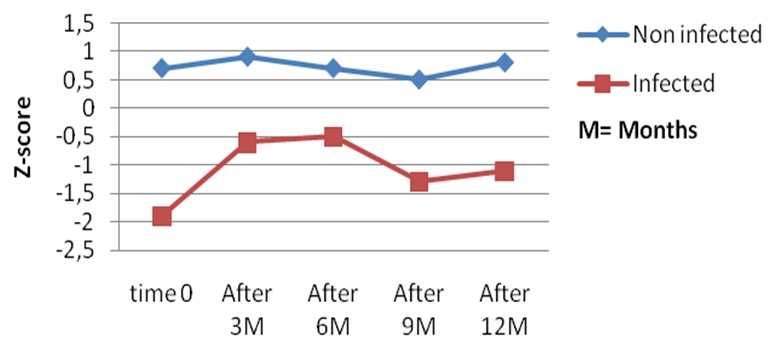
Results: Out of the 39 infected children, 26 (66.7%) had at least one of the three anthropometric indices (weight for height, weight for age, height for age) Z scores less than -2. Throughout follow-up, 20.5% of the infected children were wasted (weight to height Z score < -2) versus none in the control group, 56.4% underweight (weight for age Z score < -2) in the infected versus 2.6% in the control group, and 51.3% stunted (height for age Z score < -2) in contrast to 5.1% in the control group.
Conclusion: This study demonstrated that wasting; underweight and stunting are common findings in HIV- infected children, thus stressing the importance of anthropometry in the routine care of these children.
Keywords: Anthropometry; Cameroon; HIV infected children; growth.
Figures
References
-
- Arpadi SM. Growth failure in children with HIV infection. J Acquir Immune Defic Syndr. 2000 Oct 1;25(Suppl 1):37–42. - PubMed
-
- Moye J, Jr, Rich KC, Kalish LA, Sheon AR, Diaz C, Cooper ER, Pitt J, Handelsman E. Natural history of somatic growth in infants born to women infected by human immunodeficiency virus. Women and Infants Transmission Study Group. J Pediatr. 1996 Jan;128(1):58–69. - PubMed
-
- Lepage P, Msellati P, Hitimana DG, Bazubagira A, Van Goethem C, Simonon A, Karita E, Dequae-Merchadou L, Van de Perre P, Dabis F. Growth of human immunodeficiency type-1-infected and uninfected children: a prospective cohort study in Kigali, Rwanda, 1993 to 1993. Pediatr Infect Dis J. 1996 Jun;15(6):479–85. - PubMed
-
- Henderson RA, Miotti PG, Saavedra JM, Dallabetta G, Chiphangwi J, Liomba G, Taha TE, Yolken RH. Longitudinal growth during the first 2 years of life in children born to HIV-infected mothers in Malawi, Africa. Pediatr AIDS HIV Infect. 1996 Apr;7(2):91–7. - PubMed
-
- Bailey RC, Kamenga MC, Nsuami MJ, Nieburg P, St Louis ME. Growth of children according to maternal and child HIV, immunological and disease characteristics: a prospective cohort study in Kinshasa, Democratic Republic of Congo. Int J Epidemiol. 1999;28:532–40. - PubMed
MeSH terms
LinkOut - more resources
Full Text Sources
Medical