


G protein-coupled adenosine (P1) and P2Y receptors: ligand design and receptor interactions
- PMID: 22371149
- PMCID: PMC3360101
- DOI: 10.1007/s11302-012-9294-7
G protein-coupled adenosine (P1) and P2Y receptors: ligand design and receptor interactions
Abstract
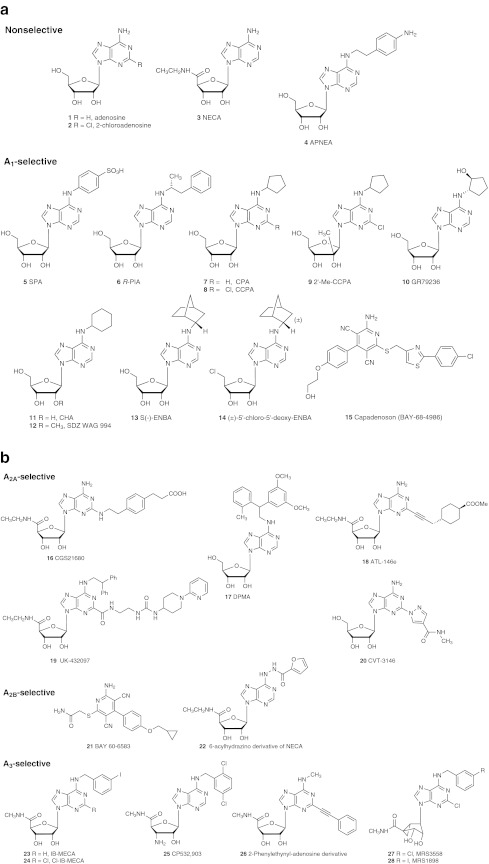
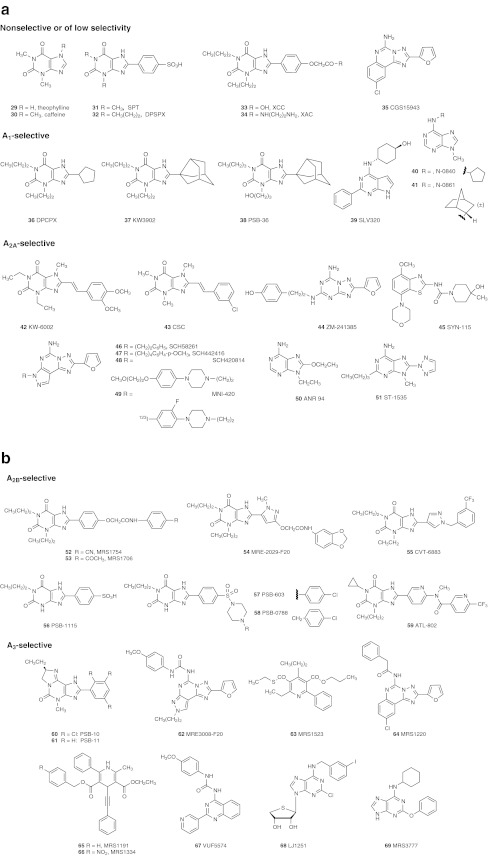
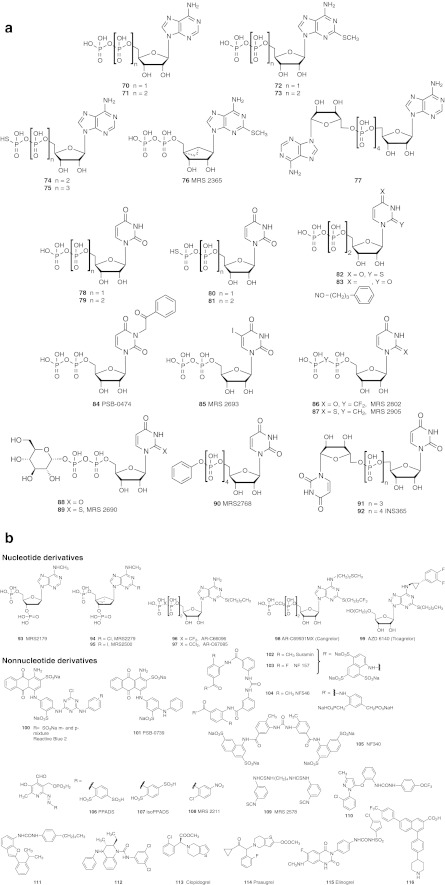
The medicinal chemistry and pharmacology of the four subtypes of adenosine receptors (ARs) and the eight subtypes of P2Y receptors (P2YRs, activated by a range of purine and pyrimidine mono- and dinucleotides) has recently advanced significantly leading to selective ligands. X-ray crystallographic structures of both agonist- and antagonist-bound forms of the A(2A)AR have provided unprecedented three-dimensional detail concerning molecular recognition in the binding site and the conformational changes in receptor activation. It is apparent that this ubiquitous cell signaling system has implications for understanding and treating many diseases. ATP and other nucleotides are readily released from intracellular sources under conditions of injury and organ stress, such as hypoxia, ischemia, or mechanical stress, and through channels and vesicular release. Adenosine may be generated extracellularly or by cellular release. Therefore, depending on pathophysiological factors, in a given tissue, there is often a tonic activation of one or more of the ARs or P2YRs that can be modulated by exogenous agents for a beneficial effect. Thus, this field has provided fertile ground for pharmaceutical development, leading to clinical trials of selective receptor ligands as imaging agents or for conditions including cardiac arrhythmias, ischemia/reperfusion injury, diabetes, pain, thrombosis, Parkinson's disease, rheumatoid arthritis, psoriasis, dry eye disease, pulmonary diseases such as cystic fibrosis, glaucoma, cancer, chronic hepatitis C, and other diseases.
Figures
References
-
- Abbracchio MP, Burnstock G, Boeynaems JM, Barnard EA, Boyer JL, Kennedy C, Fumagalli M, King BF, Gachet C, Jacobson KA, Weisman GA. International Union of Pharmacology LVIII. Update on the P2Y G protein-coupled nucleotide receptors: from molecular mechanisms and pathophysiology to therapy. Pharmacol Rev. 2006;58:281–341. doi: 10.1124/pr.58.3.3. - DOI - PMC - PubMed
Publication types
MeSH terms
Substances
LinkOut - more resources
Full Text Sources
Other Literature Sources
Research Materials
