


SkM1 and Cx32 improve conduction in canine myocardial infarcts yet only SkM1 is antiarrhythmic
- PMID: 22374989
- PMCID: PMC3410408
- DOI: 10.1093/cvr/cvs107
SkM1 and Cx32 improve conduction in canine myocardial infarcts yet only SkM1 is antiarrhythmic
Abstract
Aims: Reentry accounts for most life-threatening arrhythmias, complicating myocardial infarction, and therapies that consistently prevent reentry from occurring are lacking. In this study, we compare antiarrhythmic effects of gene transfer of green fluorescent protein (GFP; sham), the skeletal muscle sodium channel (SkM1), the liver-specific connexin (Cx32), and SkM1/Cx32 in the subacute canine infarct.
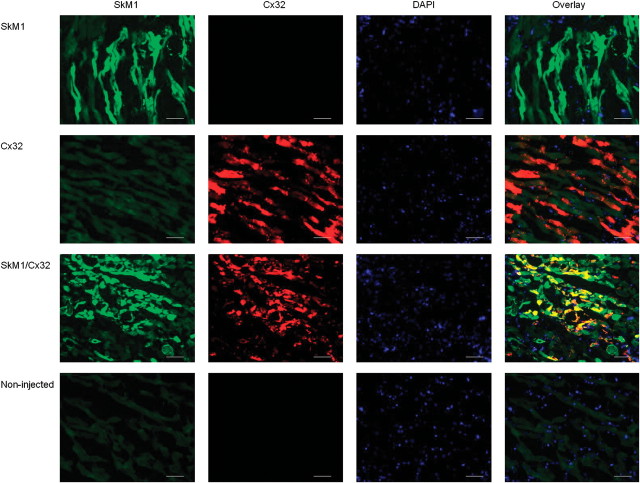
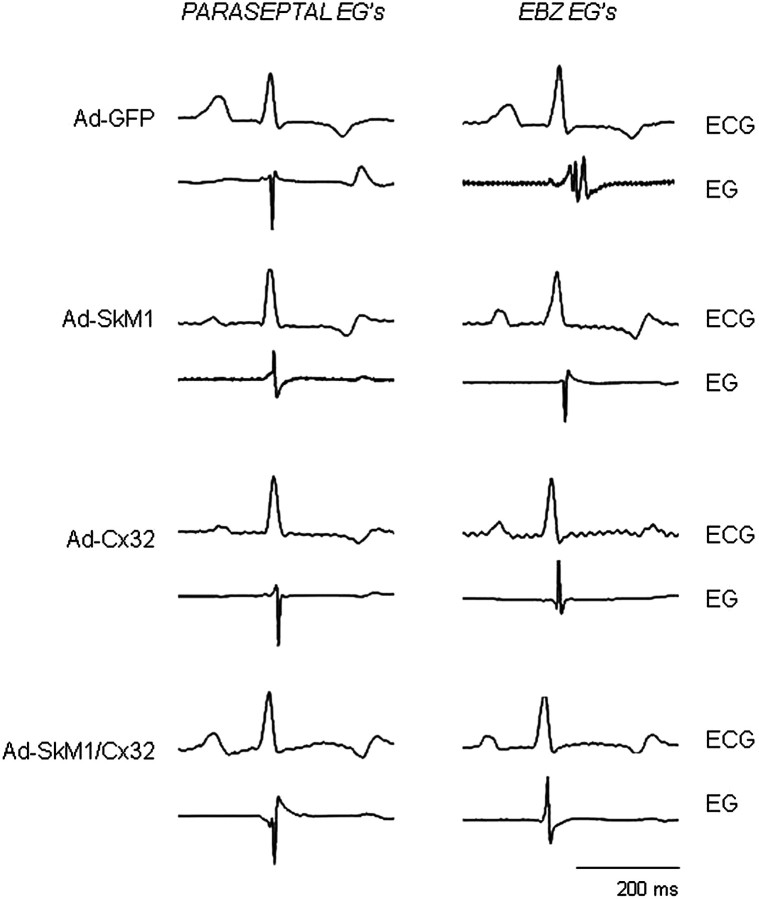
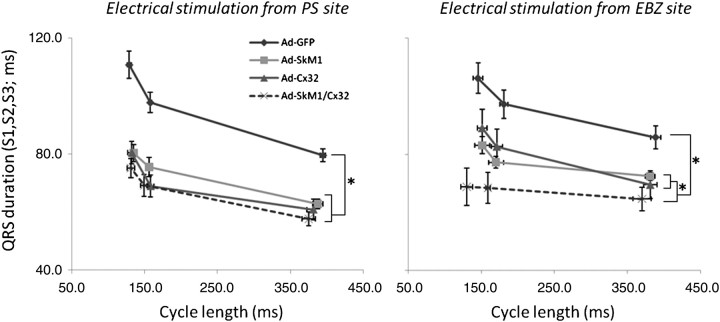
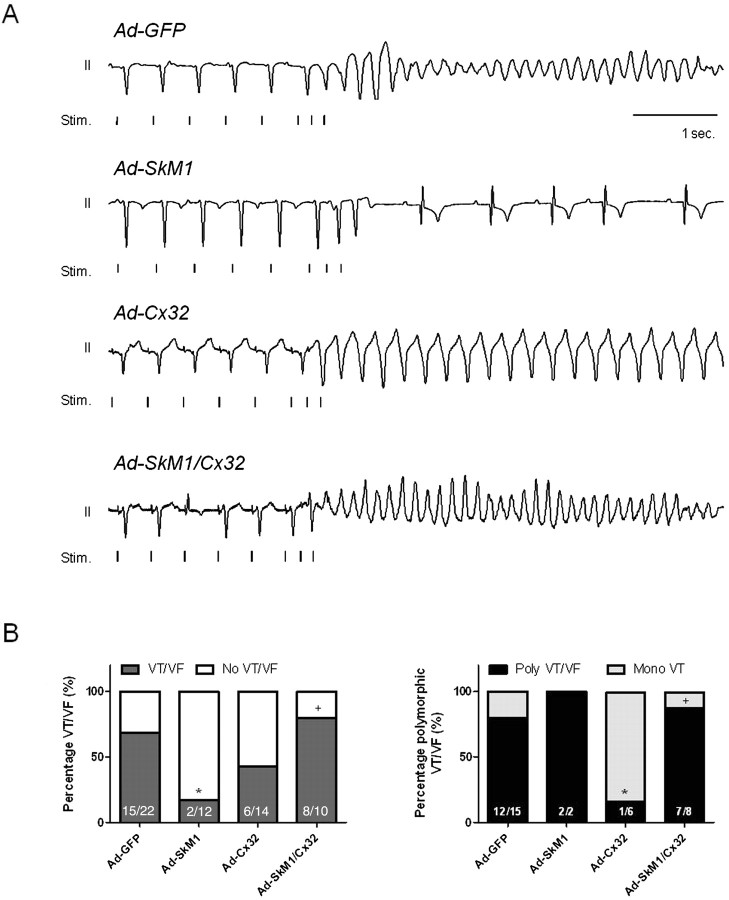
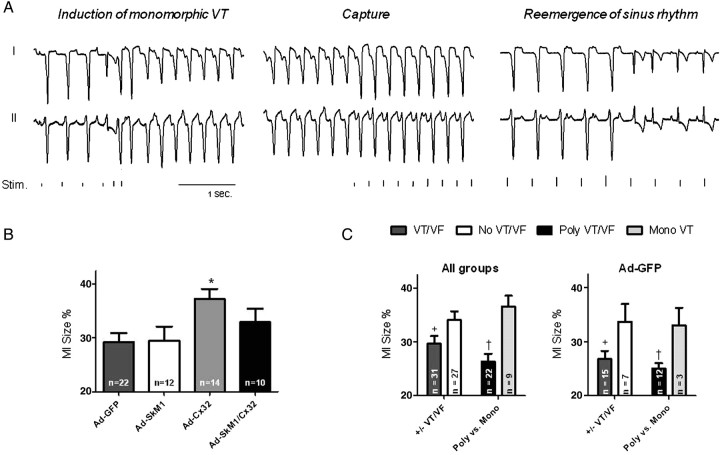
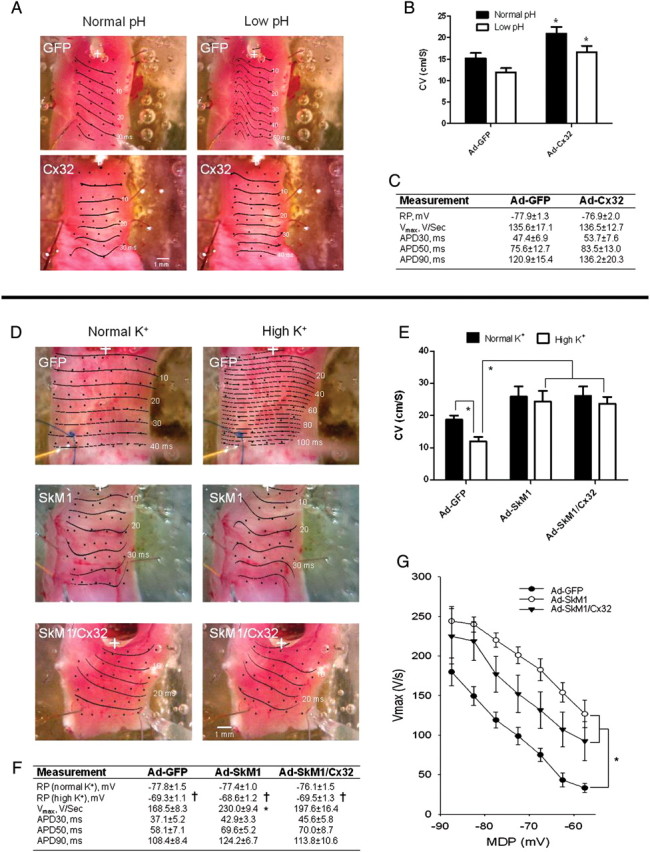
Methods and results: Immediately after ligation of the left anterior descending artery, viral constructs were implanted in the epicardial border zone (EBZ). Five to 7 days later, efficient restoration of impulse propagation (narrow QRS and local electrogram duration) occurred in SkM1, Cx32, and SkM1/Cx32 groups (P< 0.05 vs. GFP). Programmed electrical stimulation from the EBZ induced sustained ventricular tachycardia (VT)/ventricular fibrillation (VF) in 15/22 GFP dogs vs. 2/12 SkM1, 6/14 Cx32, and 8/10 SkM1/Cx32 (P< 0.05 SkM1 vs. GFP). GFP, SkM1, and SkM1/Cx32 had predominantly polymorphic VT/VF, whereas in Cx32 dogs, monomorphic VT predominated (P< 0.05 for Cx32 vs. GFP). Tetrazolium red staining showed significantly larger infarcts in Cx32- vs. GFP-treated animals (P< 0.05).
Conclusion: Whereas SkM1 gene transfer reduces the incidence of inducible VT/VF, Cx32 therapy to improve gap junctional conductance results in larger infarct size, a different VT morphology, and no antiarrhythmic efficacy.
Figures
References
-
- Allessie MA, Boyden PA, Camm AJ, Kleber AG, Lab MJ, Legato MJ, et al. Pathophysiology and prevention of atrial fibrillation. Circulation. 2001;103:769–777. - PubMed
-
- Wit AL, Janse MJ. Experimental models of ventricular tachycardia and fibrillation caused by ischemia and infarction. Circulation. 1992;85:I32–I42. - PubMed
-
- Janse MJ, Wit AL. Electrophysiological mechanisms of ventricular arrhythmias resulting from myocardial ischemia and infarction. Physiol Rev. 1989;69:1049–1169. - PubMed
-
- Hennan JK, Swillo RE, Morgan GA, Keith JC, Jr, Schaub RG, Smith RP, et al. Rotigaptide (zp123) prevents spontaneous ventricular arrhythmias and reduces infarct size during myocardial ischemia/reperfusion injury in open-chest dogs. J Pharmacol Exp Ther. 2006;317:236–243. doi:10.1124/jpet.105.096933. - DOI - PubMed
-
- Macia E, Dolmatova E, Cabo C, Sosinsky AZ, Dun W, Coromilas J, et al. Characterization of gap junction remodeling in epicardial border zone of healing canine infarcts and electrophysiological effects of partial reversal by rotigaptide. Circ Arrhythm Electrophysiol. 2011;4:344–351. doi:10.1161/CIRCEP.110.959312. - DOI - PMC - PubMed
Publication types
MeSH terms
Substances
Grants and funding
LinkOut - more resources
Full Text Sources
Medical
Miscellaneous
