


Effects of pilates training on lumbo-pelvic stability and flexibility
- PMID: 22375213
- PMCID: PMC3289190
- DOI: 10.5812/asjsm.34822
Effects of pilates training on lumbo-pelvic stability and flexibility
Abstract
Purpose: This study was performed to assess and compare the effects of Pilates exercise on flexibility and lumbo-pelvic movement control between the Pilates training and control groups.
Methods: A randomized single-blinded controlled design was utilized in the study. Forty healthy male and female volunteers (mean age 31.65±6.21 years) were randomly divided into Pilates-based training (20 subjects) and the control groups (20 subjects). The Pilates group attended 45-minute training sessions, 2 times per week, for a period of 8 weeks. Flexibility and lumbo-pelvic stability tests were determined as outcome measures using a standard "sit and reach test" and "pressure biofeedback" respectively at 0, 4 and 8 weeks of the study.
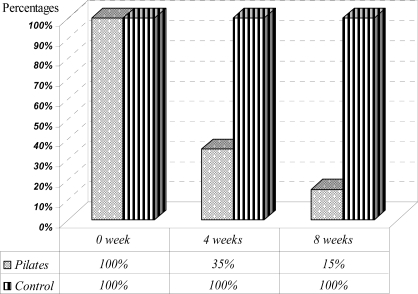
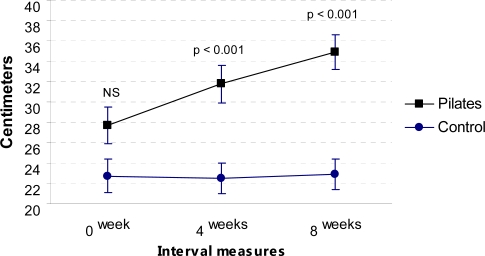
Results: The results showed that the Pilates training group improved flexibility significantly (P<0.001) during time intervals. This effect was also significantly greater than the control group for both 4 weeks and 8 weeks of the training period (P<0.001). There were 65% and 85% of the subjects from Pilates group passing the lumbo-pelvic stability test at 4 and 8 weeks of training periods respectively. No subjects from the control group passed the test at any stages.
Conclusions: Pilates can be used as an adjunctive exercise program to improve flexibility, enhance control-mobility of trunk and pelvic segments. It may also prevent and attenuate the predisposition to axial musculoskeletal injury.
Keywords: Exercise; Flexibility; Lumbo-pelvic stability; Pilates Training; Pilates-Based Exercises.
Figures
References
-
- Panjabi MM. Clinical spinal in stability and low back pain. J Electromyogr Kinesiol. 2003;13:371–9. - PubMed
-
- Harrington L, Davies R. The influence of Pilates training on the ability to contract the Transversus abdominis muscle in asymptomatic individuals. J Body Work Mov Ther. 2005;9:52–7.
-
- Standaert CJ, Weinstein SM, Rumpeltes J. Evidence-informed management of chronic low back pain with lumbar stabilization exercises. Spine J. 2008;8:114–20. - PubMed
-
- Hodges PW. Changes in motor planning of feed-forward postural responses of the trunk muscles in low back pain. Exp Brain Res. 2001;141:261–6. - PubMed
-
- Yoshihara K, Shirai Y, Nakayama Y, Uesaka S. Histochemical changes in the multifidus muscle in patients with lumbar intervertebral disc herniation. Spine. 2001;26:622–6. - PubMed
LinkOut - more resources
Full Text Sources
Medical