


Posterior reversible encephalopathy syndrome (PRES) and CT perfusion changes
- PMID: 22377097
- PMCID: PMC3311605
- DOI: 10.1186/1865-1380-5-12
Posterior reversible encephalopathy syndrome (PRES) and CT perfusion changes
Abstract
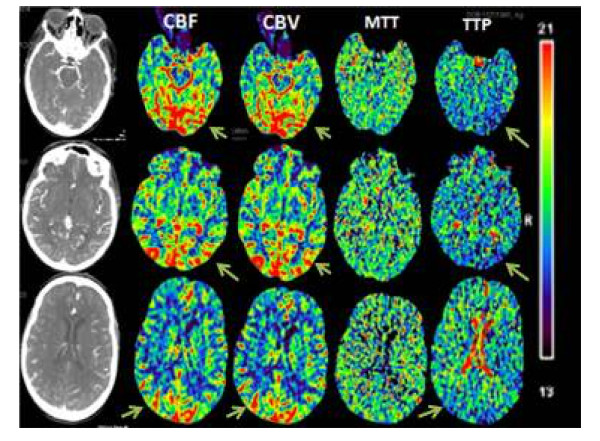
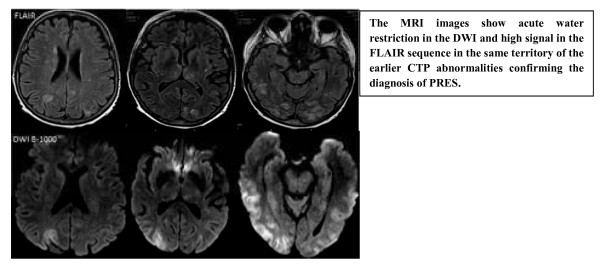
Posterior reversible encephalopathy syndrome (PRES) can present with focal neurologic deficits, mimicking a stroke and can often represent a diagnostic challenge when presenting atypically. A high degree of suspicion is required in the clinical setting in order to yield the diagnosis. Cerebral CT perfusion (CTP) is utilized in many institutions as the first line in acute stroke imaging. CTP has proved to be a very sensitive measure of cerebral blood flow dynamics, most commonly employed to delineate the infarcted tissue from penumbra (at-risk tissue) in ischemic strokes. But abnormal CTP is also seen in stroke mimics such as seizures, hypoglycemia, tumors, migraines and PRES. In this article we describe a case of PRES in an elderly bone marrow transplant recipient who presented with focal neurological deficits concerning for a cerebrovascular accident. CTP played a pivotal role in the diagnosis and initiation of appropriate management. We also briefly discuss the pathophysiology of PRES.
Figures

References
LinkOut - more resources
Full Text Sources
