


Lower extremity kinematics in children with and without flexible flatfoot: a comparative study
- PMID: 22381254
- PMCID: PMC3359242
- DOI: 10.1186/1471-2474-13-31
Lower extremity kinematics in children with and without flexible flatfoot: a comparative study
Abstract
Background: A high percentage of young children present with flatfeet. Although the percentage of those with flatfeet declines with age, about 15% of the population maintains a flat arch. A reduction in longitudinal arch height usually combines with excessive subtalar joint pronation and may be related to other musculoskeletal problems of the lower extremity kinetic chain. The purpose of this study is to describe and compare the lower extremity kinematics between children with normal arches and those with flexible flatfeet, with the intent of providing practical information for decision making when treating children with flexible flatfeet.
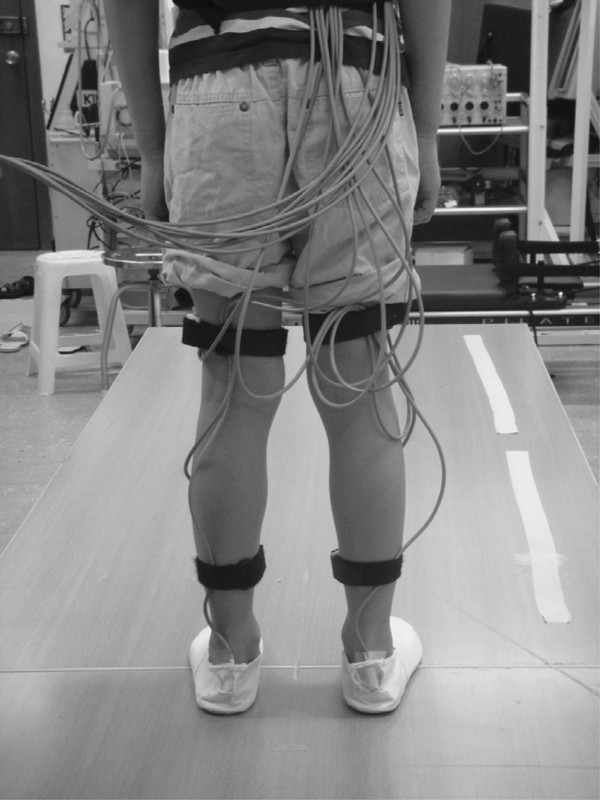
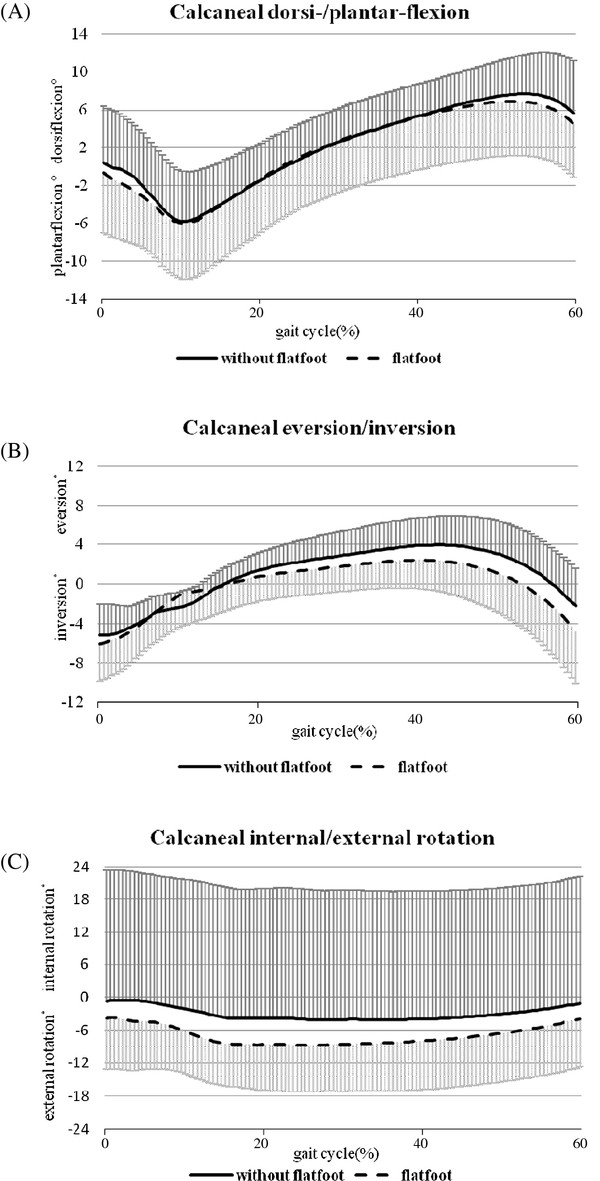
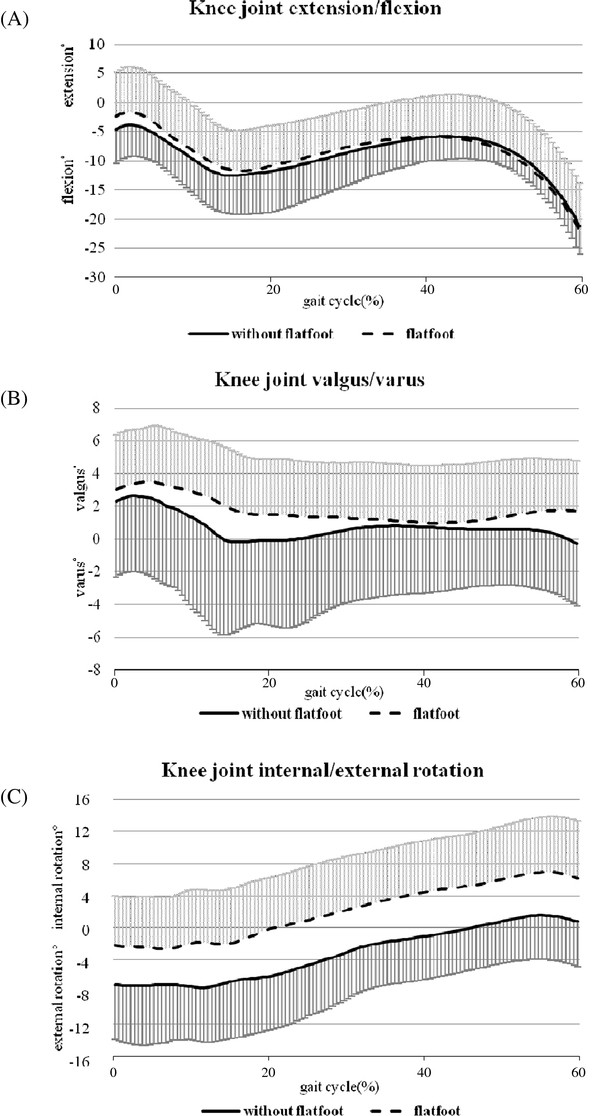
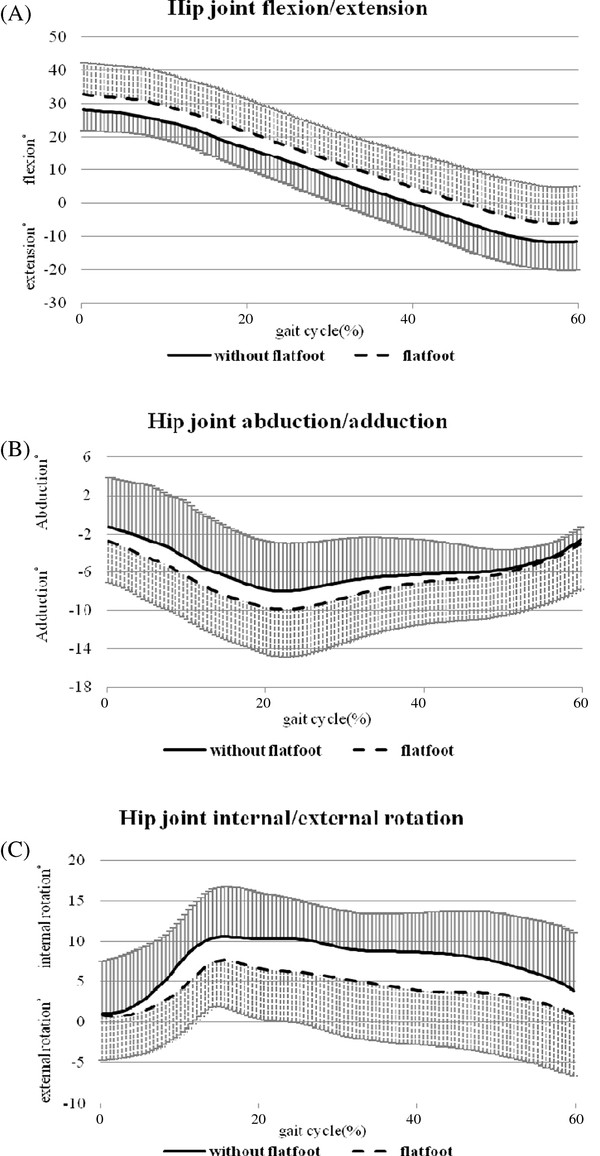
Methods: Twenty children with flexible flatfeet (years age mean (SD), 9.7 (0.9) years) and 10 children with normal arches (yeas age mean (SD), 9.6 (1.2) years) were included. Kinematic data (maximum and minimum angles, and movement range, velocity, and excursion) of the hip, knee and rearfoot were collected during walking using Liberty Electromagnetic Tracking System. Kinematic variables were compared between the normal arches and flexible flatfeet groups using repeated measures mixed effects ANOVA.
Results: Movement patterns at the hip, knee and ankle joints were similar between children with flexible flatfeet and with normal arches. The results of ANOVA showed no significant main effect or interaction in any of the kinematic variables (P ≥ 0.05).
Conclusions: This study identified no kinematic adaptation during walking in children with flexible flatfoot. We suggested that future research should take the influence of the mid-foot and forefoot into consideration when examining lower extremity kinematics in children with flexible flatfoot.
Figures
References
-
- Bordelon RL. Hypermobile flatfoot in children. Comprehension, evaluation, and treatment. Clin Orthop Relat Res. 1983;181:7–14. - PubMed
-
- Lin CJ, Lai KA, Kuan TS, Chou YL. Correlating factors and clinical significance of flexible flatfoot in preschool children. J Pediatr Orthop. 2001;21:378–382. - PubMed
Publication types
MeSH terms
LinkOut - more resources
Full Text Sources
Medical
