


New perspectives on the biology of fragile X syndrome
- PMID: 22382129
- PMCID: PMC3653273
- DOI: 10.1016/j.gde.2012.02.002
New perspectives on the biology of fragile X syndrome
Abstract
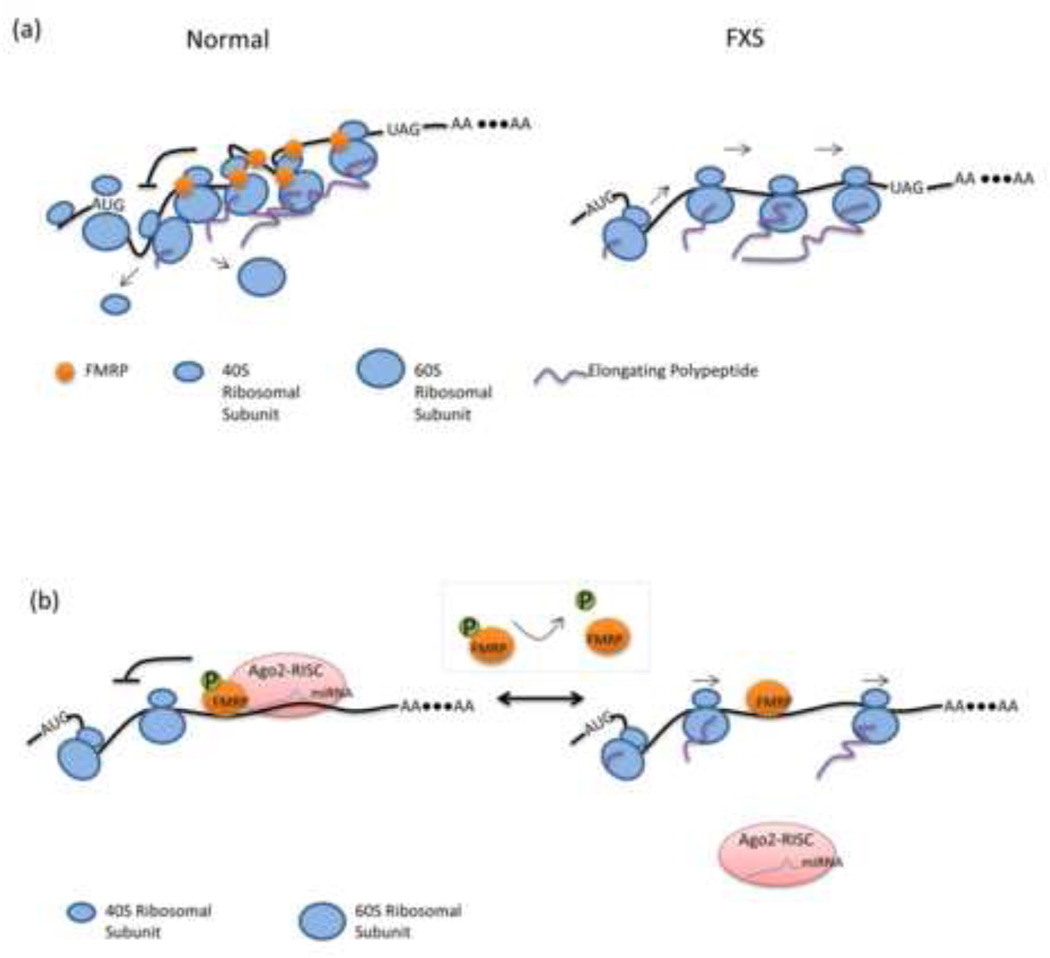
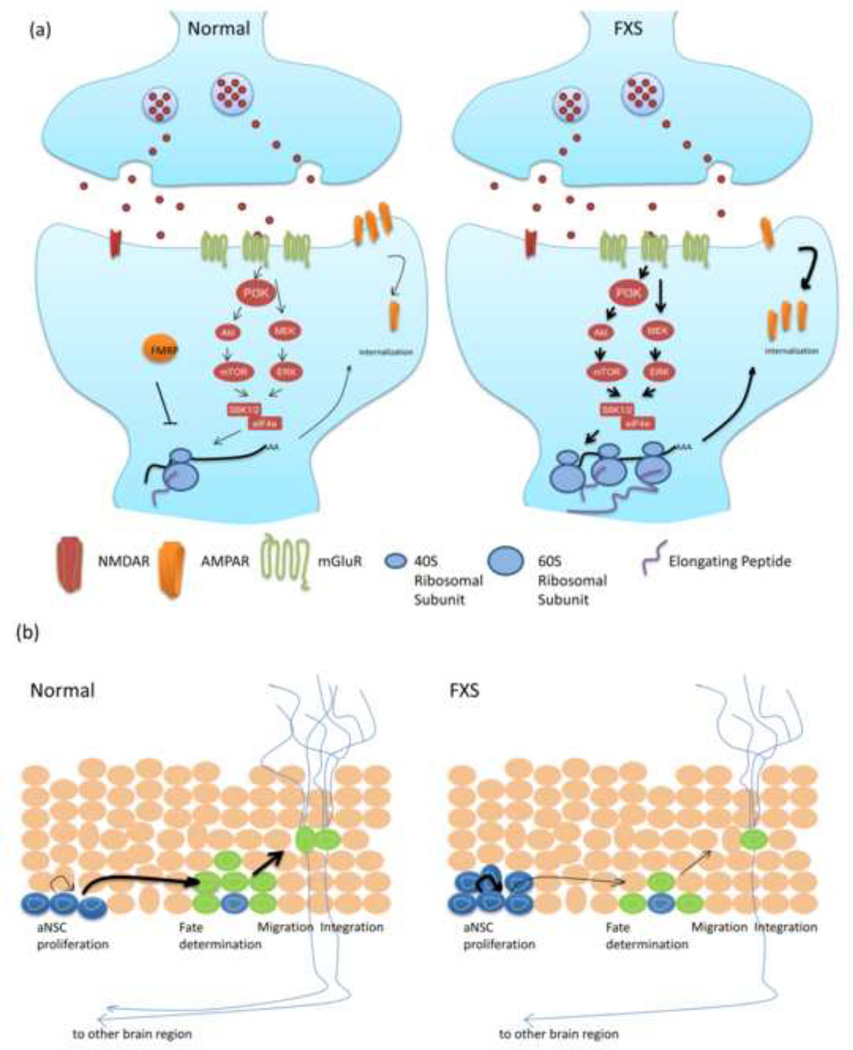
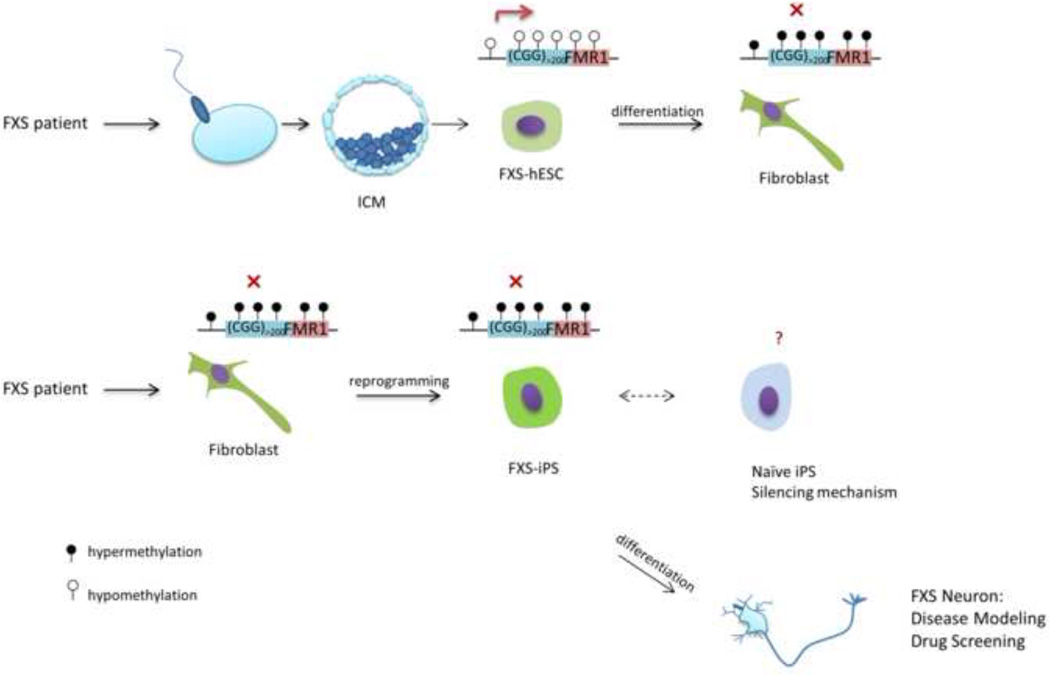
Fragile X syndrome (FXS) is a trinucleotide repeat disorder caused by a CGG repeat expansion in FMR1, and loss of its protein product FMRP. Recent studies have provided increased support for the role of FMRP in translational repression via ribosomal stalling and the microRNA pathway. In neurons, particular focus has been placed on identifying the signaling pathways such as PI3K and mTOR downstream of group 1 metabotropic glutamate receptors (mGluR1/5) that regulate FMRP. New evidence also suggests that loss of FMRP causes presynaptic dysfunction and abnormal adult neurogenesis. In addition, studies on FXS stem cells especially induced pluripotent stem (iPS) cells and new sequencing efforts hold out promise for deeper understanding of the silencing process and mutation spectrum of FMR1.
Copyright © 2012 Elsevier Ltd. All rights reserved.
Figures
References
-
- Boyle L, Kaufmann WE. The behavioral phenotype of FMR1 mutations. Am J Med Genet C Semin Med Genet. 2010;154C:469–476. - PubMed
-
- Penagarikano O, Mulle JG, Warren ST. The pathophysiology of fragile x syndrome. Annu Rev Genomics Hum Genet. 2007;8:109–129. - PubMed
-
- Ceman S, O'Donnell WT, Reed M, Patton S, Pohl J, Warren ST. Phosphorylation influences the translation state of FMRP-associated polyribosomes. Hum Mol Genet. 2003;12:3295–3305. - PubMed
Publication types
MeSH terms
Substances
Grants and funding
LinkOut - more resources
Full Text Sources
Other Literature Sources
Medical
Miscellaneous
