. 2012;7(2):e31546.
doi: 10.1371/journal.pone.0031546. Epub 2012 Feb 27.

Cognitive control reflects context monitoring, not motoric stopping, in response inhibition

Affiliations

Cognitive control reflects context monitoring, not motoric stopping, in response inhibition

Christopher H Chatham et al. PLoS One. 2012.

Abstract

The inhibition of unwanted behaviors is considered an effortful and controlled ability. However, inhibition also requires the detection of contexts indicating that old behaviors may be inappropriate--in other words, inhibition requires the ability to monitor context in the service of goals, which we refer to as context-monitoring. Using behavioral, neuroimaging, electrophysiological and computational approaches, we tested whether motoric stopping per se is the cognitively-controlled process supporting response inhibition, or whether context-monitoring may fill this role. Our results demonstrate that inhibition does not require control mechanisms beyond those involved in context-monitoring, and that such control mechanisms are the same regardless of stopping demands. These results challenge dominant accounts of inhibitory control, which posit that motoric stopping is the cognitively-controlled process of response inhibition, and clarify emerging debates on the frontal substrates of response inhibition by replacing the centrality of controlled mechanisms for motoric stopping with context-monitoring.


Conflict of interest statement

Competing Interests: The authors have declared that no competing interests exist.

Figures

Figure 1
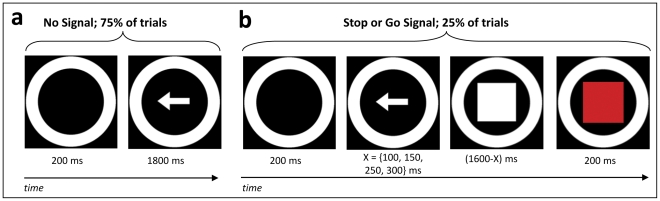
Figure 1. An illustration of the task design.
Identical stimuli and trial structure were used across tasks in three separate experiments. In both the Stop and the Double Go tasks, most trials are “No Signal” trials where only a 2AFC decision is required (A). However, the tasks differ on “Signal” trials (B) where an additional stimulus, a white box, is presented with a variable inter-stimulus interval following the onset of the 2AFC stimulus. On Double GoSignal trials, this additional stimulus indicates that the appropriate 2AFC button press be repeated. On StopSignal trials, this stimulus indicates that the 2AFC button press must be stopped. Thus, although only the Stop Task requires motoric stopping, both tasks share demands on context-monitoring.
Figure 2
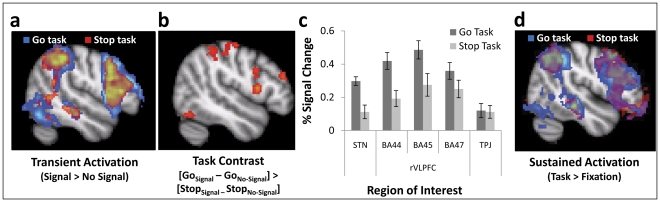
Figure 2. The Stop and Go tasks recruit overlapping neural substrates as revealed in both transient and sustained hemodynamics.
Hybrid fMRI analyses revealed overlapping neural activity in the Stop and (Double) Go Tasks (A), with significantly more rVLPFC activity in the Go Task (B). ROI analyses for the contrast of Signal vs. No-Signal trials (C) revealed increased activity in the Go Task throughout a putatively stopping-specific network; this pattern did not generalize to regions with more general attentional functions (e.g., TPJ). Sustained rVLPFC activity was also observed across all trials within each task (D).
Figure 3
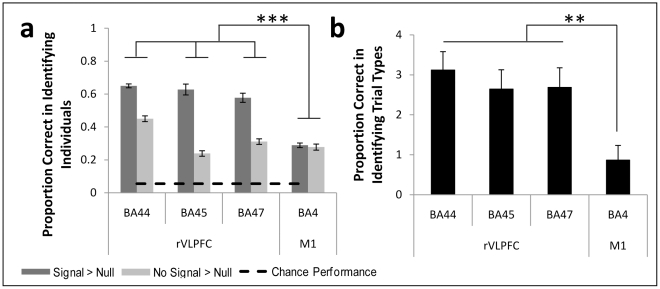
Figure 3. Multivariate pattern analysis reveals similar representations in the rVLPFC despite differing inhibitory demands.
(A) rVLPFC was recruited in subject-specific but consistent ways regardless of stopping demands: individual differences in (Double) Go task hemodynamic activity also differentiated subjects in the Stop task. (B). rVLPFC showed trial-type-specific recruitment that was consistent across tasks, contradicting stopping-specific accounts of rVLPFC function. ** p<.0001 *** p<.005.
Figure 4
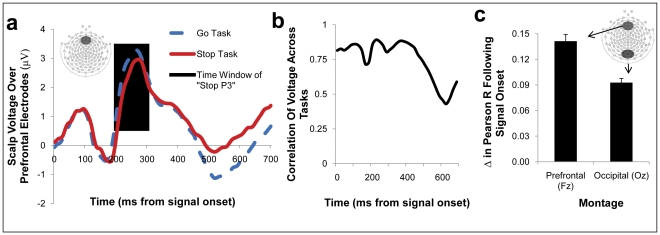
Figure 4. Prefrontal event-related potentials do not strongly distinguish the tasks.
A prefrontal positivity peaking around 300 ms, known as the “Stop P3,” has been previously associated with stopping, but this component (darkened region of A) was significantly enhanced in the (Double) Go task. Individual differences in voltage were also highly correlated across tasks, indicating substantial overlap in the underlying cortical processes (B). Moreover, prefrontal correlations between the scalp voltage recorded across tasks were disproportionately increased following the presentation of the signal, relative to the increase in occipital correlations observed at the same time (C). This difference indicates increased cross-task similarity in prefrontal processing specifically at signal onset.
Figure 5
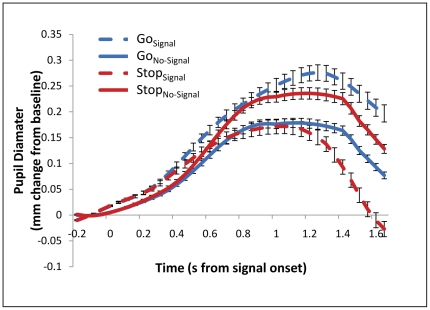
Figure 5. Patterns of mental effort assessed via pupillometry indicate that effort matches demands on context-monitoring, not stopping, and is modulated by the relevance of the infrequent stimulus to the planned response.
In particular, stopping a response (StopSignal trials) was associated with more mental effort was required by monitoring for the appearance of stimuli that would demand stopping (StopNo-Signal trials) than by stopping itself (StopSignal trials) or by monitoring for the appearance of stimuli that would demand an additional act of going (GoNo-Signal trials).
Figure 6
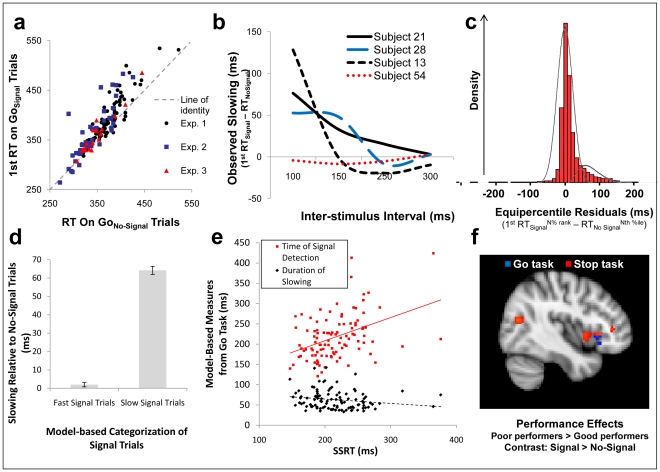
Figure 6. Mixture model analyses separate slowed from unslowed trials in the Go task, and demonstrate this slowing is not the source of the commonality across tasks.
Response slowing was observed in the Double Go task (A), perhaps suggesting that stopping is not associated with differential mental effort or prefrontal activity because it is an automatic consequence of detecting an infrequent stimulus. Critically, this slowing was dependent on ISI; indeed, large individual differences were observed in the shortest ISI to yield zero slowing (B contains data from four representative subjects). A subtraction of reaction times on (Double) GoNo-Signal trials from those with a corresponding percent rank on (Double) GoSignal trials reveals a pronounced positive skew to these equipercentile residuals (C), indicating that some proportion of reaction times on GoSignal trials are disproportionately delayed. Trials undergoing this slowing were identified as those more likely to come from a distribution not centered on zero, as determined through a two-component mixture model (see overlaid lines on histogram in C). This procedure adequately separated the slowed and unslowed distributions, as revealed by zero significant difference between GoSignal trials categorized as unslowed and their corresponding reaction times in the GoNo-Signal distribution, but a large difference between GoSignal trials categorized as slowed and their corresponding reaction times in the GoNo-Signal distribution (D). From this we estimated two individual differences: how long subjects are slowed (duration of slowing; DoS) and the time at which signals are detected (time of signal detection; TOSD). Only TOSD positively correlated with SSRT, whereas DoS showed a slight negative correlation, indicating that the slowing experienced by subjects in the Double Go task cannot be the source of shared variance between the Stop and Double Go tasks (E). Brain-behavior correlations confirmed this conclusion: SSRT and TOSD, but not DoS, overlapped in their correlations with neural activity only in the rVLPFC (F).

References

    1. Aron AR. The neural basis of inhibition in cognitive control. Neuroscientist. 2007;13:214–28. - PubMed
    1. Aron AR, Poldrack RA. The cognitive neuroscience of response inhibition: Relevance for genetic research in ADHD. Biological Psychiatry, 2005;57:1285–92. - PubMed
    1. Friedman NP, Miyake A, Young SE, Defries JC, Corley RP, et al. Individual differences in executive functions are almost entirely genetic in origin. Journal of Experimental Psychology: General. 2008;137:201–25. - PMC - PubMed
    1. MacLeod CM, Dodd MD, Sheard ED, Wilson DE, Bibi U. In Opposition to Inhibition. In: Ross BH, editor. The Psychology of Learning and Motivation. San Diego: Academic Press; 2003. pp. 163–214.
    1. Ferrier D. The functions of the brain. London: Elder; 1876. 353

Publication types