


Structure based design and synthesis of peptide inhibitor of human LOX-12: in vitro and in vivo analysis of a novel therapeutic agent for breast cancer
- PMID: 22384268
- PMCID: PMC3285689
- DOI: 10.1371/journal.pone.0032521
Structure based design and synthesis of peptide inhibitor of human LOX-12: in vitro and in vivo analysis of a novel therapeutic agent for breast cancer
Abstract
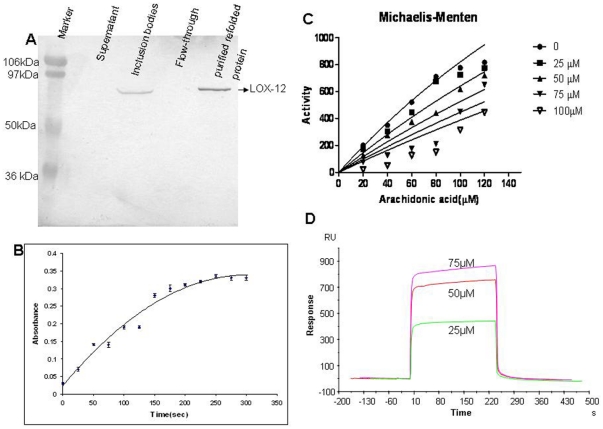
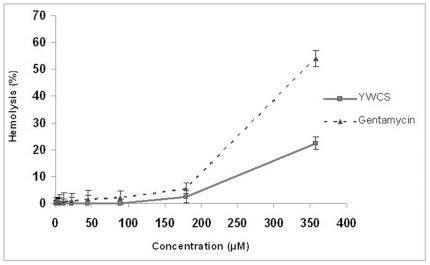
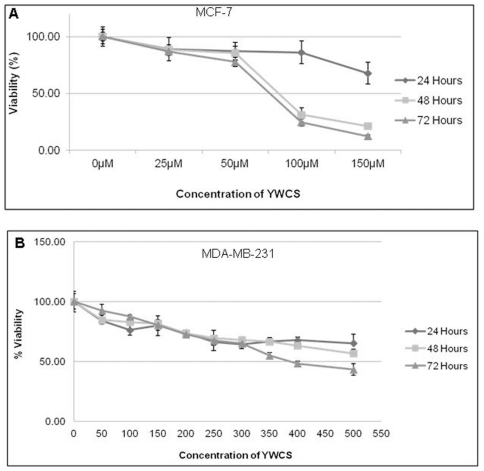
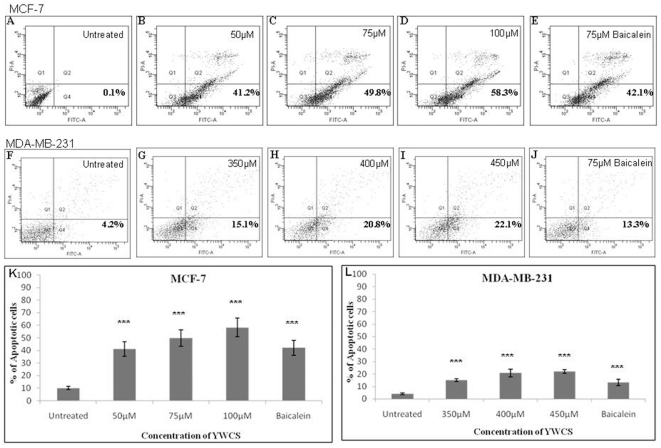
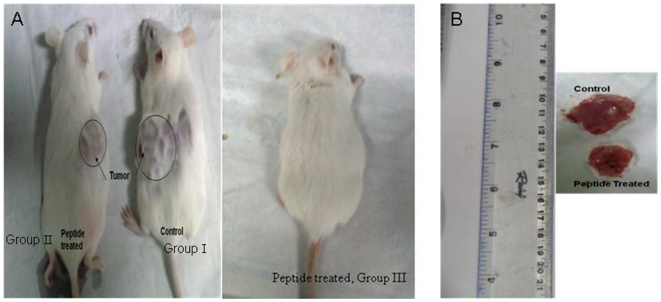
Human breast cancer cell proliferation involves a complex interaction between growth factors, steroid hormones and peptide hormones. The interaction of growth factors, such as epidermal growth factor (EGF), with their receptors on breast cancer cells can lead to the hydrolysis of phospholipids and release of fatty acid such as arachidonic acid, which can be further metabolized by cyclooxygenase (COX) and lipoxygenase (LOX) pathways to produce prostaglandins. The high concentration of prostaglandins has been associated with chronic inflammatory diseases and several types of human cancers. This is due to the over expression COX, LOX and other inflammatory enzymes. Ten peptides were designed and synthesized by solid phase peptide synthesis and analyzed in vitro for enzyme inhibition. Out of these peptides, YWCS had shown significant inhibitory effects. The dissociation constant (K(D)) was determined by surface plasmon resonance (SPR) analysis and was found to be 3.39 × 10(-8) M and 8.6 × 10(-8) M for YWCS and baicalein (positive control), respectively. The kinetic constant Ki was 72.45 × 10(-7) M as determined by kinetic assay. The peptide significantly reduced the cell viability of estrogen positive MCF-7 and estrogen negative MDA-MB-231 cell line with the half maximal concentration (IC(50)) of 75 µM and 400 µM, respectively. The peptide also induced 49.8% and 20.8% apoptosis in breast cancer cells MCF-7 and MDA-MB-231, respectively. The YWCS was also found to be least hemolytic at a concentration of 358 µM. In vivo studies had shown that the peptide significantly inhibits tumor growth in mice (p<0.017). This peptide can be used as a lead compound and complement for ongoing efforts to develop differentiation therapies for breast cancer.
Conflict of interest statement
Figures
References
-
- Nakano H, Inoue T, Kawasaki N, Miyataka H, Matsumoto H, et al. Synthesis and biological activities of novel antiallergic agents with 5-lipoxygenase inhibiting action. Bioorg Med Chem. 2000;8(2):373–380. - PubMed
-
- Harats D, Shaish A, George J, Mulkins M, Kurihara H, et al. Overexpression of 15-lipoxygenase in vascular endothelium accelerates early atherosclerosis in LDL receptor-deficient mice. Arterioscler Thromb Vasc Biol. 2000;20(9):2100–2105. - PubMed
-
- Steele VE, Holmes CA, Hawk ET, Kopelovich L, Lubet RA, et al. Lipoxygenase inhibitors as potential cancer chemopreventives. Cancer Epidemiol Biomarkers Prev. 1999;8(5):467–483. - PubMed
-
- Avis I, Hong SH, Martinez A, Moody T, Choi YH, et al. Five-lipoxygenase inhibitors can mediate apoptosis in human breast cancer cell lines through complex eicosanoid interactions. Faseb J. 2001;15(11):2007–2009. - PubMed
-
- Ikemoto S, Sugimura K, Kuratukuri K, Nakatani T. Antitumor effects of lipoxygenase inhibitors on murine bladder cancer cell line (MBT-2). Anticancer Res. 2004;24(2B):733–736. - PubMed
Publication types
MeSH terms
Substances
LinkOut - more resources
Full Text Sources
Medical
Molecular Biology Databases
Miscellaneous
