


Neurotransmitter receptors and cognitive dysfunction in Alzheimer's disease and Parkinson's disease
- PMID: 22387368
- PMCID: PMC3371373
- DOI: 10.1016/j.pneurobio.2012.02.002
Neurotransmitter receptors and cognitive dysfunction in Alzheimer's disease and Parkinson's disease
Abstract
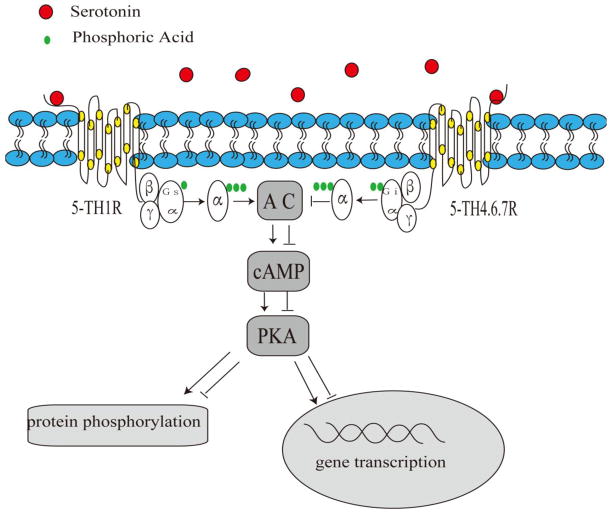
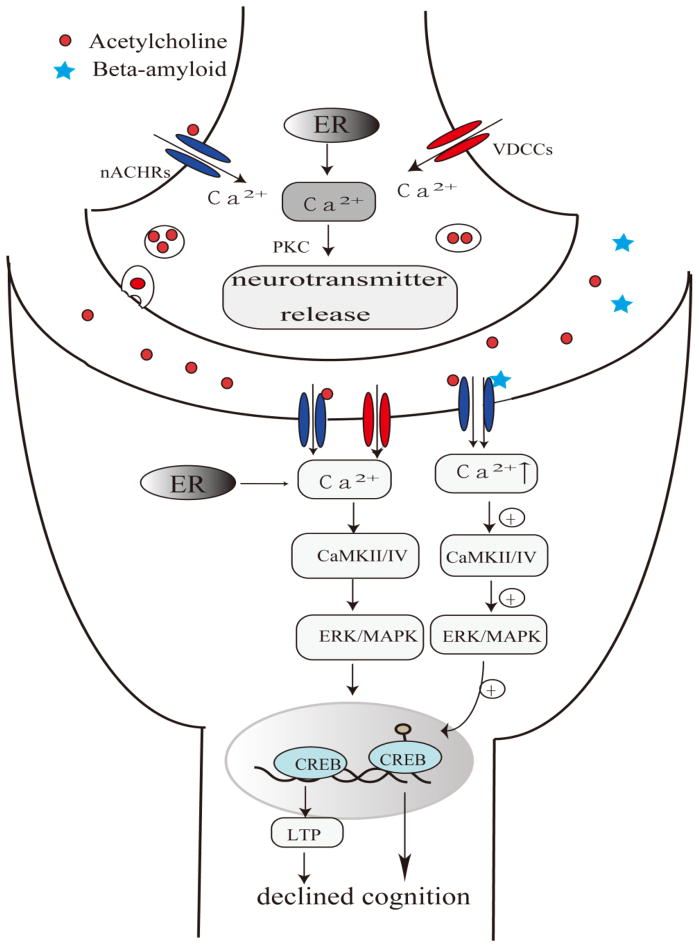
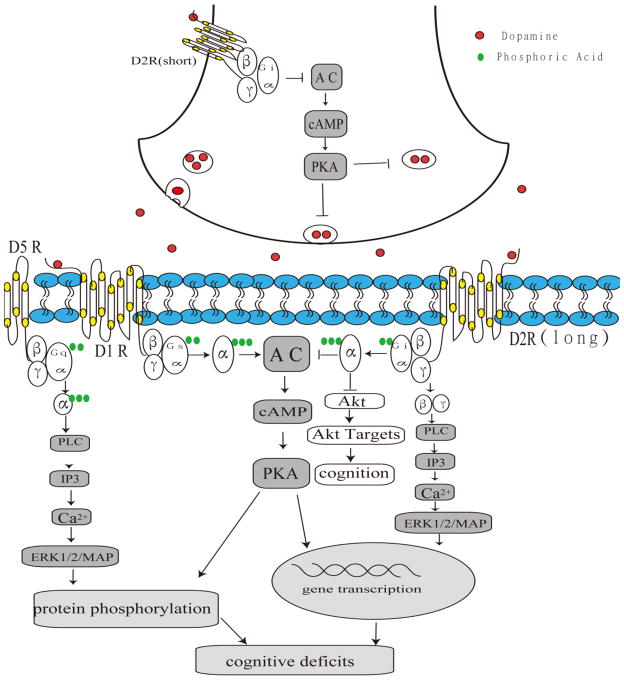
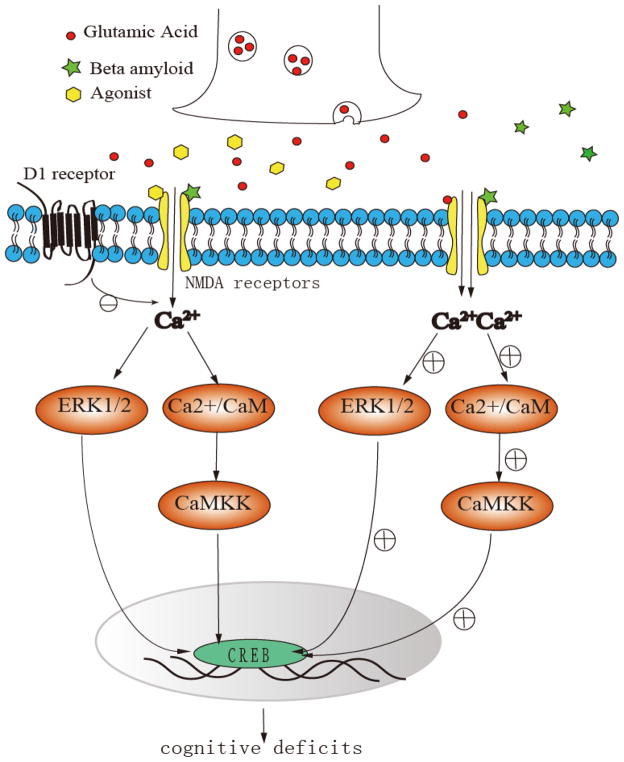
Cognitive dysfunction is one of the most typical characteristics in various neurodegenerative diseases such as Alzheimer's disease and Parkinson's disease (advanced stage). Although several mechanisms like neuronal apoptosis and inflammatory responses have been recognized to be involved in the pathogenesis of cognitive dysfunction in these diseases, recent studies on neurodegeneration and cognitive dysfunction have demonstrated a significant impact of receptor modulation on cognitive changes. The pathological alterations in various receptors appear to contribute to cognitive impairment and/or deterioration with correlation to diversified mechanisms. This article recapitulates the present understandings and concepts underlying the modulation of different receptors in human beings and various experimental models of Alzheimer's disease and Parkinson's disease as well as a conceptual update on the underlying mechanisms. Specific roles of serotonin, adrenaline, acetylcholine, dopamine receptors, and N-methyl-D-aspartate receptors in Alzheimer's disease and Parkinson's disease will be interactively discussed. Complex mechanisms involved in their signaling pathways in the cognitive dysfunction associated with the neurodegenerative diseases will also be addressed. Substantial evidence has suggested that those receptors are crucial neuroregulators contributing to cognitive pathology and complicated correlations exist between those receptors and the expression of cognitive capacities. The pathological alterations in the receptors would, therefore, contribute to cognitive impairments and/or deterioration in Alzheimer's disease and Parkinson's disease. Future research may shed light on new clues for the treatment of cognitive dysfunction in neurodegenerative diseases by targeting specific alterations in these receptors and their signal transduction pathways in the frontal-striatal, fronto-striato-thalamic, and mesolimbic circuitries.
Copyright © 2012 Elsevier Ltd. All rights reserved.
Conflict of interest statement
Figures
References
-
- Antonini A, Schwarz J, Oertel WH, Pogarell O, Leenders KL. Long-term changes of striatal dopamine D2 receptors in patients with Parkinson’s disease: a study with positron emission tomography and [11C]raclopride. Mov Disord. 1997a;12:33–38. - PubMed
-
- Antonini A, Vontobel P, Psylla M, Günther I, Maguire PR, Missimer J, Leenders KL. Complementary positron emission tomographic studies of the striatal dopaminergic system in Parkinson’s disease. Arch Neurol. 1995;52(12):1183–1190. - PubMed
-
- Antonini A, Leenders KL, Vontobel P, Maguire RP, Missimer J, Psylla M, Gunther I. Complementary PET studies of striatal neuronal function in the differential diagnosis between multiple system atrophy and Parkinson’s disease. Brain. 1997b;120 ( Pt 12):2187–2195. - PubMed
-
- Auld DS, Kornecook TJ, Bastianetto S, Quirion R. Alzheimer’s disease and the basal forebrain cholinergic system: relations to beta-amyloid peptides, cognition, and treatment strategies. Prog Neurobiol. 2002;68:209–245. - PubMed
Publication types
MeSH terms
Substances
Grants and funding
LinkOut - more resources
Full Text Sources
Other Literature Sources
Medical
