


High-performance metabolic profiling of plasma from seven mammalian species for simultaneous environmental chemical surveillance and bioeffect monitoring
- PMID: 22387982
- PMCID: PMC3332037
- DOI: 10.1016/j.tox.2012.02.007
High-performance metabolic profiling of plasma from seven mammalian species for simultaneous environmental chemical surveillance and bioeffect monitoring
Abstract
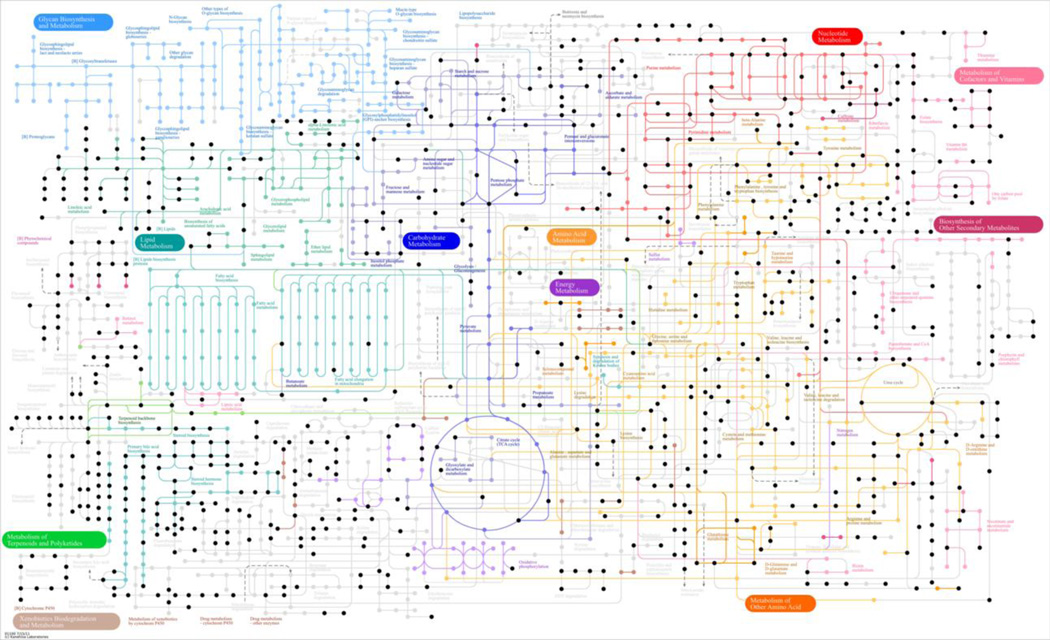
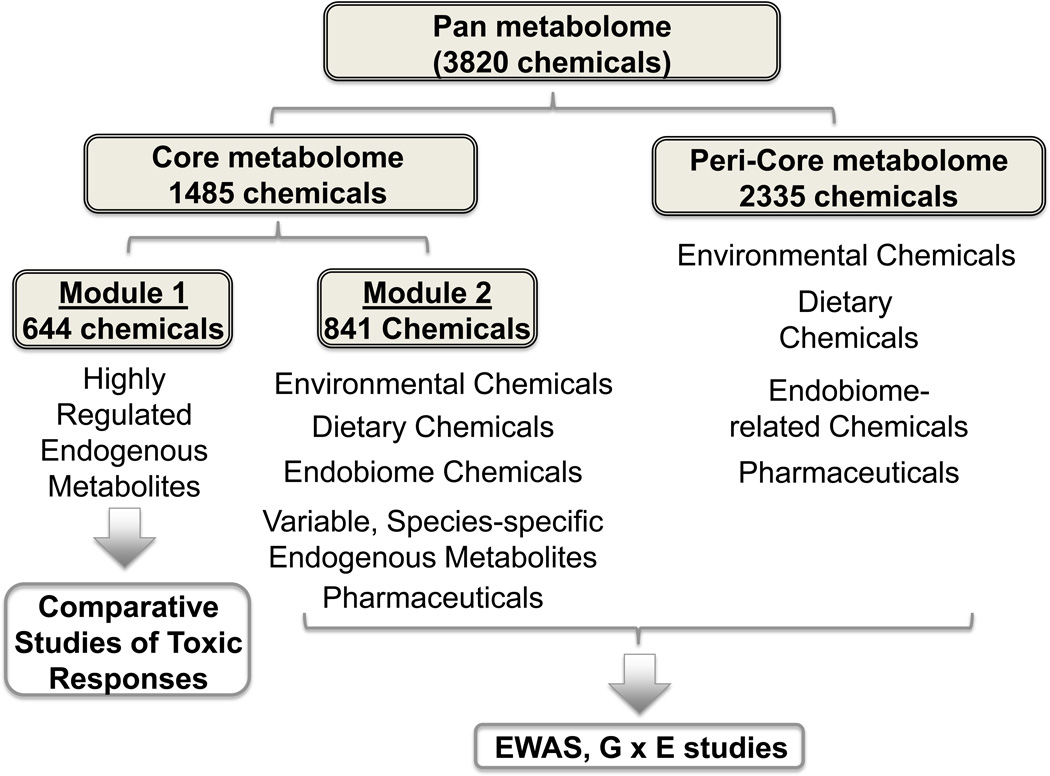
High-performance metabolic profiling (HPMP) by Fourier-transform mass spectrometry coupled to liquid chromatography gives relative quantification of thousands of chemicals in biologic samples but has had little development for use in toxicology research. In principle, the approach could be useful to detect complex metabolic response patterns to toxicologic exposures and to detect unusual abundances or patterns of potentially toxic chemicals. As an initial study to develop these possible uses, we applied HPMP and bioinformatics analysis to plasma of humans, rhesus macaques, marmosets, pigs, sheep, rats and mice to determine: (1) whether more chemicals are detected in humans living in a less controlled environment than captive species and (2) whether a subset of plasma chemicals with similar inter-species and intra-species variation could be identified for use in comparative toxicology. Results show that the number of chemicals detected was similar in humans (3221) and other species (range 2537-3373). Metabolite patterns were most similar within species and separated samples according to family and order. A total of 1485 chemicals were common to all species; 37% of these matched chemicals in human metabolomic databases and included chemicals in 137 out of 146 human metabolic pathways. Probability-based modularity clustering separated 644 chemicals, including many endogenous metabolites, with inter-species variation similar to intra-species variation. The remaining chemicals had greater inter-species variation and included environmental chemicals as well as GSH and methionine. Together, the data suggest that HPMP provides a platform that can be useful within human populations and controlled animal studies to simultaneously evaluate environmental exposures and biological responses to such exposures.
Copyright © 2012 Elsevier Ireland Ltd. All rights reserved.
Conflict of interest statement
The authors declare that they have no competing financial interests.
Figures




References
-
- Bergen WG, Mersmann HJ. Comparative aspects of lipid metabolism: impact on contemporary research and use of animal models. The Journal of nutrition. 2005;135:2499–2502. - PubMed
-
- Bonkovsky HL, Kane RE, Jones DP, Galinsky RE, Banner B. Acute hepatic and renal toxicity from low doses of acetaminophen in the absence of alcohol abuse or malnutrition: evidence for increased susceptibility to drug toxicity due to cardiopulmonary and renal insufficiency. Hepatology. 1994;19:1141–1148. - PubMed
-
- Butt CM, Muir DC, Mabury SA. Elucidating the pathways of poly- and perfluorinated acid formation in rainbow trout. Environ Sci Technol. 2010;44:4973–4980. - PubMed
Publication types
MeSH terms
Grants and funding
- R01 HL070892/HL/NHLBI NIH HHS/United States
- K24 DK096574/DK/NIDDK NIH HHS/United States
- HL070892/HL/NHLBI NIH HHS/United States
- P01 ES016731/ES/NIEHS NIH HHS/United States
- R01 ES011195/ES/NIEHS NIH HHS/United States
- P51 RR000165/RR/NCRR NIH HHS/United States
- ES016731/ES/NIEHS NIH HHS/United States
- UL1 TR000454/TR/NCATS NIH HHS/United States
- HD46501/HD/NICHD NIH HHS/United States
- RR023356/RR/NCRR NIH HHS/United States
- R01 ES009047/ES/NIEHS NIH HHS/United States
- R01 HL083019/HL/NHLBI NIH HHS/United States
- UL1 RR025008/RR/NCRR NIH HHS/United States
- HL083019/HL/NHLBI NIH HHS/United States
- RR025008/RR/NCRR NIH HHS/United States
- T32 ES012870/ES/NIEHS NIH HHS/United States
- R01 HD046501/HD/NICHD NIH HHS/United States
- ES011195/ES/NIEHS NIH HHS/United States
- AG038746/AG/NIA NIH HHS/United States
- K24 RR023356/RR/NCRR NIH HHS/United States
- RR00165/RR/NCRR NIH HHS/United States
- R01 AG038746/AG/NIA NIH HHS/United States
LinkOut - more resources
Full Text Sources
