


The Apaf-1-binding protein Aven is cleaved by Cathepsin D to unleash its anti-apoptotic potential
- PMID: 22388353
- PMCID: PMC3422468
- DOI: 10.1038/cdd.2012.17
The Apaf-1-binding protein Aven is cleaved by Cathepsin D to unleash its anti-apoptotic potential
Abstract
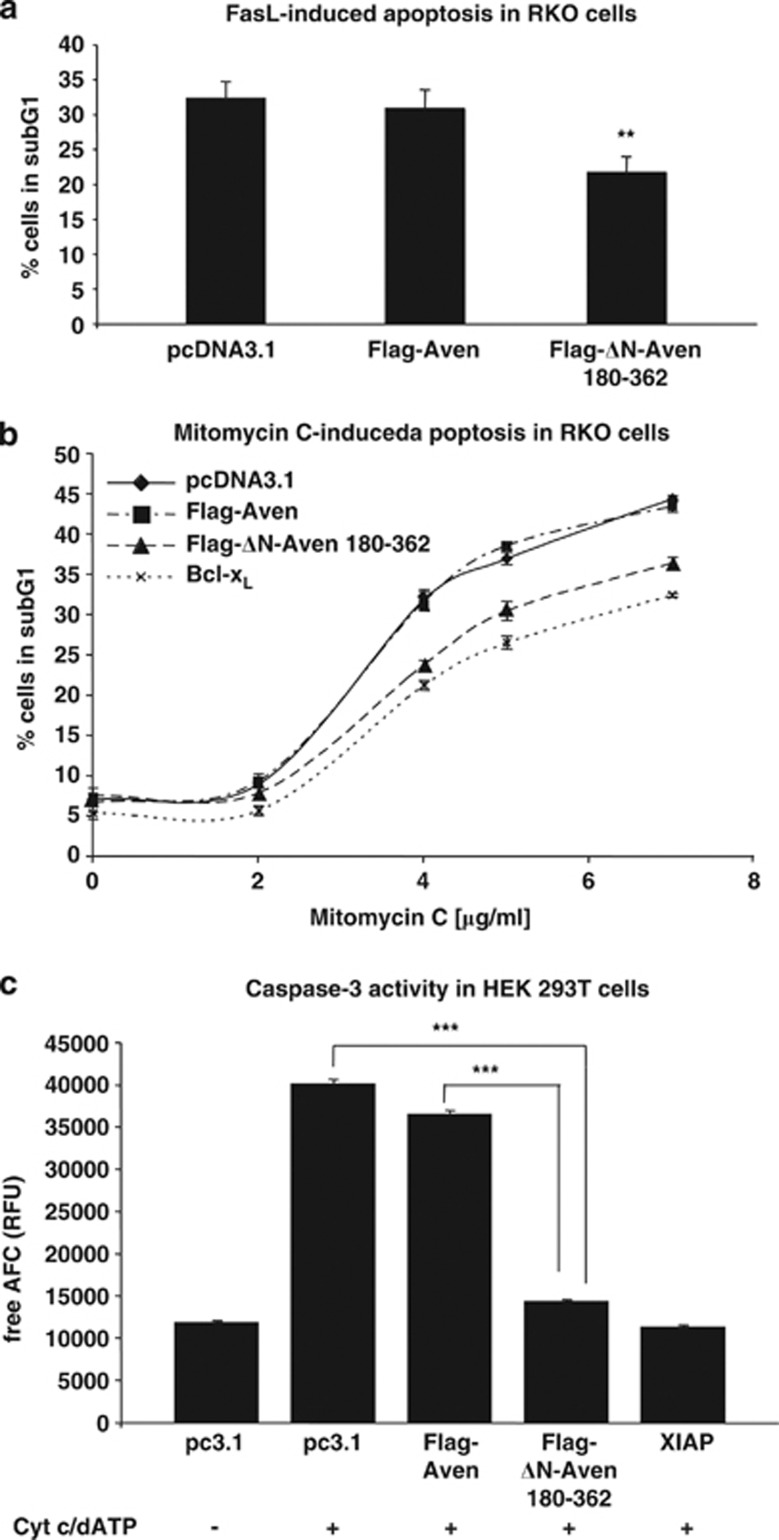
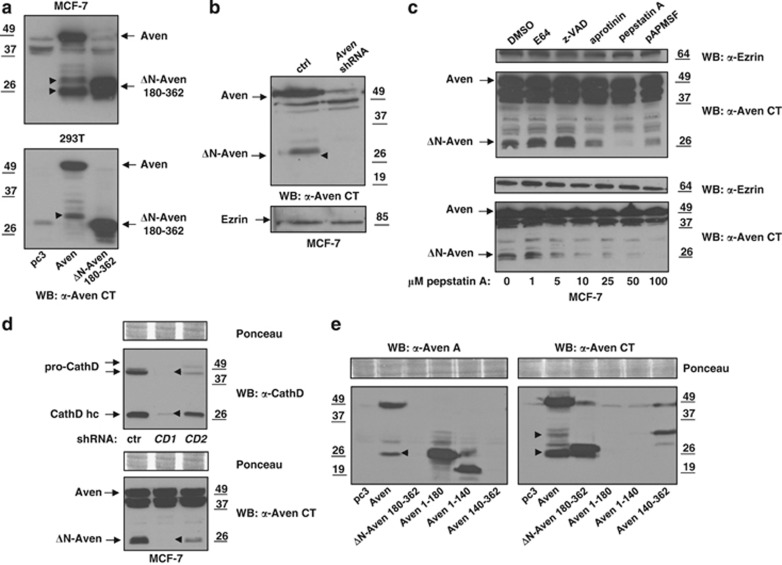
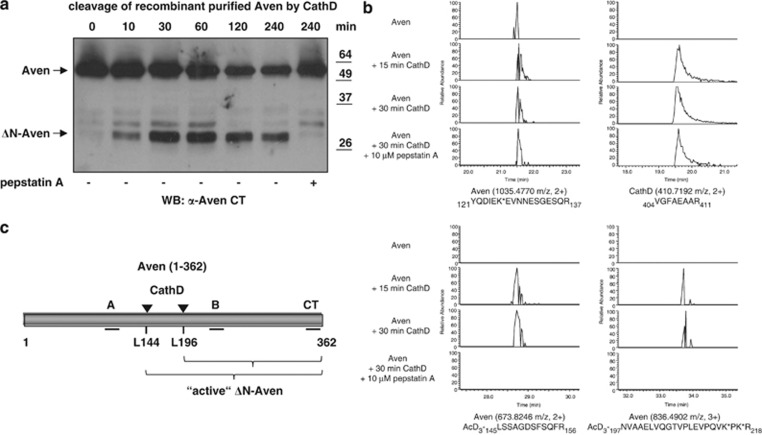
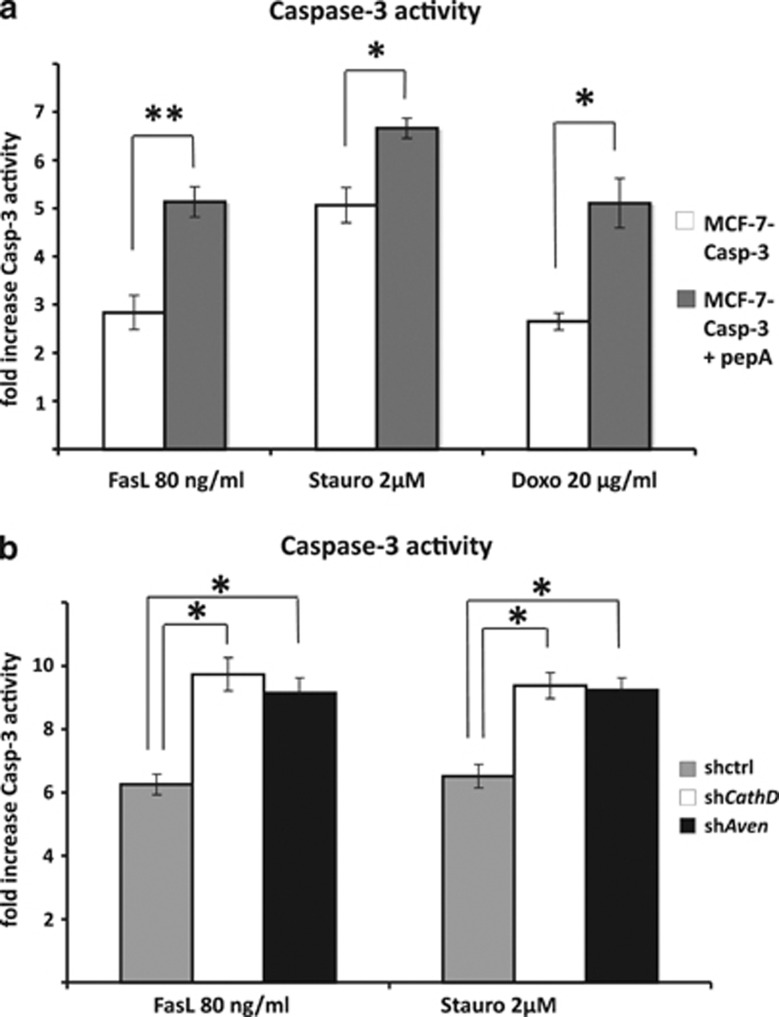
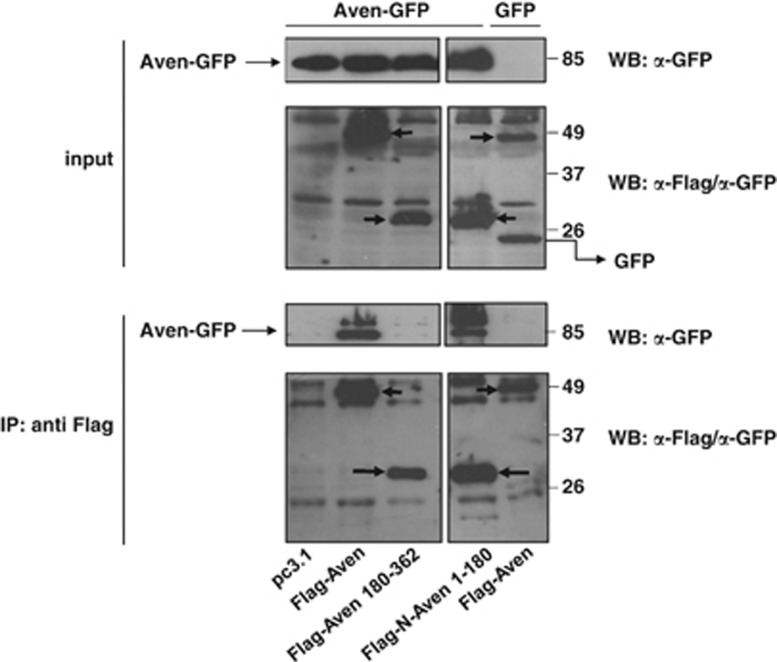
The anti-apoptotic molecule Aven was originally identified in a yeast two-hybrid screen for Bcl-x(L)-interacting proteins and has also been found to bind Apaf-1, thereby interfering with Apaf-1 self-association during apoptosome assembly. Aven is expressed in a wide variety of adult tissues and cell lines, and there is increasing evidence that its overexpression correlates with tumorigenesis, particularly in acute leukemias. The mechanism by which the anti-apoptotic activity of Aven is regulated remains poorly understood. Here we shed light on this issue by demonstrating that proteolytic removal of an inhibitory N-terminal Aven domain is necessary to activate the anti-apoptotic potential of the molecule. Furthermore, we identify Cathepsin D (CathD) as the protease responsible for Aven cleavage. On the basis of our results, we propose a model of Aven activation by which its N-terminal inhibitory domain is removed by CathD-mediated proteolysis, thereby unleashing its cytoprotective function.
Figures
References
-
- Brenner D, Mak TW. Mitochondrial cell death effectors. Curr Opin Cell Biol. 2009;21:871–877. - PubMed
-
- Ow YP, Green DR, Hao Z, Mak TW. Cytochrome c: functions beyond respiration. Nat Rev Mol Cell Biol. 2008;9:532–542. - PubMed
-
- Bao Q, Shi Y. Apoptosome: a platform for the activation of initiator caspases. Cell Death Differ. 2007;14:56–65. - PubMed
-
- Li P, Nijhawan D, Budihardjo I, Srinivasula SM, Ahmad M, Alnemri ES, et al. Cytochrome c and dATP-dependent formation of Apaf-1/caspase-9 complex initiates an apoptotic protease cascade. Cell. 1997;91:479–489. - PubMed
Publication types
MeSH terms
Substances
LinkOut - more resources
Full Text Sources
Other Literature Sources
