A surface glycoprotein indispensable for gamete fusion in the social amoeba Dictyostelium discoideum
- PMID: 22389384
- PMCID: PMC3346428
- DOI: 10.1128/EC.00028-12
A surface glycoprotein indispensable for gamete fusion in the social amoeba Dictyostelium discoideum
Abstract
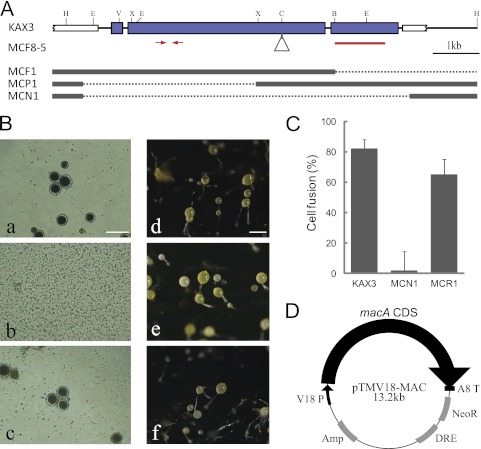
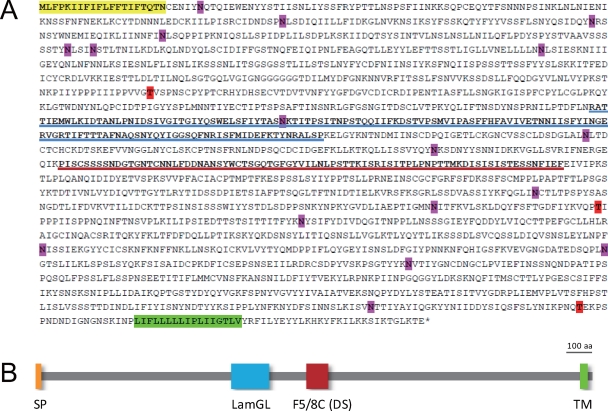
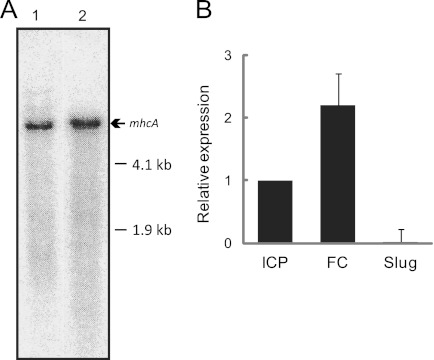
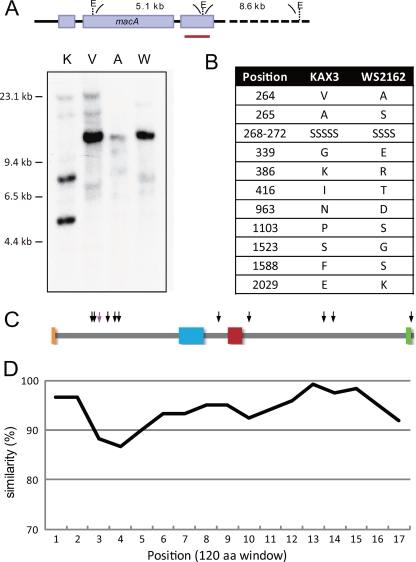
Sexual reproduction is essential for the maintenance of species in a wide variety of multicellular organisms, and even unicellular organisms that normally proliferate asexually possess a sexual cycle because of its contribution to increased genetic diversity. Information concerning the molecules involved in fertilization is accumulating for many species of the metazoan, plant, and fungal lineages, and the evolutionary consideration of sexual reproduction systems is now an interesting issue. Macrocyst formation in the social amoeba Dictyostelium discoideum is a sexual process in which cells become sexually mature under dark and submerged conditions and fuse with complementary mating-type cells. In the present study, we isolated D. discoideum insertional mutants defective in sexual cell fusion and identified the relevant gene, macA, which encodes a highly glycosylated, 2,041-amino-acid membrane protein (MacA). Although its overall similarity is restricted to proteins of unknown function within dictyostelids, it contains LamGL and discoidin domains, which are implicated in cell adhesion. The growth and development of macA-null mutants were indistinguishable from those of the parental strain. The overexpression of macA using the V18 promoter in a macA-null mutant completely restored its sexual defects. Although the macA gene encoded exactly the same protein in a complementary mating-type strain, it was expressed at a much lower level. These results suggest that MacA is indispensable for gamete interactions in D. discoideum, probably via cell adhesion. There is a possibility that it is controlled in a mating-type-dependent manner.
Figures
References
-
- Aiba K, Fang H, Yamaguchi N, Tanaka Y, Urushihara H. 1997. Isoforms of gp138, a cell-fusion related protein in Dictyostelium discoideum. J. Biol. 121:238–243 - PubMed
-
- Chagla AH, Lewis KE, O'Day DH. 1980. Ca2+ and cell fusion during sexual development in liquid cultures of Dictyostelium discoideum. Exp. Cell Res. 126:501–505 - PubMed
-
- Ensslin MA, Shur BD. 2003. Identification of mouse sperm SED1, a bimotif EGF repeat and discoidin-domain protein involved in sperm-egg binding. Cell 114:405–417 - PubMed
Publication types
MeSH terms
Substances
LinkOut - more resources
Full Text Sources
Research Materials