The erosive effects of racism: reduced self-control mediates the relation between perceived racial discrimination and substance use in African American adolescents
- PMID: 22390225
- PMCID: PMC3341491
- DOI: 10.1037/a0027404
The erosive effects of racism: reduced self-control mediates the relation between perceived racial discrimination and substance use in African American adolescents
Abstract
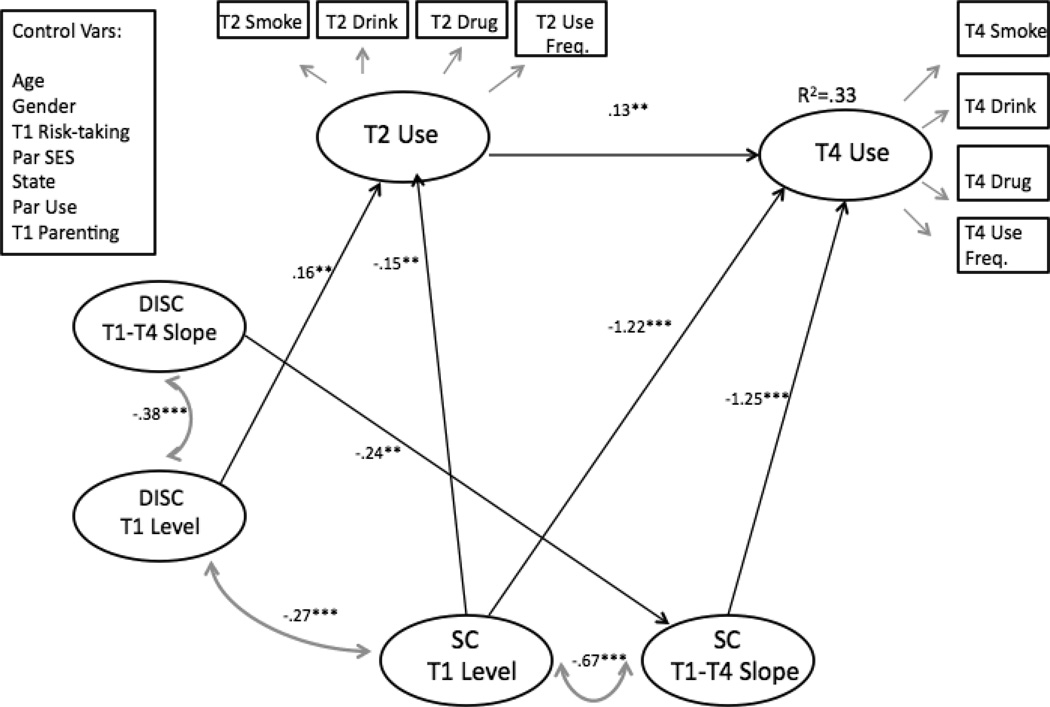
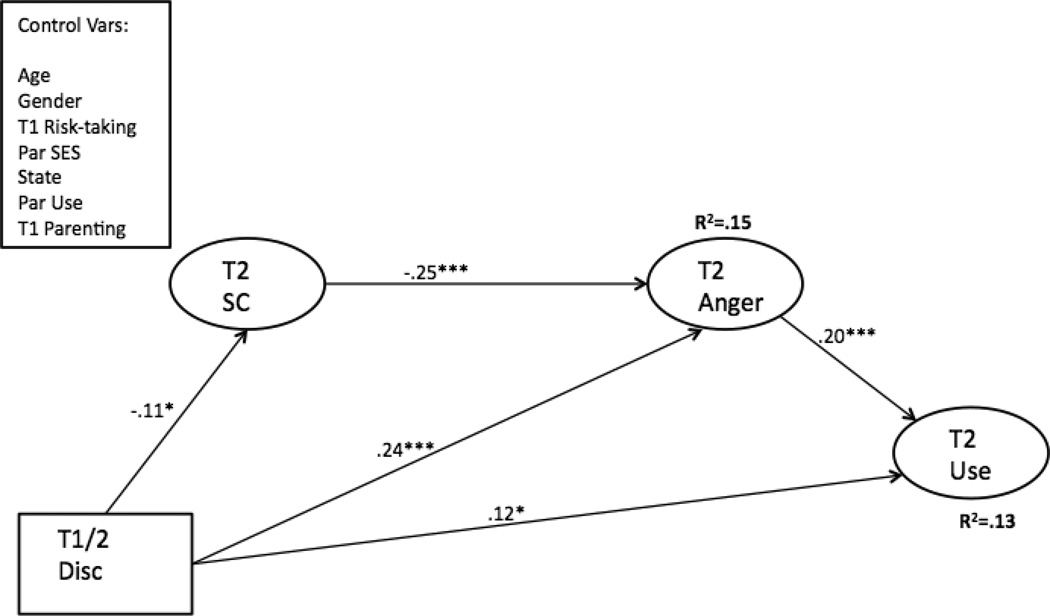
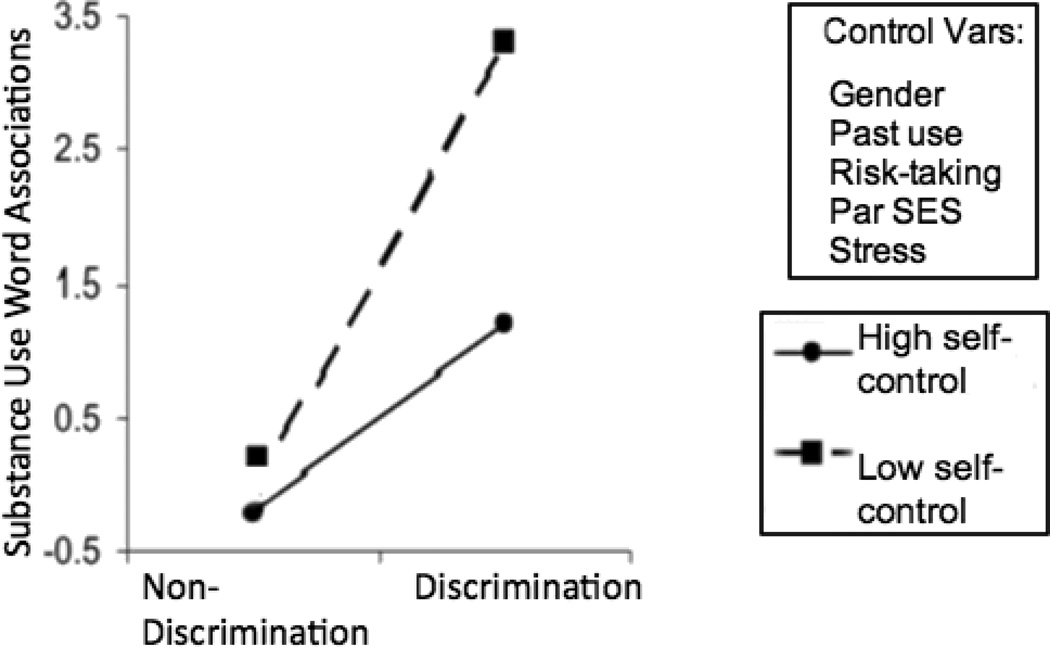
Perceived racial discrimination, self-control, anger, and either substance use or use cognitions were assessed in 2 studies conducted with samples of African American adolescents. The primary goal was to examine the relation between discrimination and self-control over time; a 2nd goal was to determine whether that relation mediates the link between discrimination and substance use found in previous research. Study 1, which included a latent growth curve analysis with 3 waves of data, indicated that experience with discrimination (from age 10 years to age 18 years) was associated with reduced self-control, which then predicted increased substance use. Additional analyses indicated anger was also a mediator of this discrimination to use relation. Study 2, which was experimental, showed that envisioning an experience involving discrimination was associated with an increase in substance-related responses to double entendre words (e.g., pot, roach) in a word association task, especially for participants who were low in dispositional self-control. The effect was again mediated by reports of anger. Thus, the "double mediation" pattern was discrimination → more anger and reduced self-control → increased substance use and/or substance cognitions. Results are discussed in terms of the long-term impact of discrimination on self-control and health behavior. Implications for interventions aimed at ameliorating the negative effects of discrimination and low self-control on health are also discussed.
Figures
References
-
- Adler NE, Rehkopf DH. U.S. disparities in health: Descriptions, causes, and mechanisms. Annual Review of Public Health. 2008;29:235–252. - PubMed
-
- Arneklev BJ, Cochran J, Gainey RR. Testing Gottfredson and Hirschi's "low self-control" stability hypothesis: An exploratory study. American Journal of Criminal Justice. 1998;23:107–127.
-
- Bair AN, Steele JR. Examining the consequences of exposure to racism for the executive functioning of Black students. Journal of Experimental Social Psychology. 2010;46:127–132.