


What infants know and what they do: perceiving possibilities for walking through openings
- PMID: 22390664
- PMCID: PMC3584587
- DOI: 10.1037/a0027530
What infants know and what they do: perceiving possibilities for walking through openings
Abstract
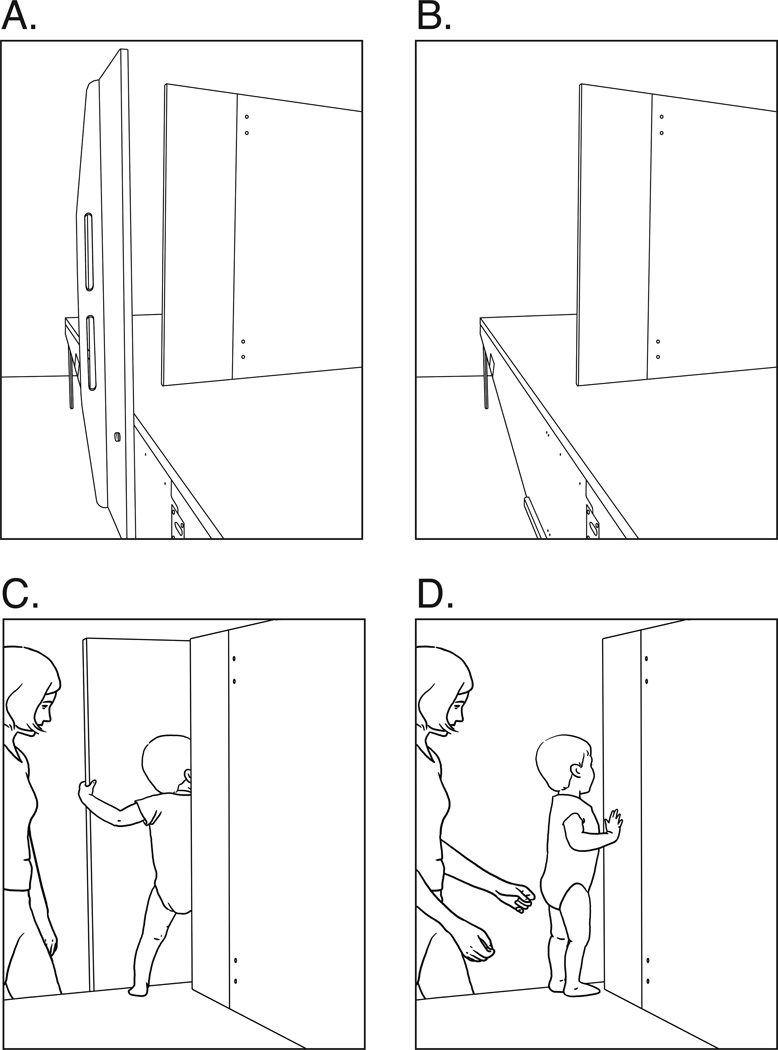
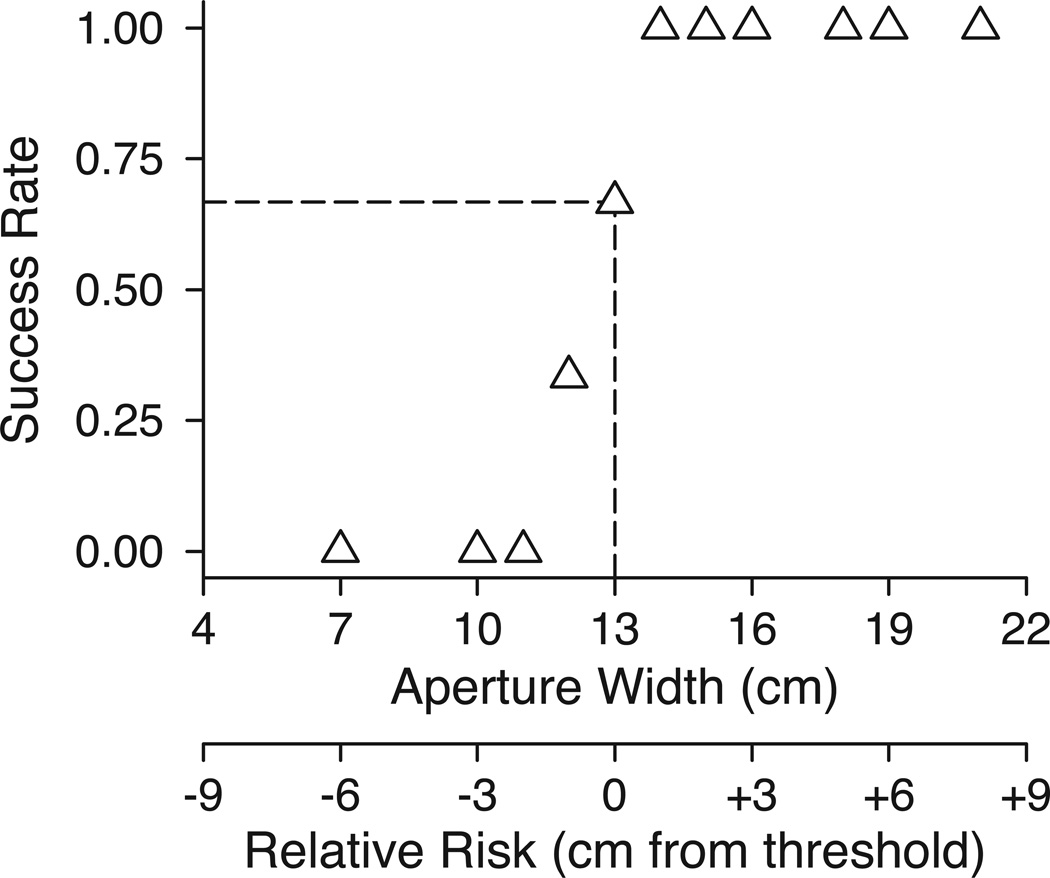
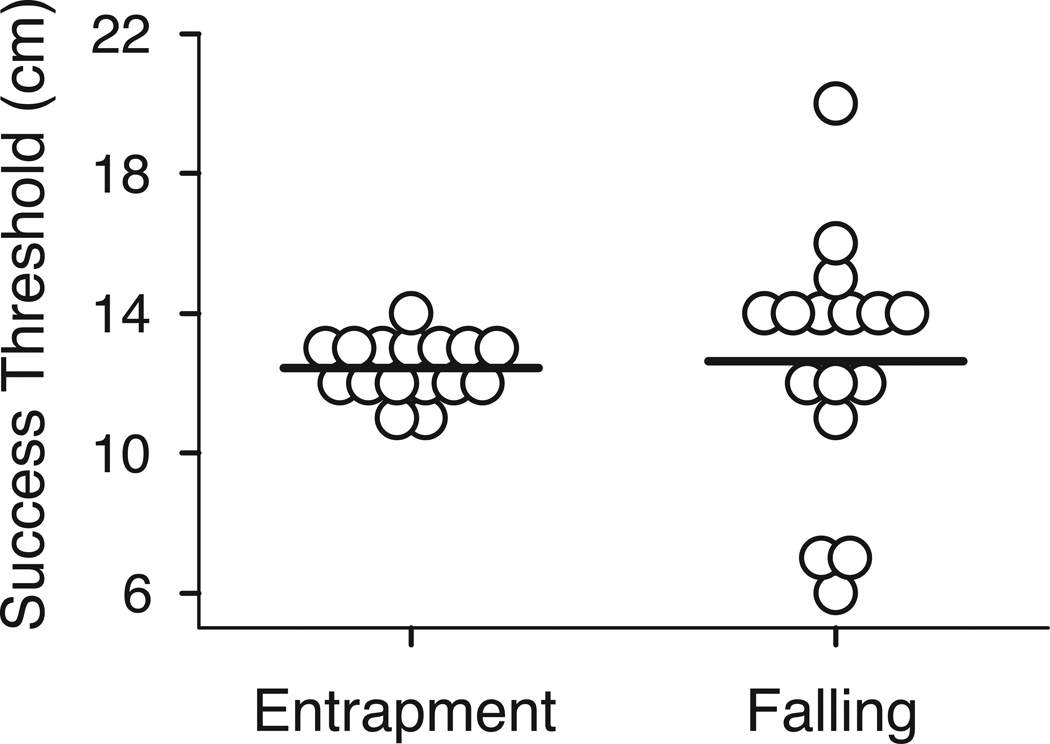
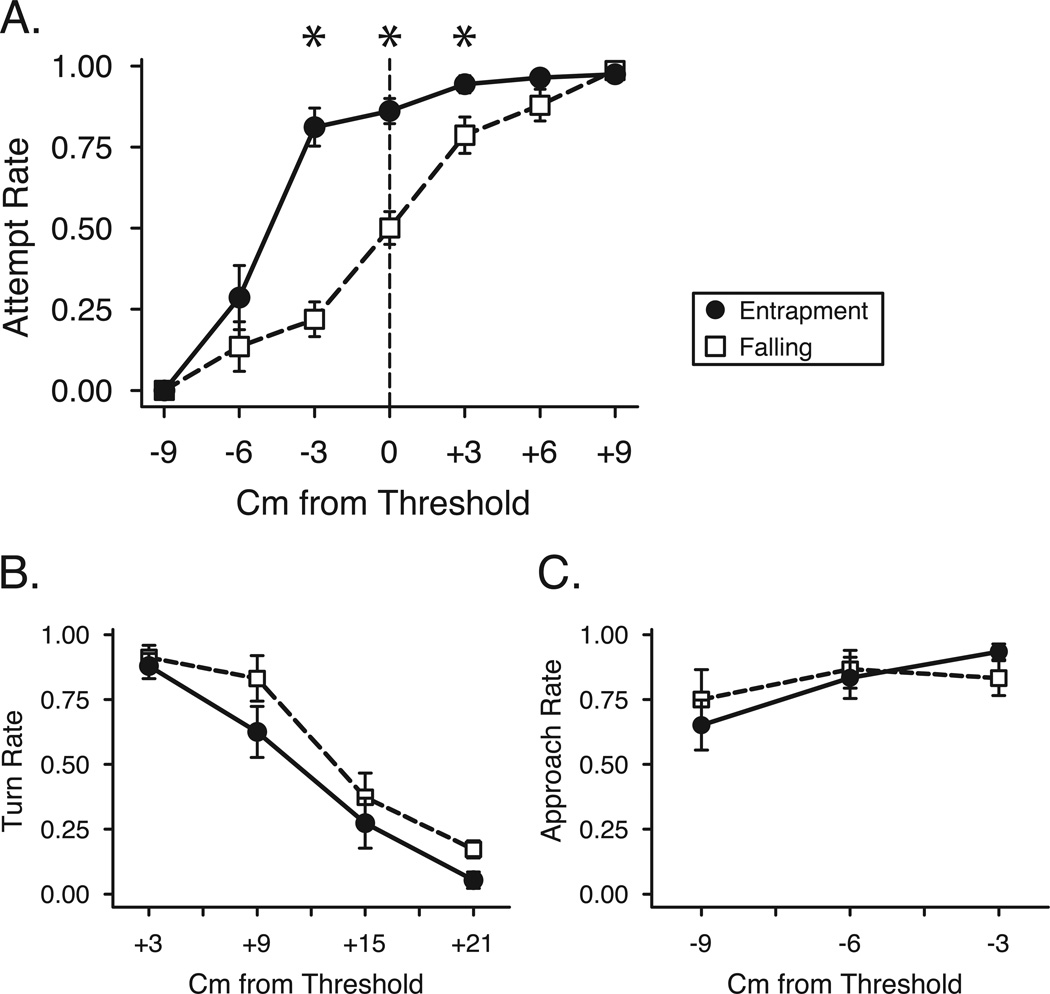
What infants decide to do does not necessarily reflect the extent of what they know. In the current study, 17-month-olds were encouraged to walk through openings of varying width under risk of entrapment. Infants erred by squeezing into openings that were too small and became stuck, suggesting that they did not accurately perceive whether they could fit. However, a second penalty condition revealed accurate action selection when errors resulted in falling, indicating that infants are indeed perceptually sensitive to fitting through openings. Furthermore, independent measures of perception were equivalent between the two penalty conditions, suggesting that differences in action selection resulted from different penalties, not lack of perceptual sensitivity.
PsycINFO Database Record (c) 2012 APA, all rights reserved.
Figures
References
-
- Adolph KE. Learning in the development of infant locomotion. Monographs of the Society for Research in Child Development. 1997;62 - PubMed
-
- Adolph KE. The growing body in action: What infant locomotion tells us about perceptually guided action. In: Klatzy R, Behrmann M, MacWhinney B, editors. Embodiment, ego-space, and action. Mahwah: Erlbaum; 2008. pp. 275–321.
-
- Adolph KE, Berger SE. Motor development. In: Kuhn D, Siegler RS, editors. Handbook of child psychology: Vol. 2. Cognition, perception, and language. 6th ed. New York: John Wiley & Sons; 2006. pp. 161–213.
