


A brief history of melanoma: from mummies to mutations
- PMID: 22395415
- PMCID: PMC3303163
- DOI: 10.1097/CMR.0b013e328351fa4d
A brief history of melanoma: from mummies to mutations
Abstract
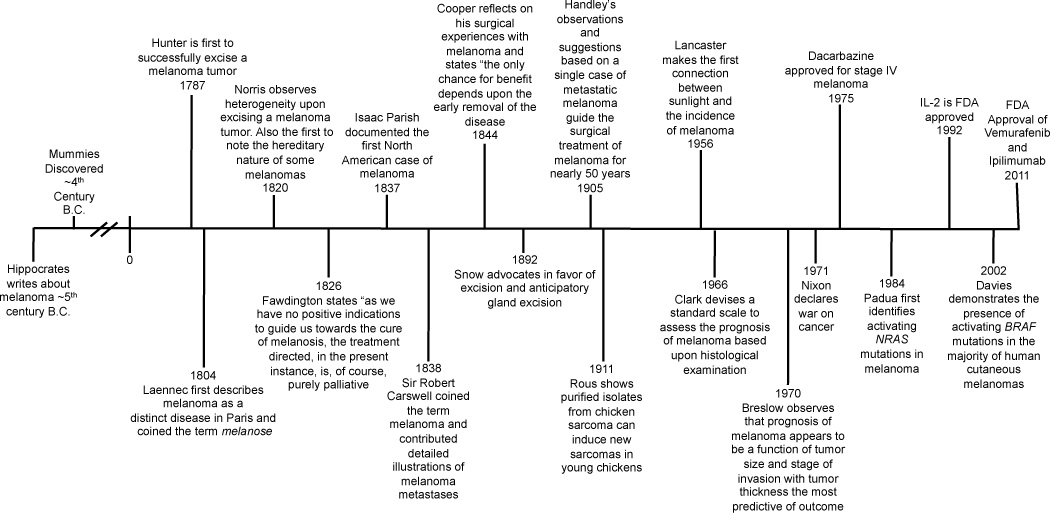
In recent years, melanoma research has undergone a renaissance. What was once viewed, at least in the metastatic setting, as an intractable and untreatable disease is now revealing its molecular weaknesses. 2011 was a landmark year for melanoma therapy, with two new agents, the anti-CTLA4 antibody ipilimumab and the BRAF inhibitor vemurafenib, shown to confer a survival benefit in randomized phase III clinical trials. Overlooked in the recent flurry of interest that has accompanied the development of these drugs, melanoma is in fact an ancient disease that has long frustrated attempts at therapeutic interventions. In this article, we trace the history of melanoma: from the earliest known cases of melanoma in pre-Colombian South America, through the explorations of the Victorian anatomists right up to the molecular biology revolution of the 20th century that allowed for the identification of the key driving events required for melanomagenesis. We further outline how observations about melanoma heterogeneity, first made over 190 years ago, continue to drive our efforts to reduce melanoma to the level of a chronic, manageable disease and ultimately to cure it entirely.
Figures
References
-
- Fawdington T. A Case of Melanosis, with General Observations on the Pathology of the Interesting Disease. London: Longman, Orme, Brown, Robinson and Bent; 1826.
-
- Smalley KS, Nathanson KL, Flaherty KT. Genetic subgrouping of melanoma reveals new opportunities for targeted therapy. Cancer Res. 2009;69:3241–3244. - PubMed
-
- Mukherjee S. The emperor of all maladies: a biography of cancer. New York Scribner: Scribner; 2010.
Publication types
MeSH terms
Substances
Grants and funding
LinkOut - more resources
Full Text Sources
Medical
Research Materials
