


Placental adiponectin gene DNA methylation levels are associated with mothers' blood glucose concentration
- PMID: 22396200
- PMCID: PMC3331769
- DOI: 10.2337/db11-1160
Placental adiponectin gene DNA methylation levels are associated with mothers' blood glucose concentration
Abstract
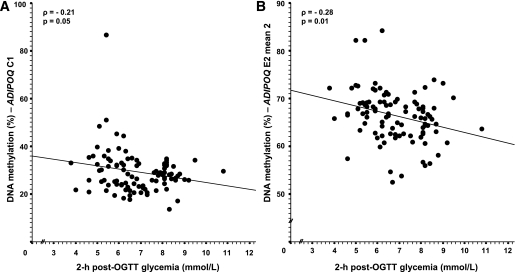
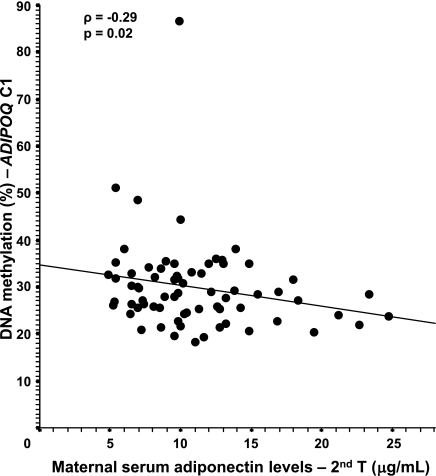
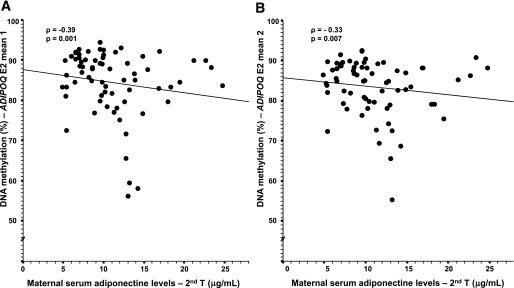
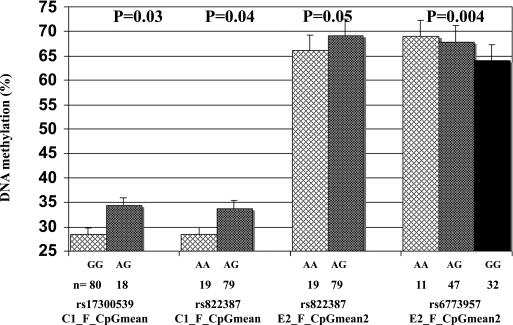
Growing evidence suggests that epigenetic profile changes occurring during fetal development in response to in utero environment variations could be one of the mechanisms involved in the early determinants of adult chronic diseases. In this study, we tested whether maternal glycemic status is associated with the adiponectin gene (ADIPOQ) DNA methylation profile in placenta tissue, in maternal circulating blood cells, and in cord blood cells. We found that lower DNA methylation levels in the promoter of ADIPOQ on the fetal side of the placenta were correlated with higher maternal glucose levels during the second trimester of pregnancy (2-h glucose after the oral glucose tolerance test; r(s) ≤ -0.21, P < 0.05). Lower DNA methylation levels on the maternal side of the placenta were associated with higher insulin resistance index (homeostasis model assessment of insulin resistance) during the second and third trimesters of pregnancy (r(s) ≤ -0.27, P < 0.05). Finally, lower DNA methylation levels were associated with higher maternal circulating adiponectin levels throughout pregnancy (r(s) ≤ -0.26, P < 0.05). In conclusion, the ADIPOQ DNA methylation profile was associated with maternal glucose status and with maternal circulating adiponectin concentration. Because adiponectin is suspected to have insulin-sensitizing proprieties, these epigenetic adaptations have the potential to induce sustained glucose metabolism changes in the mother and offspring later in life.
Figures
Comment in
-
Challenges of linking early-life conditions and disease susceptibility.Diabetes. 2012 May;61(5):981-2. doi: 10.2337/db12-0087. Diabetes. 2012. PMID: 22517650 Free PMC article. No abstract available.
References
-
- Berger H, Crane J, Farine D, et al. Maternal-Fetal Medicine Committee. Executive and Council for the Society of Obstetricians and Gynaecologists of Canada Screening for gestational diabetes mellitus. J Obstet Gynaecol Can 2002;24:894–912 - PubMed
-
- Clausen TD, Mathiesen ER, Hansen T, et al. Overweight and the metabolic syndrome in adult offspring of women with diet-treated gestational diabetes mellitus or type 1 diabetes. J Clin Endocrinol Metab 2009;94:2464–2470 - PubMed
-
- Krishnaveni GV, Hill JC, Leary SD, et al. Anthropometry, glucose tolerance, and insulin concentrations in Indian children: relationships to maternal glucose and insulin concentrations during pregnancy. Diabetes Care 2005;28:2919–2925 - PubMed
Publication types
MeSH terms
Substances
LinkOut - more resources
Full Text Sources
Other Literature Sources
Medical
Miscellaneous
