


Electrophysiological characterization of the polyspecific organic cation transporter plasma membrane monoamine transporter
- PMID: 22396231
- PMCID: PMC3362792
- DOI: 10.1124/dmd.111.042432
Electrophysiological characterization of the polyspecific organic cation transporter plasma membrane monoamine transporter
Abstract
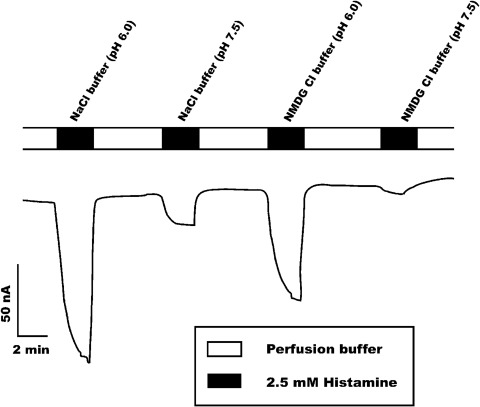
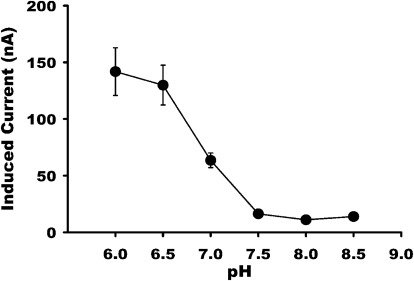
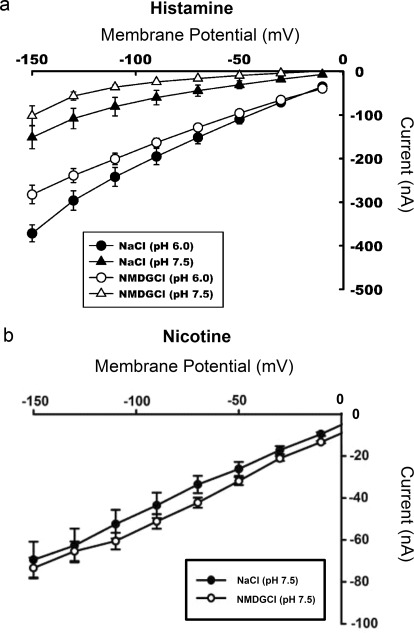
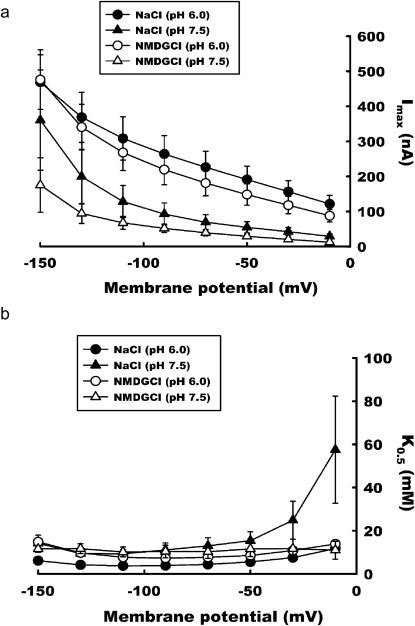
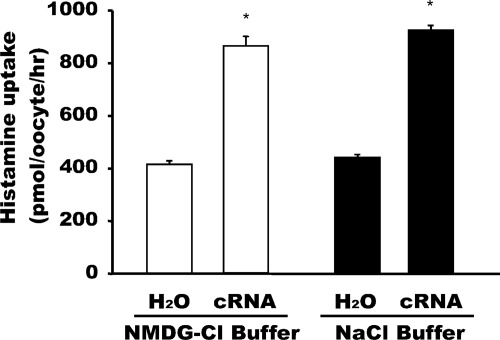
Plasma membrane monoamine transporter (PMAT) is a polyspecific organic cation (OC) transporter that transports a variety of endogenous biogenic amines and xenobiotic cations. Previous radiotracer uptake studies showed that PMAT-mediated OC transport is sensitive to changes in membrane potential and extracellular pH, but the precise role of membrane potential and protons on PMAT-mediated OC transport is unknown. Here, we characterized the electrophysiological properties of PMAT in Xenopus laevis oocytes using a two-microelectrode voltage-clamp approach. PMAT-mediated histamine uptake is associated with inward currents under voltage-clamp conditions, and the currents increased in magnitude as the holding membrane potential became more negative. A similar effect was also observed for another cation, nicotine. Substrate-induced currents were largely independent of Na+ but showed strong dependence on membrane potential and pH of the perfusate. Detailed kinetic analysis of histamine uptake revealed that the energizing effect of membrane potentials on PMAT transport is mainly due to an augmentation of Imax with little effect on K0.5. At most holding membrane potentials, Imax at pH 6.0 is approximately 3- to 4-fold higher than that at pH 7.5, whereas K0.5 is not dependent on pH. Together, these data unequivocally demonstrate PMAT as an electrogenic transporter and establish the physiological inside-negative membrane potential as a driving force for PMAT-mediated OC transport. The important role of membrane potential and pH in modulating the transport activity of PMAT toward OCs suggests that the in vivo activity of PMAT could be regulated by pathophysiological processes that alter physiological pH or membrane potential.
Figures
References
-
- Budiman T, Bamberg E, Koepsell H, Nagel G. (2000) Mechanism of electrogenic cation transport by the cloned organic cation transporter 2 from rat. J Biol Chem 275:29413–29420 - PubMed
-
- Busch AE, Quester S, Ulzheimer JC, Waldegger S, Gorboulev V, Arndt P, Lang F, Koepsell H. (1996) Electrogenic properties and substrate specificity of the polyspecific rat cation transporter rOCT1. J Biol Chem 271:32599–32604 - PubMed
-
- Dascal N. (2001) Voltage clamp recordings from Xenopus oocytes. Curr Protoc Neurosci Chapter 6: Unit 6.12 - PubMed
Publication types
MeSH terms
Substances
Grants and funding
LinkOut - more resources
Full Text Sources
Molecular Biology Databases
