


Bias in the brain: a diffusion model analysis of prior probability and potential payoff
- PMID: 22396408
- PMCID: PMC6621823
- DOI: 10.1523/JNEUROSCI.4156-11.2012
Bias in the brain: a diffusion model analysis of prior probability and potential payoff
Abstract
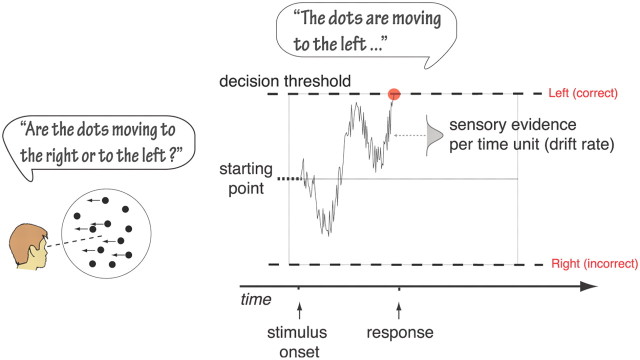
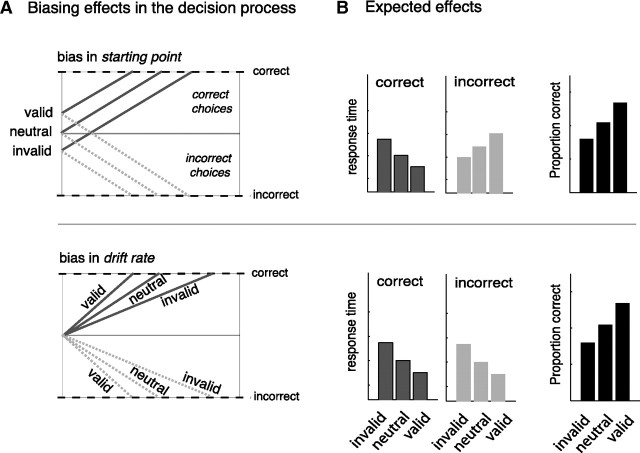
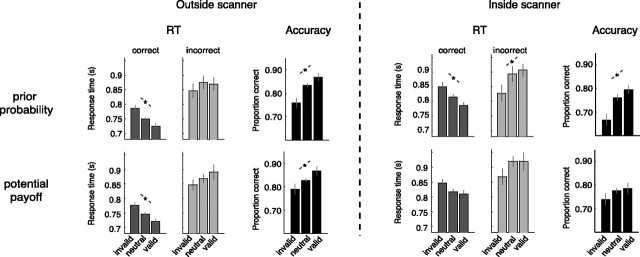
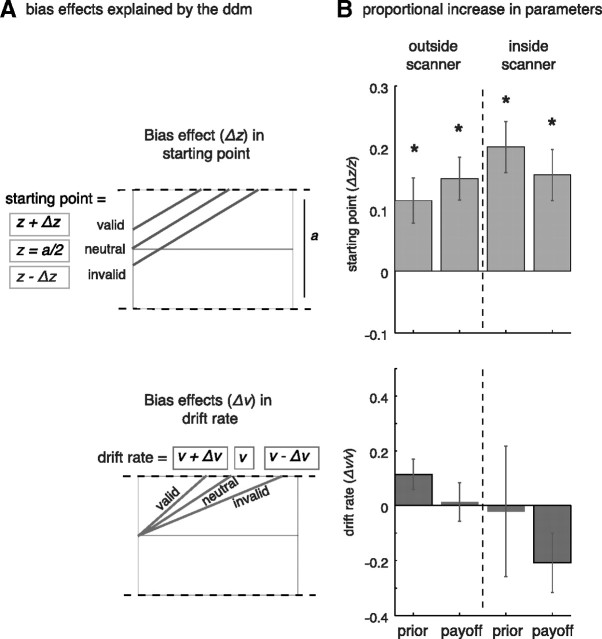
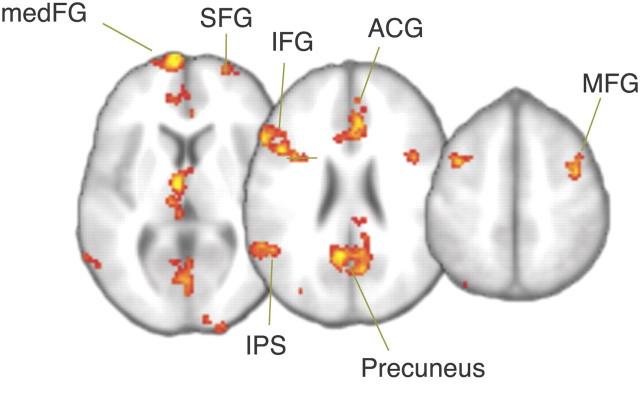
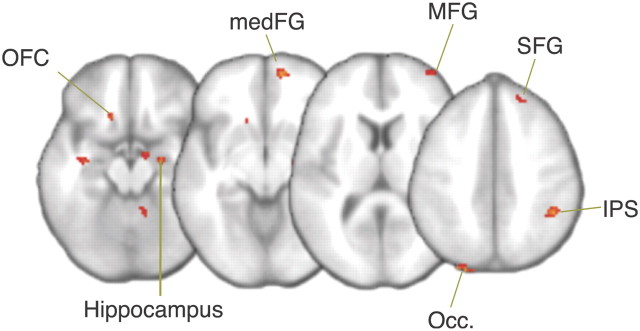
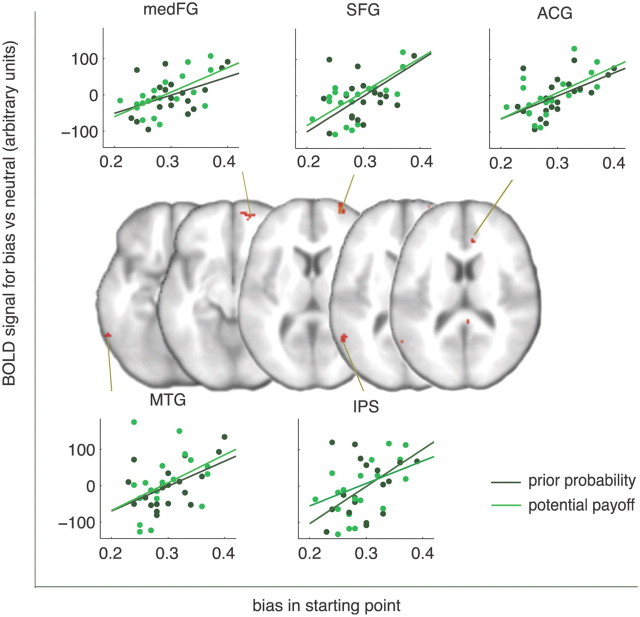
In perceptual decision-making, advance knowledge biases people toward choice alternatives that are more likely to be correct and more likely to be profitable. Accumulation-to-bound models provide two possible explanations for these effects: prior knowledge about the relative attractiveness of the alternatives at hand changes either the starting point of the decision process, or the rate of evidence accumulation. Here, we used model-based functional MRI to investigate whether these effects are similar for different types of prior knowledge, and whether there is a common neural substrate underlying bias in simple perceptual choices. We used two versions of the random-dot motion paradigm in which we manipulated bias by: (1) changing the prior likelihood of occurrence for two alternatives ("prior probability") and (2) assigning a larger reward to one of two alternatives ("potential payoff"). Human subjects performed the task inside and outside a 3T MRI scanner. For each manipulation, bias was quantified by fitting the drift diffusion model to the behavioral data. Individual measurements of bias were then used in the imaging analyses to identify regions involved in biasing choice behavior. Behavioral results showed that subjects tended to make more and faster choices toward the alternative that was most probable or had the largest payoff. This effect was primarily due to a change in the starting point of the accumulation process. Imaging results showed that, at cue level, regions of the frontoparietal network are involved in changing the starting points in both manipulations, suggesting a common mechanism underlying the biasing effects of prior knowledge.
Figures

References
-
- Ashby FG. A biased random walk model for two choice reaction times. J Math Psychol. 1983;27:277–297.
-
- Beckmann CF, Jenkinson M, Smith SM. General multilevel linear modeling for group analysis in FMRI. Neuroimage. 2003;20:1052–1063. - PubMed
-
- Bogacz R. Optimal decision-making theories: linking neurobiology with behaviour. Trends Cogn Sci. 2007;11:118–125. - PubMed
Publication types
MeSH terms
LinkOut - more resources
Full Text Sources
