


Signaling and Damaging Functions of Free Radicals in Aging-Free Radical Theory, Hormesis, and TOR
- PMID: 22396858
- PMCID: PMC3295029
Signaling and Damaging Functions of Free Radicals in Aging-Free Radical Theory, Hormesis, and TOR
Abstract
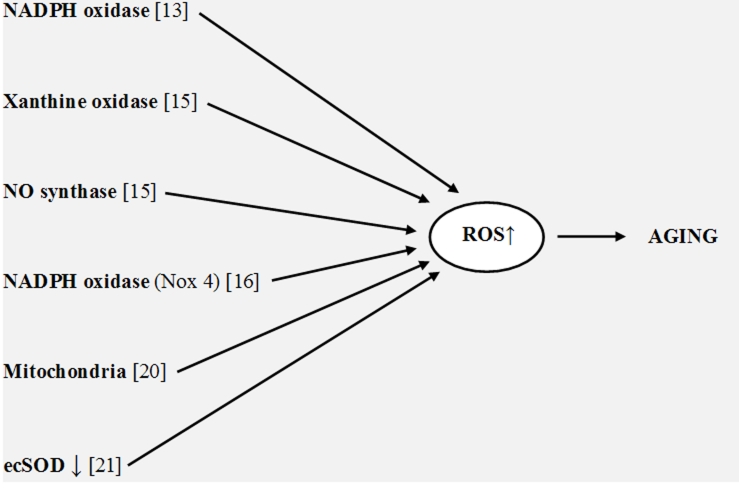
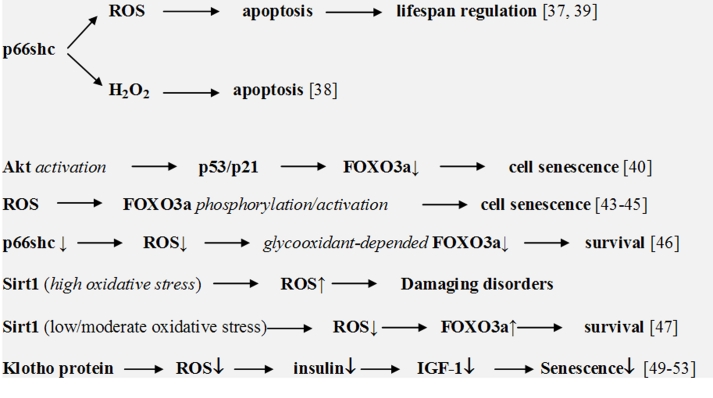
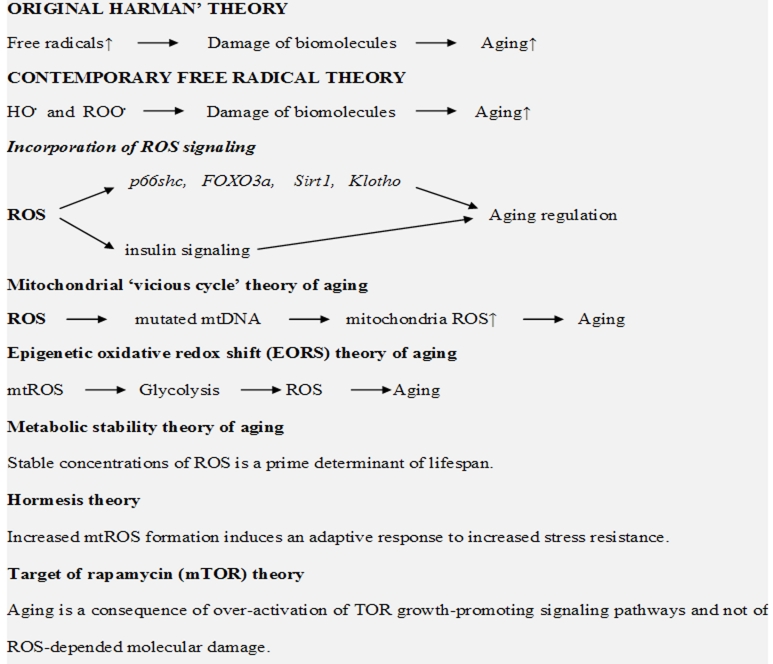
Harman's Free Radical Theory of Aging has been considered as a major theory of aging for more than 50 years. In 1956 Dr. Harman proposed that the accumulation of free radicals with the age causes the damage of biomolecules by these reactive species and the development of pathological disorders resulting in cell senescence and organismal aging. His hypothesis was supported by numerous experimental studies demonstrated an increase in free radical levels in cells and living organisms with aging. In subsequent years important discoveries of new physiological free radicals superoxide and nitric oxide have been made that led to understanding of other important functions of free radicals. It has been shown that superoxide and nitric oxide together with their diamagnetic reaction products hydrogen peroxide and peroxynitrite (all are now named reactive oxygen and nitrogen species, ROS and RNS) function as signaling species in many physiological enzymatic/gene processes. Furthermore, the disturbance of ROS and RNS physiological signaling can be an origin of various pathologies and aging. These discoveries demanded to widen original free radical theory of aging and to consider the damaging ROS signaling as an important, maybe major route to cell senescence and organismal aging. However, some experimental findings such as the extension of lifespan by calorie restriction of yeast, flies, worms, and mice, and favorable effects of physical exercises stimulated criticism of free radical theory because the expansion of lifespan accompanied in some cases by increasing oxidative stress. On these grounds such theories as Hormesis and Target of rapamycin (mTOR) theories refute the role of ROS and oxidative stress in aging. Accordingly, a major purpose of this review to show that ROS signaling is probably the most important enzyme/gene pathway responsible for the development of cell senescence and organismal aging and that ROS signaling might be considered as further development of free radical theory of aging. In spite of apparent contradictions the Hormesis or TOR theories are also describing processes of aging development regulated by ROS signaling.
Keywords: ROS and RNS signaling; aging; senescence.
Figures
References
-
- Harman D. Aging: a theory based on free radical and radiation chemistry. J Gerontology. 1956;11:298–300. - PubMed
-
- Beckman KB, Ames BN. The Free Radical Theory of Aging Matures. Physiol Rev. 1998;78:547–81. - PubMed
-
- Sanz A, Pamplona R, Barja G. Is the mitochondrial free radical theory of aging intact? Antioxid Redox Signal. 2006;8:582–99. - PubMed
-
- Kregel KC, Zhang HJ. An integrated view of oxidative stress in aging: basic mechanisms, functional effects, and pathological considerations. Am J Physiol Regul Integr Comp Physiol. 2007;292:R18–36. - PubMed
LinkOut - more resources
Full Text Sources
Other Literature Sources
Miscellaneous