


Epub 2011 Dec 2.
Effects of Aging on Inflammation and Hemostasis through the Continuum of Critical Illness
Affiliations
- PMID: 22396897
- PMCID: PMC3295067
Item in Clipboard
Effects of Aging on Inflammation and Hemostasis through the Continuum of Critical Illness
Aging Dis.
2011 Dec.
Free PMC article
Abstract
Older age has long been associated with altered inflammation and hemostasis regulation. Emerging evidence suggests that age-related differences in inflammation and hemostasis abnormalities may play a role in the development of and long-term outcomes after critical illness. A better understanding of underlying mechanisms may provide new possibilities for therapeutic interventions. In this review, we will examine how age-related differences in inflammatory and coagulation responses are affected through the continuum of healthy state, before infection occurs, to severe sepsis and recovery.
Keywords: Aging; Coagulation; Infection; Inflammation; Sepsis.
Figures
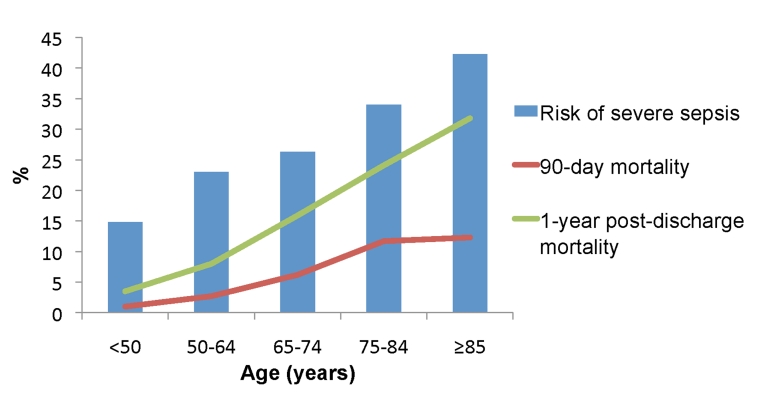
90-day mortality measured from day of hospital admission. 1-year post-discharge mortality measured from day of hospital discharge. All rates increased significantly across age groups (P<0.001).
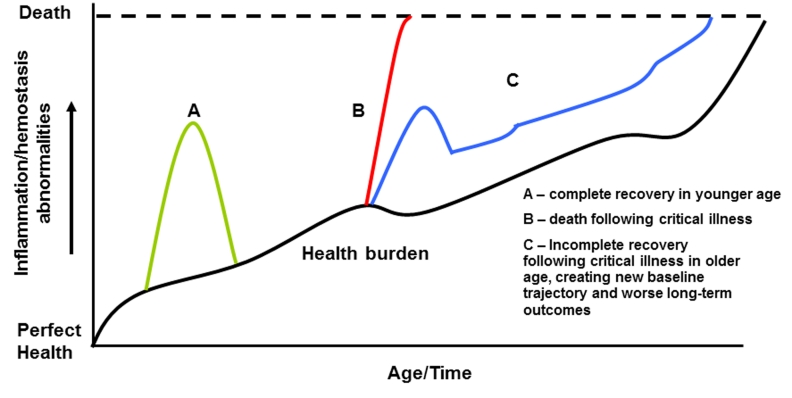
Aging is associated with a baseline increase in inflammation and hemostasis abnormalities (dark black line). Three potential outcomes are shown following sepsis. Younger adults have a lower incidence and mortality with and are expected to return to baseline inflammatory and hemostasis levels after infection (A). In older adults, a higher baseline inflammation/hemostasis burden increases the risk of sepsis and higher mortality (B). Even among older survivors of sepsis, processes that down-regulate inflammation after infection may be dysregulated, leading to a higher inflammation/hemostasis burden post-infection and worse long-term outcomes, including repeat infection and exacerbation of chronic conditions (C).
References
-
- Girard TD, Ely EW. Bacteremia and sepsis in older adults. Clin Geriatr Med. 2007;23:633–647. viii. - PubMed
-
- Salminen A, Huuskonen J, Ojala J, Kauppinen A, Kaarniranta K, Suuronen T. Activation of innate immunity system during aging: NF-kB signaling is the molecular culprit of inflamm-aging. Ageing Res Rev. 2008;7:83–105. - PubMed
-
- Krabbe KS, Pedersen M, Bruunsgaard H. Inflammatory mediators in the elderly. Exp Gerontol. 2004;39:687–699. - PubMed
-
- Walston J, McBurnie MA, Newman A, Tracy RP, Kop WJ, Hirsch CH, Gottdiener J, Fried LP. Frailty and activation of the inflammation and coagulation systems with and without clinical comorbidities: results from the Cardiovascular Health Study. Arch Intern Med. 2002;162:2333–2341. - PubMed
-
- Hotchkiss RS, Karl IE. The pathophysiology and treatment of sepsis. N Engl J Med. 2003;348:138–150. - PubMed
LinkOut - more resources
Full Text Sources