


The prevalence, rate of progression, and treatment of elbow flexion contracture in children with brachial plexus birth palsy
- PMID: 22398733
- PMCID: PMC3284859
- DOI: 10.2106/JBJS.J.00750
The prevalence, rate of progression, and treatment of elbow flexion contracture in children with brachial plexus birth palsy
Abstract
Background: Elbow flexion contracture is a well-known complication of brachial plexus birth palsy that adversely affects upper-extremity function. The prevalence, risk factors, and rate of progression of elbow flexion contracture associated with brachial plexus birth palsy have not been established, and the effectiveness of nonoperative treatment involving nighttime splinting or serial casting has not been well studied.
Methods: The medical records of 319 patients with brachial plexus birth palsy who had been seen at our institution between 1992 and 2009 were retrospectively reviewed to identify patients with an elbow flexion contracture (≥10°). The chi-square test for trend and the Kaplan-Meier estimator were used to evaluate risk factors for contracture, including age, sex, and the extent of brachial plexus involvement. Longitudinal models were used to estimate the rate of contracture progression and the effectiveness of nonoperative treatment.
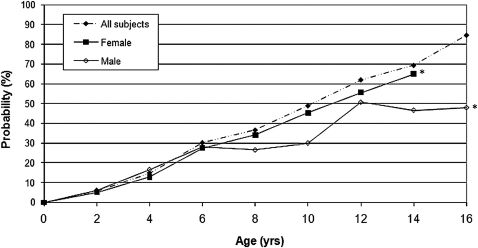
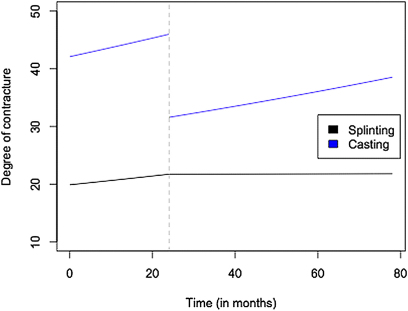
Results: An elbow flexion contracture was present in 48% (152) of the patients with brachial plexus birth palsy. The median age of onset was 5.1 years (range, 0.25 to 14.8 years). The contracture was ≥30° in 36% (fifty-four) of these 152 patients and was accompanied by a documented radial head dislocation in 6% (nine). The prevalence of contracture increased with increasing age (p < 0.001) but was not significantly associated with sex or with the extent of brachial plexus involvement. The magnitude of the contracture increased by 4.4% per year before treatment (p < 0.01). The magnitude of the contracture decreased by 31% when casting was performed (p < 0.01) but thereafter increased again at the same rate of 4.4% per year. The magnitude of the contracture did not improve when splinting was performed but the rate of increase thereafter decreased to <0.1% per year (p = 0.04).
Conclusions: The prevalence of elbow flexion contracture in children with brachial plexus birth palsy may be greater than clinicians perceive. The prevalence increased with patient age but was not significantly affected by sex or by the extent of brachial plexus involvement. Serial casting may initially improve severe contractures, whereas nighttime splinting may prevent further progression of milder contractures.
Figures
References
-
- Adler JB, Patterson RL., Jr Erb's palsy. Long-term results of treatment in eighty-eight cases. J Bone Joint Surg Am. 1967;49:1052-64 - PubMed
-
- Hardy AE. Birth injuries of the brachial plexus: incidence and prognosis. J Bone Joint Surg Br. 1981;63:98-101 - PubMed
-
- Hoeksma AF, Wolf H, Oei SL. Obstetrical brachial plexus injuries: incidence, natural course and shoulder contracture. Clin Rehabil. 2000;14:523-6 - PubMed
-
- Jackson ST, Hoffer MM, Parrish N. Brachial-plexus palsy in the newborn. J Bone Joint Surg Am. 1988;70:1217-20 - PubMed
MeSH terms
LinkOut - more resources
Full Text Sources
Medical
Molecular Biology Databases
