


Mitochondria in neurodegeneration
- PMID: 22399427
- PMCID: PMC3618469
- DOI: 10.1007/978-94-007-2869-1_12
Mitochondria in neurodegeneration
Abstract
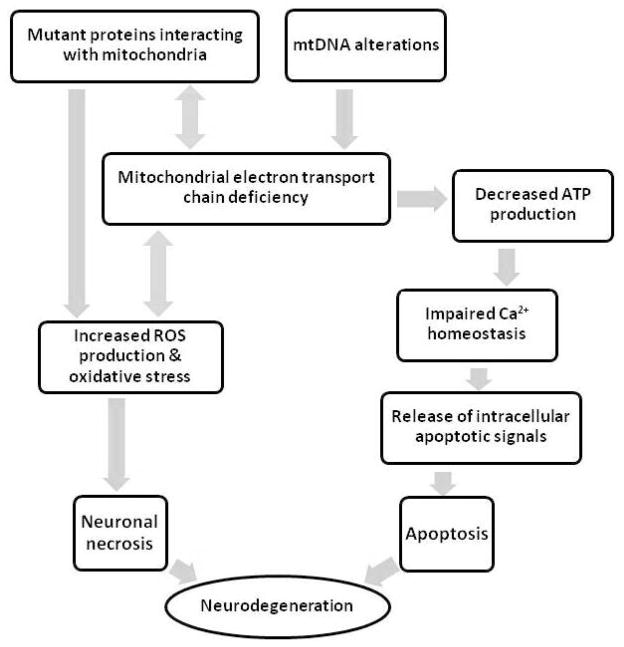
Many neurodegenerative diseases demonstrate abnormal mitochondrial morphology and biochemical dysfunction. Alterations are often systemic rather than brain-limited. Mitochondrial dysfunction may arise as a consequence of abnormal mitochondrial DNA, mutated nuclear proteins that interact directly or indirectly with mitochondria, or through unknown causes. In most cases it is unclear where mitochondria sit in relation to the overall disease cascades that ultimately causes neuronal dysfunction and death, and there is still controversy regarding the question of whether mitochondrial dysfunction is a necessary step in neurodegeneration. In this chapter we highlight and catalogue mitochondrial perturbations in some of the major neurodegenerative diseases including Alzheimer's disease (AD), Parkinson's disease (PD), amyotrophic lateral sclerosis (ALS), and Huntington's disease (HD). We consider data that suggest mitochondria may be critically involved in neurodegenerative disease neurodegeneration cascades.
Figures
References
-
- Abou-Sleiman PM, Muqit MMK, Wood NW. Expanding insights of mitochondrial dysfunction in Parkinson’s disease. Nature Reviews Neuroscience. 2006;7:13. - PubMed
-
- Ali SF, David SN, Newport GD, Cadet JL, Slikker W., Jr MPTP-induced oxidative stress and neurotoxicity are age-dependent: evidence from measures of reactive oxygen species and striatal dopamine levels. Synapse. 1994;18:27–34. - PubMed
-
- Antuono P, Beyer J. The burden of dementia. A medical and research perspective. Theoretical Medicine and Bioethics. 1999;20:11. - PubMed
-
- Arenas J, Campos Y, Ribacoba R, Martin MA, Rubio JC, Ablanedo P, Cabello A. Complex I defect in muscle from patients with Huntington’s disease. Ann Neurol. 1998;43:397–400. - PubMed
Publication types
MeSH terms
Grants and funding
LinkOut - more resources
Full Text Sources
Other Literature Sources
Medical
Miscellaneous
