


Gram-negative bacterial sensors for eukaryotic signal molecules
- PMID: 22399982
- PMCID: PMC3290508
- DOI: 10.3390/s90906967
Gram-negative bacterial sensors for eukaryotic signal molecules
Abstract
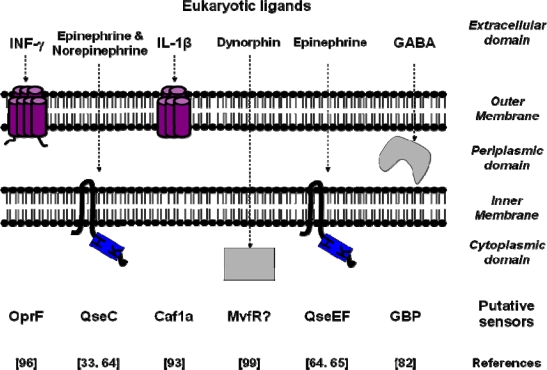
Ample evidence exists showing that eukaryotic signal molecules synthesized and released by the host can activate the virulence of opportunistic pathogens. The sensitivity of prokaryotes to host signal molecules requires the presence of bacterial sensors. These prokaryotic sensors, or receptors, have a double function: stereospecific recognition in a complex environment and transduction of the message in order to initiate bacterial physiological modifications. As messengers are generally unable to freely cross the bacterial membrane, they require either the presence of sensors anchored in the membrane or transporters allowing direct recognition inside the bacterial cytoplasm. Since the discovery of quorum sensing, it was established that the production of virulence factors by bacteria is tightly growth-phase regulated. It is now obvious that expression of bacterial virulence is also controlled by detection of the eukaryotic messengers released in the micro-environment as endocrine or neuro-endocrine modulators. In the presence of host physiological stress many eukaryotic factors are released and detected by Gram-negative bacteria which in return rapidly adapt their physiology. For instance, Pseudomonas aeruginosa can bind elements of the host immune system such as interferon-γ and dynorphin and then through quorum sensing circuitry enhance its virulence. Escherichia coli sensitivity to the neurohormones of the catecholamines family appears relayed by a recently identified bacterial adrenergic receptor. In the present review, we will describe the mechanisms by which various eukaryotic signal molecules produced by host may activate Gram-negative bacteria virulence. Particular attention will be paid to Pseudomonas, a genus whose representative species, P. aeruginosa, is a common opportunistic pathogen. The discussion will be particularly focused on the pivotal role played by these new types of pathogen sensors from the sensing to the transduction mechanism involved in virulence factors regulation. Finally, we will discuss the consequence of the impact of host signal molecules on commensally or opportunistic pathogens associated with different human tissue.
Keywords: cytokines; hormones; host-pathogen interactions; neurotransmitters; pathogens; pseudomonas; sensors; virulence.
Figures
References
LinkOut - more resources
Full Text Sources
Research Materials
