


De novo sequencing of circulating miRNAs identifies novel markers predicting clinical outcome of locally advanced breast cancer
- PMID: 22400902
- PMCID: PMC3342150
- DOI: 10.1186/1479-5876-10-42
De novo sequencing of circulating miRNAs identifies novel markers predicting clinical outcome of locally advanced breast cancer
Abstract
Background: MicroRNAs (miRNAs) have been recently detected in the circulation of cancer patients, where they are associated with clinical parameters. Discovery profiling of circulating small RNAs has not been reported in breast cancer (BC), and was carried out in this study to identify blood-based small RNA markers of BC clinical outcome.
Methods: The pre-treatment sera of 42 stage II-III locally advanced and inflammatory BC patients who received neoadjuvant chemotherapy (NCT) followed by surgical tumor resection were analyzed for marker identification by deep sequencing all circulating small RNAs. An independent validation cohort of 26 stage II-III BC patients was used to assess the power of identified miRNA markers.
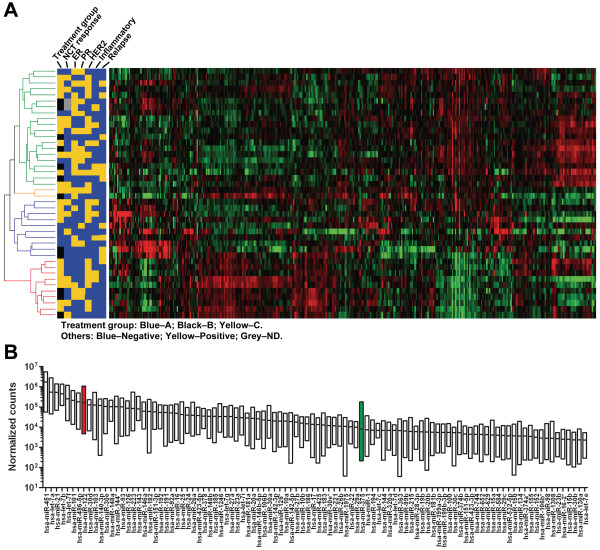
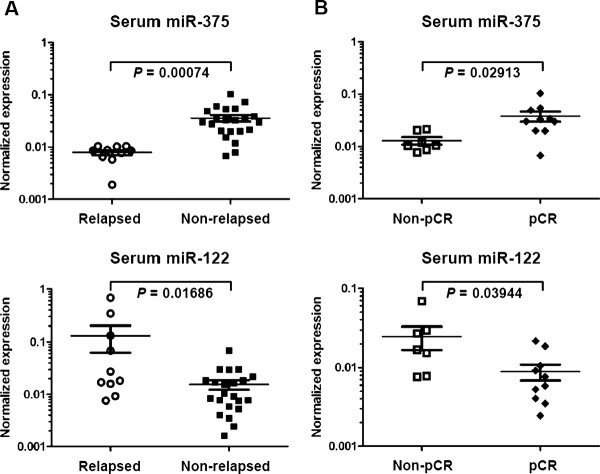
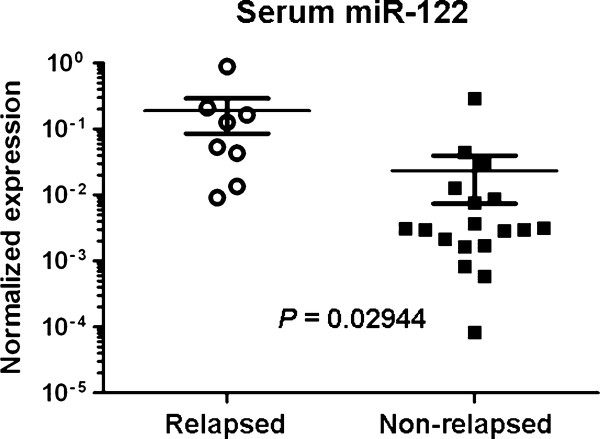
Results: More than 800 miRNA species were detected in the circulation, and observed patterns showed association with histopathological profiles of BC. Groups of circulating miRNAs differentially associated with ER/PR/HER2 status and inflammatory BC were identified. The relative levels of selected miRNAs measured by PCR showed consistency with their abundance determined by deep sequencing. Two circulating miRNAs, miR-375 and miR-122, exhibited strong correlations with clinical outcomes, including NCT response and relapse with metastatic disease. In the validation cohort, higher levels of circulating miR-122 specifically predicted metastatic recurrence in stage II-III BC patients.
Conclusions: Our study indicates that certain miRNAs can serve as potential blood-based biomarkers for NCT response, and that miR-122 prevalence in the circulation predicts BC metastasis in early-stage patients. These results may allow optimized chemotherapy treatments and preventive anti-metastasis interventions in future clinical applications.
Figures
References
-
- National Cancer Institute Surveillance Epidemiology and End Results. Cancer survival statistics. http://seer.cancer.gov/statistics/types.html#4
Publication types
MeSH terms
Substances
Grants and funding
LinkOut - more resources
Full Text Sources
Other Literature Sources
Medical
Research Materials
Miscellaneous
