


Fungal Planet description sheets: 92-106
- PMID: 22403481
- PMCID: PMC3251320
- DOI: 10.3767/003158511X617561
Fungal Planet description sheets: 92-106
Abstract
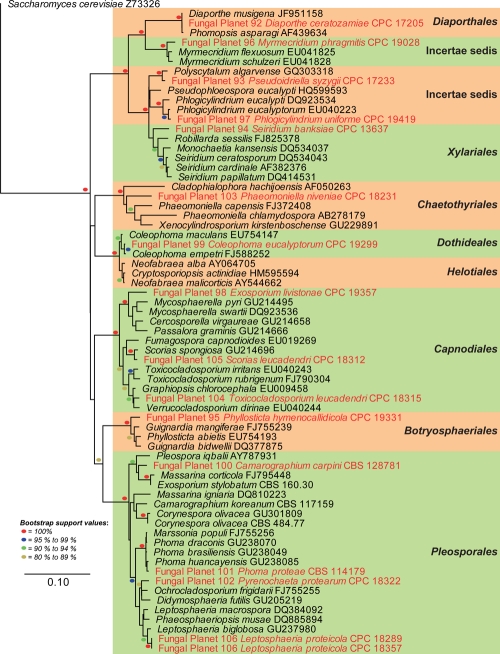
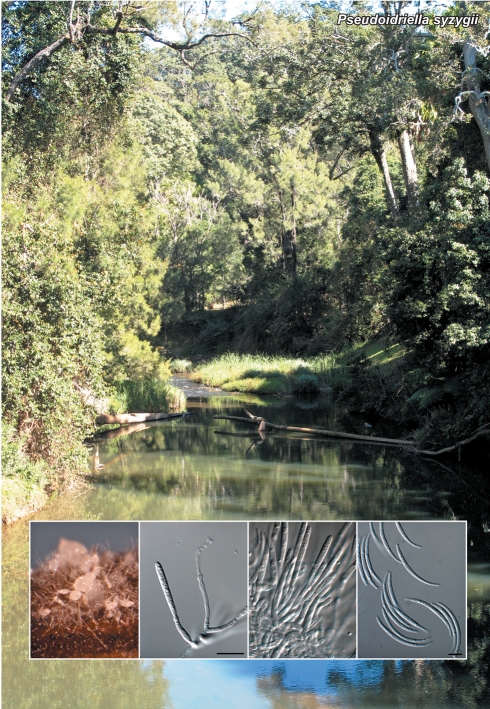
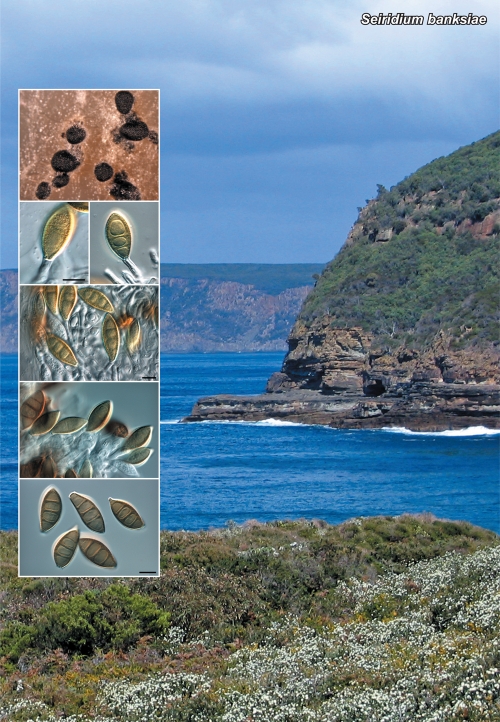
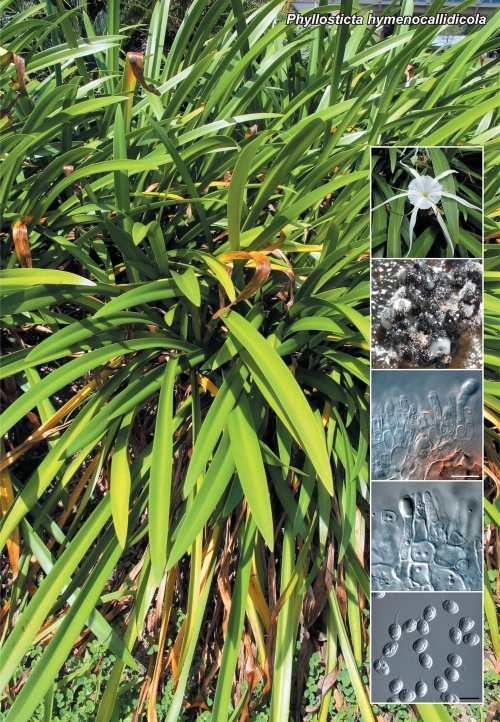
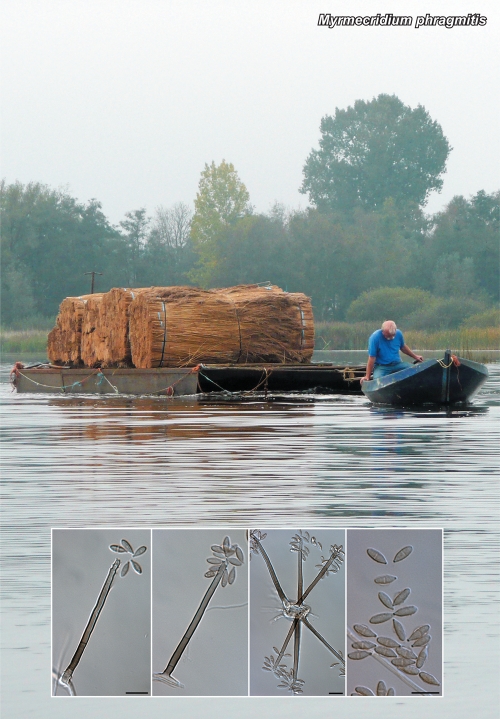
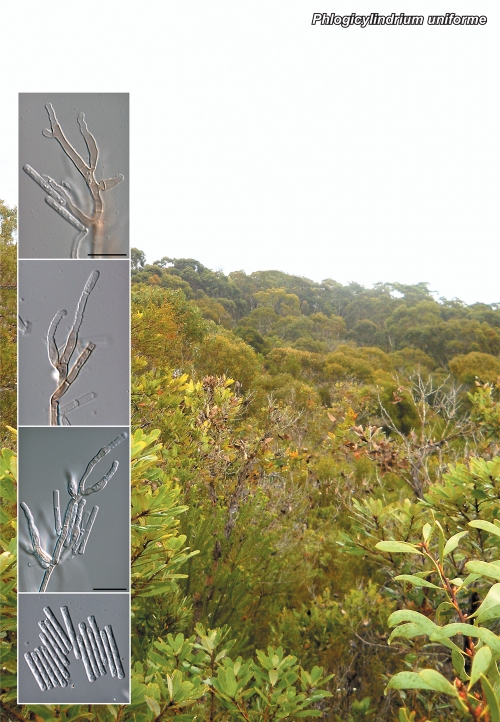
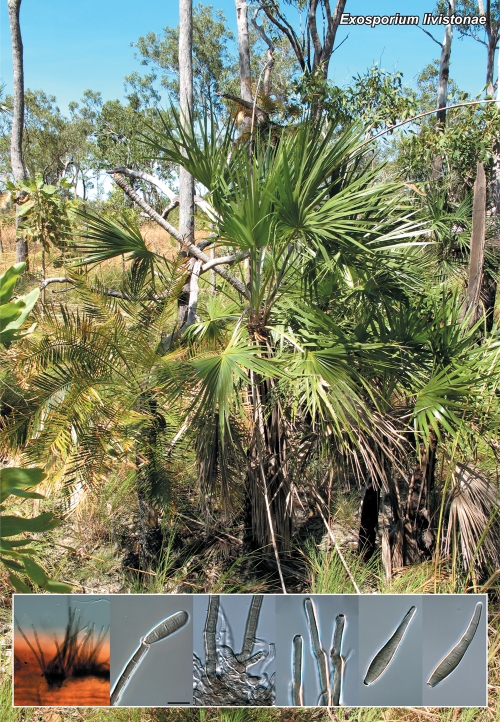
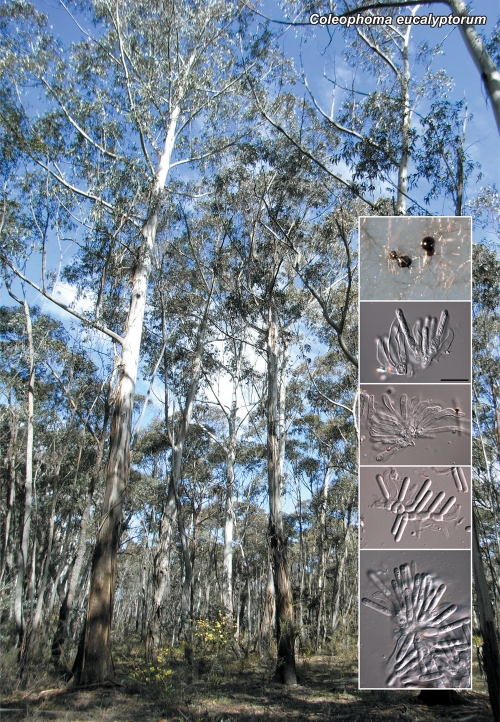
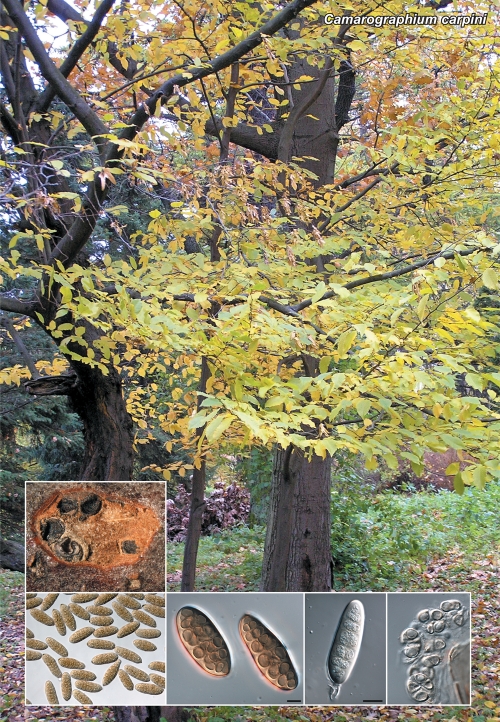
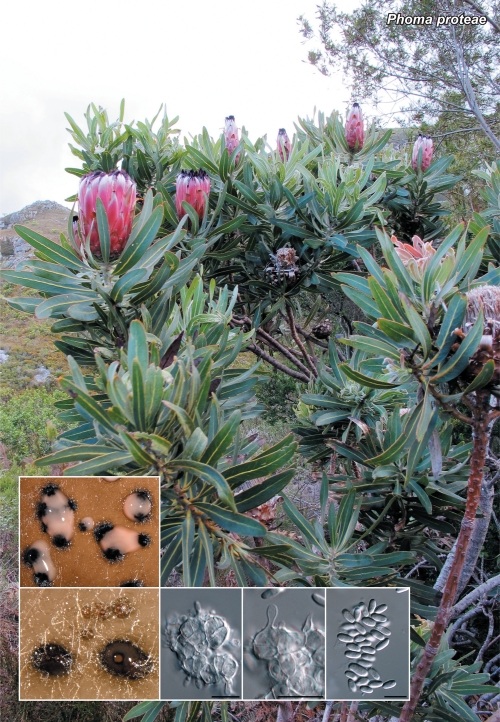
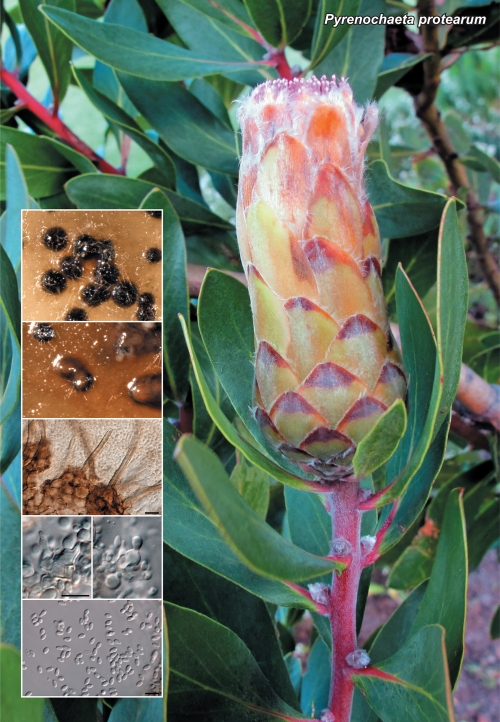
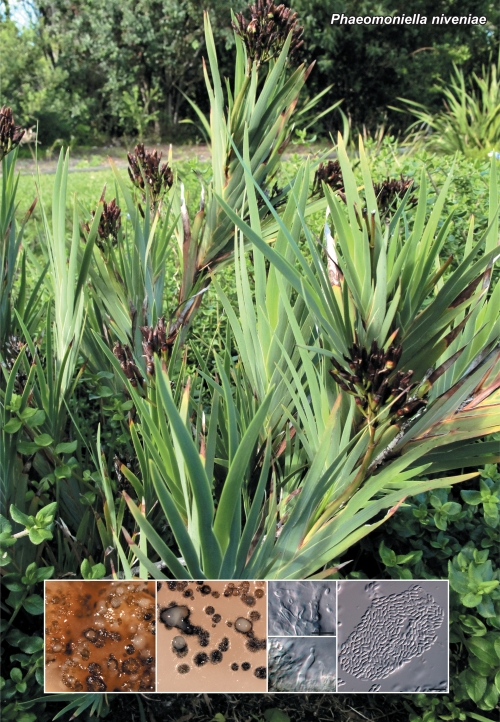
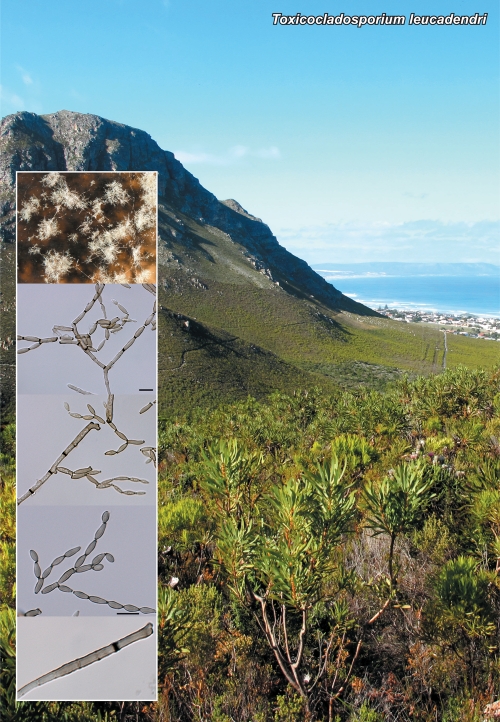
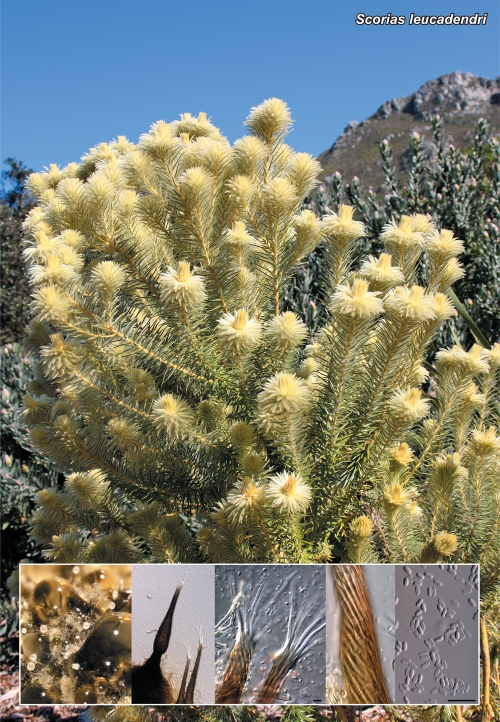
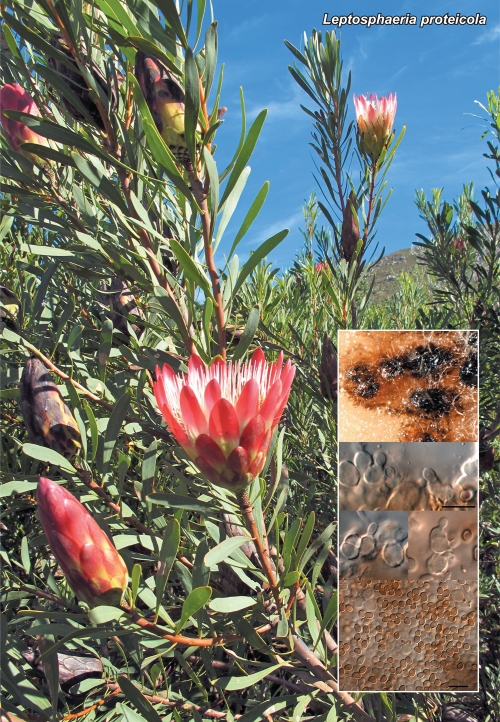
Novel species of microfungi described in the present study include the following from Australia: Diaporthe ceratozamiae on Ceratozamia robusta, Seiridium banksiae on Banksia marginata, Phyllosticta hymenocallidicola on Hymenocallis littoralis, Phlogicylindrium uniforme on Eucalyptus cypellocarpa, Exosporium livistonae on Livistona benthamii and Coleophoma eucalyptorum on Eucalyptus piperita. Several species are also described from South Africa, namely: Phoma proteae, Pyrenochaeta protearum and Leptosphaeria proteicola on Protea spp., Phaeomoniella niveniae on Nivenia stokoei, Toxicocladosporium leucadendri on Leucadendron sp. and Scorias leucadendri on Leucadendron muirii. Other species include Myrmecridium phragmitis on Phragmites australis (Netherlands) and Camarographium carpini on Carpinus betulus (Russia). Furthermore, Pseudoidriella syzygii on Syzygium sp. represents a novel genus of hyphomycetes collected in Australia. Morphological and culture characteristics along with ITS DNA barcodes are provided for all taxa.
Keywords: ITS DNA barcodes; LSU; novel fungal species; systematics.
Figures

References
-
- Aveskamp MM, Verkley GJM, Gruyter J de, Murace MA, Perelló A, Woudenberg JHC, Groenewald JZ, Crous PW. 2009. DNA phylogeny reveals polyphyly of Phoma section Peyronellaea and multiple taxonomic novelties. Mycologia 101: 363 – 382 . - PubMed
-
- Boerema GH. 1993. Contributions towards a monograph of Phoma (Coelomycetes) – II Section Peyronellaea. Persoonia 15: 197 – 221 .
-
- Boerema GH, Gruyter J de, Noordeloos ME, Hamers MEC. 2004. Phoma identification manual. Differentiation of specific and infra-specific taxa in culture. CABI publishing, Wallingford, UK: .
LinkOut - more resources
Full Text Sources
Molecular Biology Databases
Miscellaneous