. 2012;7(3):e32247.
doi: 10.1371/journal.pone.0032247. Epub 2012 Mar 5.

Development of a humanized HLA-A2.1/DP4 transgenic mouse model and the use of this model to map HLA-DP4-restricted epitopes of HBV envelope protein

Affiliations

Development of a humanized HLA-A2.1/DP4 transgenic mouse model and the use of this model to map HLA-DP4-restricted epitopes of HBV envelope protein

Zhitao Ru et al. PLoS One. 2012.

Abstract

A new homozygous humanized transgenic mouse strain, HLA-A2.1(+/+)HLA-DP4(+/+) hCD4(+/+)mCD4(-/-)IAβ(-/-)β2m(-/-) (HLA-A2/DP4), was obtained by crossing the previously characterized HLA-A2(+/+)β2m(-/-) (A2) mouse and our previously created HLA-DP4(+/+) hCD4(+/+)mCD4(-/-)IAβ(-/-) (DP4) mouse. We confirmed that the transgenes (HLA-A2, HLA-DP4, hCD4) inherited from the parental A2 and DP4 mice are functional in the HLA-A2/DP4 mice. After immunizing HLA-A2/DP4 mice with a hepatitis B DNA vaccine, hepatitis B virus-specific antibodies, HLA-A2-restricted and HLA-DP4-restricted responses were observed to be similar to those in naturally infected humans. Therefore, the present study demonstrated that HLA-A2/DP4 transgenic mice can faithfully mimic human cellular responses. Furthermore, we reported four new HLA-DP4-restricted epitopes derived from HBsAg that were identified in both vaccinated HLA-A2/DP4 mice and HLA-DP4-positive human individuals. The HLA-A2/DP4 mouse model is a promising preclinical animal model carrying alleles present to more than a quarter of the human population. This model should facilitate the identification of novel HLA-A2- and HLA-DP4-restricted epitopes and vaccine development as well as the characterization of HLA-DP4-restricted responses against infection in humans.


Conflict of interest statement

Competing Interests: The authors have read the journal's policy and have the following conflict: David Ojcius is an editor for PLoS ONE. This does not alter the authors' adherence to all the PLoS ONE policies on sharing data and materials.

Figures

Figure 1
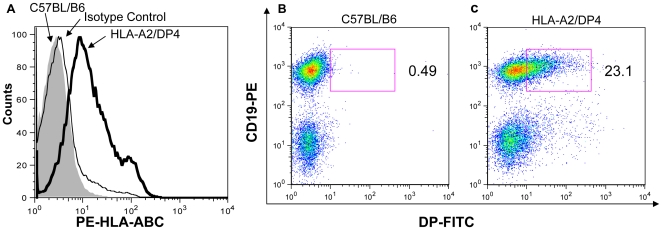
Figure 1. Flow cytometric analysis of HLA-A2 and HLA-DP4 expression of transgenic molecules.
(A) Splenocytes from HLA-A2/DP4 (bold histogram) and wild-type C57BL/B6 (shadowed histogram) mice were isolated and stained with PE-labeled anti-HLA-ABC mAb to observe the HLA-A2 expression. PE-labeled mouse IgG2a, k mAb was used as isotype control (thinned histogram) for staining HLA-A2/DP4 mouse. (B) Splenocytes from wild-type C57BL/B6 mice (Figure 1B) and HLA-A2/DP4 (Figure 1C) were isolated and stained with PE-labeled anti-CD19 and FITC-labeled anti-HLA-DP mAb to observe the HLA-DP4 expression.
Figure 2
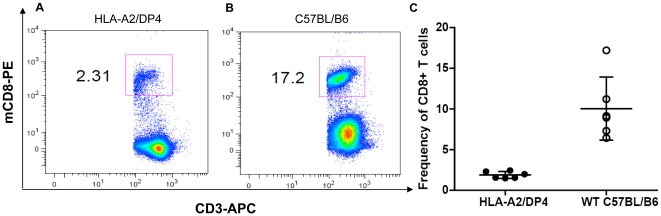
Figure 2. Flow cytometric analysis of peripheral CD8+ T lymphocytes.
Splenocytes from HLA-A2/DP4 (Figure 2A) and wild-type C57BL/B6 mice (Figure 2B) were isolated and CD3+ T cells were gated by staining APC-conjugated anti-CD3 mAb and CD8+ T cells were gated by staining PE-conjugated anti-mCD8 mAb. Frequencies of CD8+ T cells among total CD3+ T cells from 6 mice of each group were shown in Figure 2C.
Figure 3
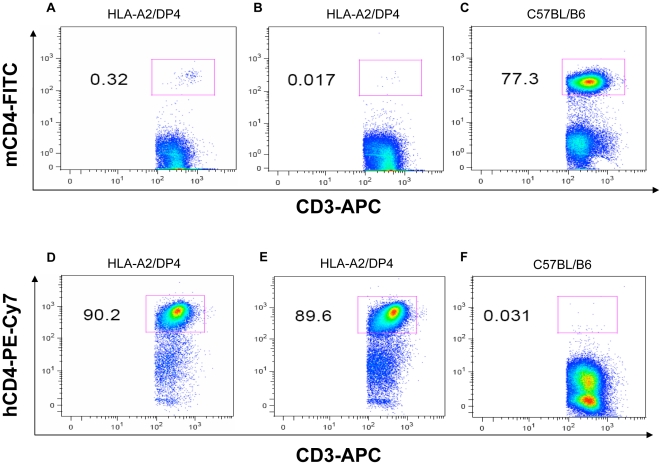
Figure 3. Flow cytometric analysis of peripheral mCD4+ and hCD4+ T lymphocytes.
Splenocytes from HLA-A2/DP4 (Figure 3A, 3B, 3D and 3E) and wild-type C57BL/B6 (Figure 3C and 3F) mice were isolated and CD3+ T cells were gated by staining with APC-conjugated anti-CD3 mAb. Meanwhile, FITC-conjugated anti-mCD4 and PECy7-conjugated anti-hCD4 antibodies were simultaneously used to observe the mCD4 and hCD4 expression in HLA-A2/DP4 and WT C57BL/B6 mice.
Figure 4
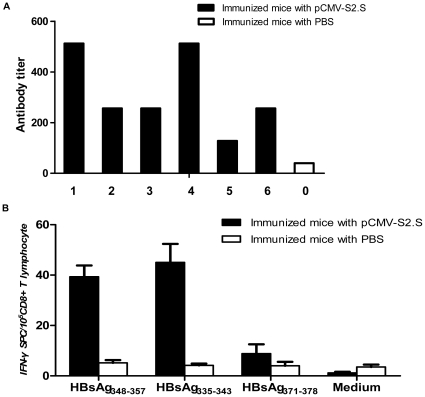
Figure 4. HBs-specific antibody and cytotoxic responses.
(A) Sera were collected 10 days after the third immunization, and the titers of the antibody (IgG) against HBs particles in the immunized mice (solid bar) were determined and compared with the mean responses of six PBS-immunized mice (hollow bar) in an ELISA assay. (B) HBs epitope-specific IFN-γ production by CTLs was determined by measuring response to the HLA-A2-restricted epitopes HBsAg348–357 and HBsAg335–343 and to the H-2 Kb-restricted epitope HBsAg371–378 in immunized mice (solid bar) and PBS-immunized mice (hollow bar).
Figure 5
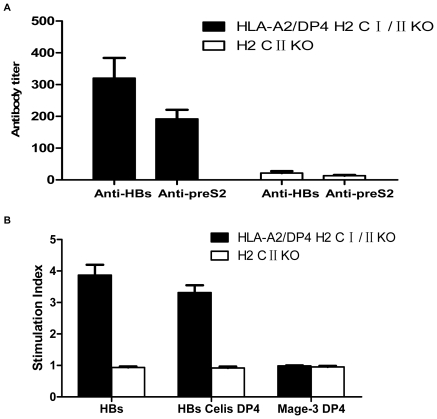
Figure 5. HBs-specific antibody and proliferative response.
(A) The titers of antibody (IgG) from HLA-A2/DP4 transgenic mice (solid bar) and H-2 class II-deficient mice (hollow bar) against HBs particles and the preS2109–134 peptide were determined using an ELISA assay (Figure 5A). (B) The HLA-DP4-restricted proliferation of CD4+ T cells from HLA-A2/DP4 transgenic mice (solid bar) and H-2 class II-deficient mice (hollow bar) after stimulation with HBs particles, the previously described HBV DP4 restricted peptide, S181–S192, or the control HLA-DP4-restricted epitope, Mag-3243–258 (Figure 5B).

References

    1. Healey GD, Elvin SJ, Morton M, Williamson ED. Humoral and cell-mediated adaptive immune responses are required for protection against Burkholderia pseudomallei Challenge and bacterial clearance postinfection. Infect Immun. 2005;73:5945–5951. - PMC - PubMed
    1. Viret C, Janeway CAJ. MHC and T cell development. Rev Immunogenet. 1999;1:91–104. - PubMed
    1. Sprent J, Gao EK, Webb SR. T cell reactivity to MHC molecules: Immunity vs. tolerance. Science. 1990;248:1357–1363. - PubMed
    1. Botten J, Whitton JL, Barrowman P, Sidney J, Whitmire JK, et al. A multivalent vaccination strategy for the prevention of Old World arenavirus infection in humans. J Virol. 2010;84(19):9947–56. - PMC - PubMed
    1. Ribeiro SP, Rosa DS, Fonseca SG, Mairena EC, Postol E, et al. A vaccine encoding conserved promiscuous HIV CD4 epitopes induces broad T cell responses in mice transgenic to multiple common HLA class II molecules. PLoS One. 2010;5(6):e11072. - PMC - PubMed

Publication types

MeSH terms