


The Rare Diseases Clinical Research Network Contact Registry update: features and functionality
- PMID: 22405970
- PMCID: PMC3652679
- DOI: 10.1016/j.cct.2012.02.012
The Rare Diseases Clinical Research Network Contact Registry update: features and functionality
Abstract
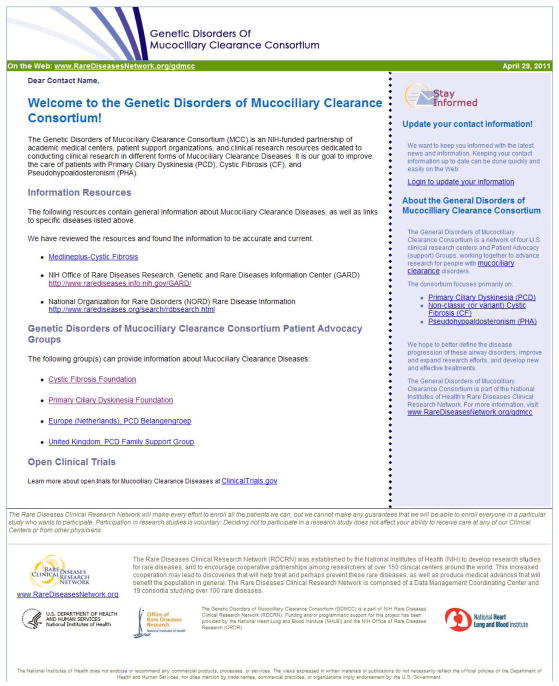
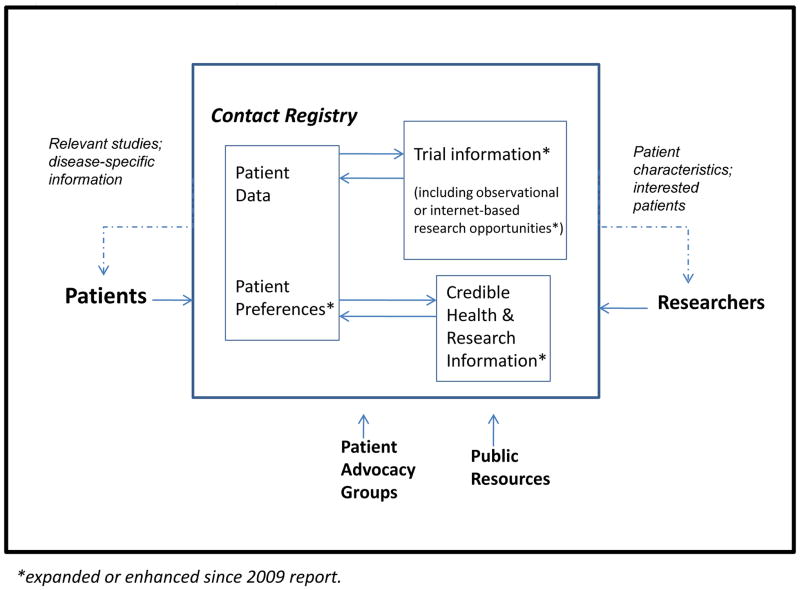
The Rare Diseases Clinical Research Network (RDCRN) Contact Registry has grown in size and scope since it was first reported in this journal in 2007. In this paper, we reflect on our seven years' experience developing and expanding the RDCRN Contact Registry to include many more rare diseases. We present the functional and data requirements that motivated this registry, and the new features and policies that have been developed since. Given the high costs and long-term commitment required to build patient registries, the RDCRN Contact Registry experience represents a reasonable approach for identifying and cultivating potential research populations, with minimal resources and patient burden. The basic model of a patient-reported registry has not changed since our 2007 report, but the number of diseases has grown from 42 to 201, and the types of information that are exchanged with participants has expanded. A patient-directed information-sharing feature has been added to reduce barriers to communication between investigators and patients affected by rare and genetic diseases. As specific data and research needs arise, the Contact Registry can be leveraged to access needed data or to solicit patients for particular research opportunities. This multiple-disease registry is scalable, expandable, and standards-driven, and has become a model for clinical and translational research across rare and many other diseases.
Copyright © 2012 Elsevier Inc. All rights reserved.
Figures
References
Publication types
MeSH terms
Grants and funding
LinkOut - more resources
Full Text Sources
Medical
Research Materials
