Treatment-specific changes in decentering following mindfulness-based cognitive therapy versus antidepressant medication or placebo for prevention of depressive relapse
- PMID: 22409641
- PMCID: PMC3365628
- DOI: 10.1037/a0027483
Treatment-specific changes in decentering following mindfulness-based cognitive therapy versus antidepressant medication or placebo for prevention of depressive relapse
Abstract
Objective: To examine whether metacognitive psychological skills, acquired in mindfulness-based cognitive therapy (MBCT), are also present in patients receiving medication treatments for prevention of depressive relapse and whether these skills mediate MBCT's effectiveness.
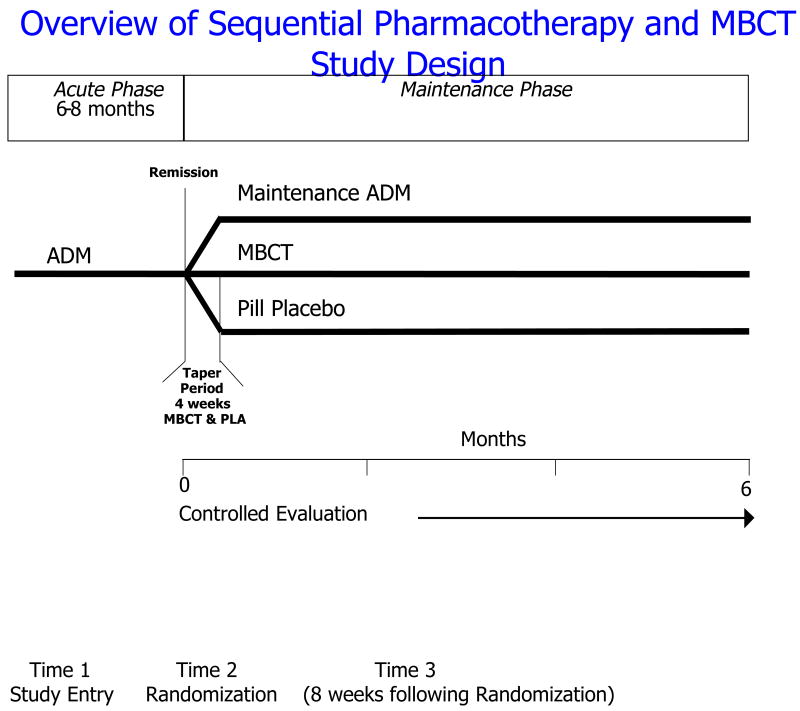
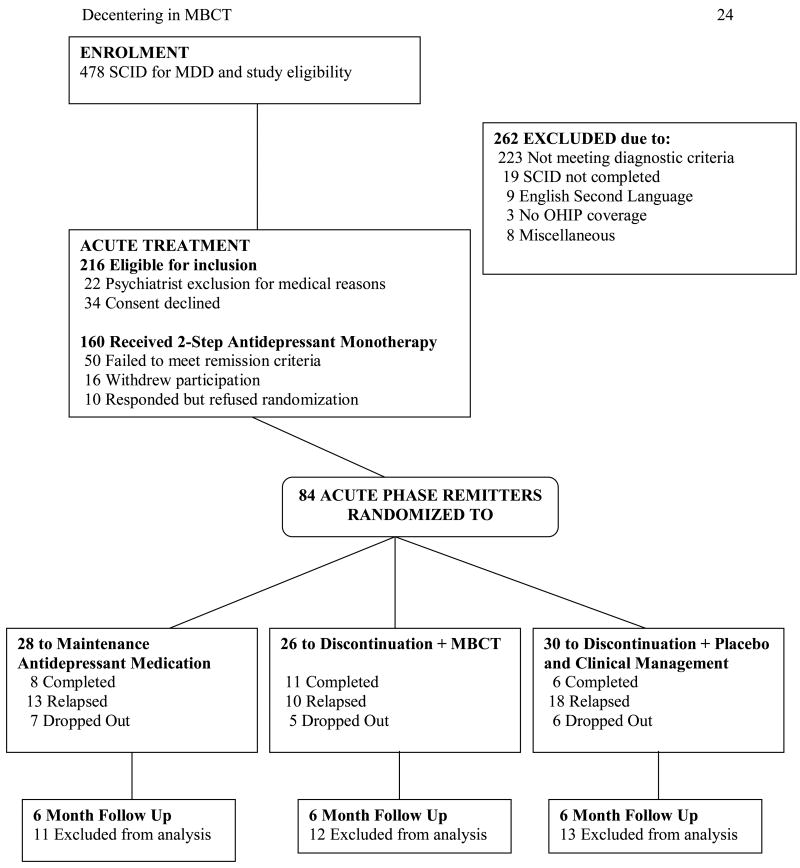
Method: This study, embedded within a randomized efficacy trial of MBCT, was the first to examine changes in mindfulness and decentering during 6-8 months of antidepressant treatment and then during an 18-month maintenance phase in which patients discontinued medication and received MBCT, continued on antidepressants, or were switched to a placebo. In total, 84 patients (mean age = 44 years, 58% female) were randomized to 1 of these 3 prevention conditions. In addition to symptom variables, changes in mindfulness, rumination, and decentering were assessed during the phases of the study.
Results: Pharmacological treatment of acute depression was associated with reductions in scores for rumination and increased wider experiences. During the maintenance phase, only patients receiving MBCT showed significant increases in the ability to monitor and observe thoughts and feelings as measured by the Wider Experiences (p < .01) and Decentering (p < .01) subscales of the Experiences Questionnaire and by the Toronto Mindfulness Scale. In addition, changes in Wider Experiences (p < .05) and Curiosity (p < .01) predicted lower Hamilton Rating Scale for Depression scores at 6-month follow-up.
Conclusions: An increased capacity for decentering and curiosity may be fostered during MBCT and may underlie its effectiveness. With practice, patients can learn to counter habitual avoidance tendencies and to regulate dysphoric affect in ways that support recovery.
Figures
References
-
- Allen M, Bromley A, Kuyken W, Sonnenberg S. Participants' experiences of mindfulness-based cognitive therapy: “It changed me in just about every way possible”. Behavioral and Cognitive Psychotherapy. 2009;37:413–30. - PubMed
-
- Fresco DM, Moore MT, Dulmen MHM, Segal ZV, Ma SH, Teasdale JD, et al. Initial psychometric properties of the Experiences Questionnaire: Validation of a self-report measure of decentering. Behavior Therapy. 2007;38:234–246. - PubMed
-
- Kuyken W, Watkins E, Holden E, White K, Taylor RS, Byford S, et al. How does mindfulness-based cognitive therapy work? Behaviour Research and Therapy. 2010;48:1105–1112. - PubMed