


A randomized trial of a web-based intervention to improve migraine self-management and coping
- PMID: 22413151
- PMCID: PMC3305283
- DOI: 10.1111/j.1526-4610.2011.02031.x
A randomized trial of a web-based intervention to improve migraine self-management and coping
Abstract
Objective: To test the clinical efficacy of a web-based intervention designed to increase patient self-efficacy to perform headache self-management activities and symptom management strategies, and reduce migraine-related psychological distress.
Background: In spite of their demonstrated efficacy, behavioral interventions are used infrequently as an adjunct in medical treatment of migraine. Little clinical attention is paid to the behavioral factors that can help manage migraine more effectively and improve the quality of care and quality of life. Access to evidenced-based, tailored, behavioral treatment is limited for many people with migraine.
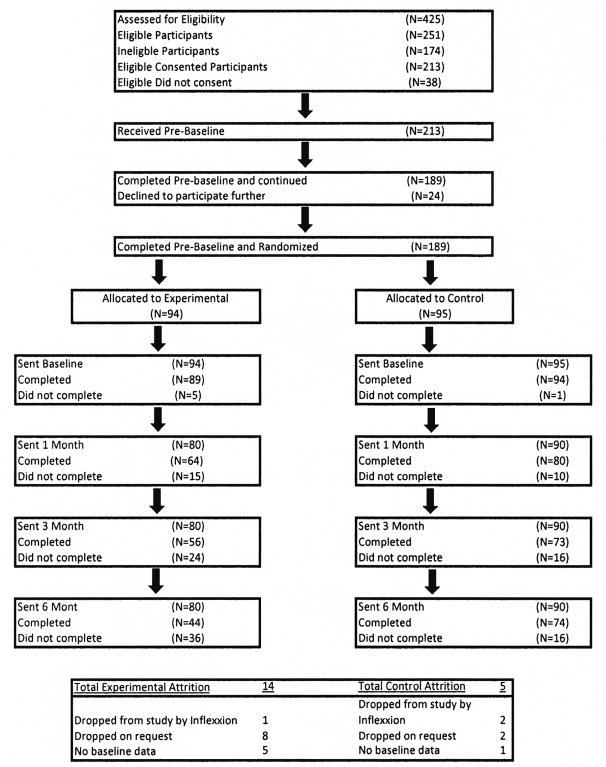
Design: The study is a parallel group design with 2 conditions: (1) an experimental group exposed to the web intervention; and (2) a no-treatment control group that was not exposed to the intervention. Assessments for both groups were conducted at baseline (T1), 1-month (T2), 3-months (T3), and 6-months (T4).
Results: Compared with controls, participants in the experimental group reported significantly: increased headache self-efficacy, increased use of relaxation, increased use of social support, decreased pain catastrophizing, decreased depression, and decreased stress. The hypothesis that the intervention would reduce pain could not be tested.
Conclusions: Demonstrated increases in self-efficacy to perform headache self-management, increased use of positive symptom management strategies, and reported decreased migraine-related depression and stress suggest that the intervention may be a useful behavioral adjunct to a comprehensive medical approach to managing migraine.
Conflict of interest statement
Conflicts of Interest: All of the authors are employees of Inflexxion, Inc, Newton, MA
References
-
- Lipton RB, Bigal ME, Amatniek JC, Stewart WF. Tools for diagnosing migraine and measuring its severity. Headache. 2004;44:387–398. - PubMed
-
- Lipton RB, Bigal ME, Diamond M, Freitag F, Reed ML, Stewart WF On behalf of the AMPP Advisory Group. Migraine prevalence, disease burden, and the need for preventive therapy. Neurology. 2007;68:343–349. - PubMed
-
- Stewart WF, Ricci JA, Chee E, Morganstein D, Lipton R. Lost productive time and cost due to common pain conditions in the US workforce. J Am Med Assoc. 2003;290 (18):2243–2454. - PubMed
-
- Breslau N, Schultz LR, Stewart WF, Lipton RB, Lucia VC, Welch KMA. Headache and Major Depression: Is the association specific to migraine? Neurology. 2000;54(2):308–313. - PubMed
-
- Wenzel R, Dortch M, Cady R, et al. Migraine headache misconceptions: barriers to effective care. Pharmacotherapy. 2004a;24(5):638–48. - PubMed
Publication types
MeSH terms
Grants and funding
LinkOut - more resources
Full Text Sources
Medical
