


Pyrosequencing reveals unique microbial signatures associated with healthy and failing dental implants
- PMID: 22417294
- PMCID: PMC3323747
- DOI: 10.1111/j.1600-051X.2012.01856.x
Pyrosequencing reveals unique microbial signatures associated with healthy and failing dental implants
Abstract
Aim: Although it is established that peri-implantitis is a bacterially induced disease, little is known about the bacterial profile of peri-implant communities in health and disease. The purpose of the present investigation was to examine the microbial signatures of the peri-implant microbiome in health and disease.
Materials and methods: Subgingival and submucosal plaque samples were collected from forty subjects with periodontitis, peri-implantitis, periodontal and peri-implant health and analysed using 16S pyrosequencing.
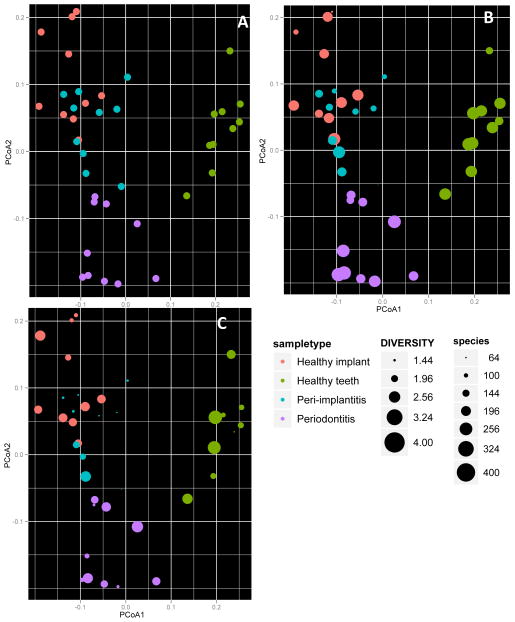
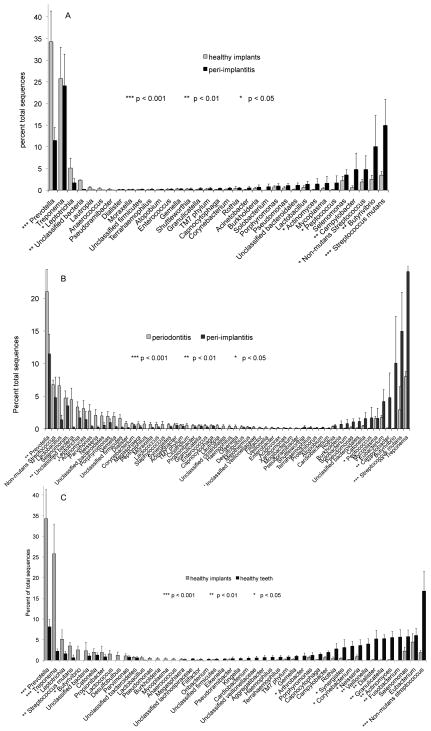
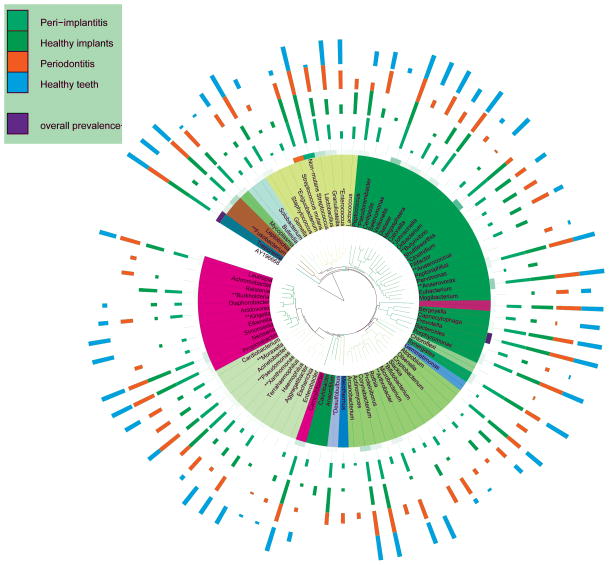
Results: Peri-implant biofilms demonstrated significantly lower diversity than subgingival biofilms in both health and disease, however, several species, including previously unsuspected and unknown organisms, were unique to this niche. The predominant species in peri-implant communities belonged to the genera Butyrivibrio, Campylobacter, Eubacterium, Prevotella, Selenomonas, Streptococcus, Actinomyces, Leptotrichia, Propionibacterium, Peptococcus, Lactococcus and Treponema. Peri-implant disease was associated with lower levels of Prevotella and Leptotrichia and higher levels of Actinomyces, Peptococcus, Campylobacter, non-mutans Streptococcus, Butyrivibrio and Streptococcus mutans than healthy implants. These communities also demonstrated lower levels of Prevotella, non-mutans Streptococcus, Lactobacillus, Selenomonas, Leptotrichia, Actinomyces and higher levels of Peptococcus, Mycoplasma, Eubacterium, Campylobacter, Butyrivibrio, S. mutans and Treponema when compared to periodontitis-associated biofilms.
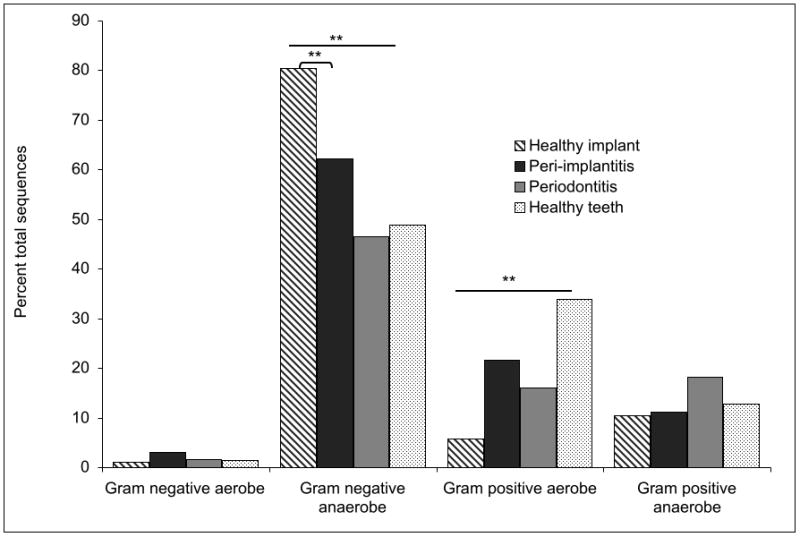
Conclusion: The peri-implant microbiome differs significantly from the periodontal community in both health and disease. Peri-implantitis is a microbially heterogeneous infection with predominantly gram-negative species, and is less complex than periodontitis.
© 2012 John Wiley & Sons A/S.
Conflict of interest statement
None of the authors have any conflicts of interest.
Figures
References
-
- Annual Industry Report. Implant Dentistry. 2000;9:192–194.
-
- Apse P, Ellen RP, Overall CM, Zarb GA. Microbiota and crevicular fluid collagenase activity in the osseointegrated dental implant sulcus: a comparison of sites in edentulous and partially edentulous patients. J Periodontal Res. 1989;24:96–105. - PubMed
-
- Armitage GC. Development of a classification system for periodontal diseases and conditions. Ann Periodontol. 1999;4:1–6. - PubMed
-
- Berglundh T, Zitzmann NU, Donati M. Are peri-implantitis lesions different from periodontitis lesions? J Clin Periodontol. 38(Suppl 11):188–202. - PubMed
-
- Botero JE, Gonzalez AM, Mercado RA, Olave G, Contreras A. Subgingival microbiota in peri-implant mucosa lesions and adjacent teeth in partially edentulous patients. J Periodontol. 2005;76:1490–1495. - PubMed
Publication types
MeSH terms
Substances
Grants and funding
LinkOut - more resources
Full Text Sources
Other Literature Sources
Medical
