


Addition of endothelial progenitor cells to renal revascularization restores medullary tubular oxygen consumption in swine renal artery stenosis
- PMID: 22419692
- PMCID: PMC3378175
- DOI: 10.1152/ajprenal.00563.2011
Addition of endothelial progenitor cells to renal revascularization restores medullary tubular oxygen consumption in swine renal artery stenosis
Abstract
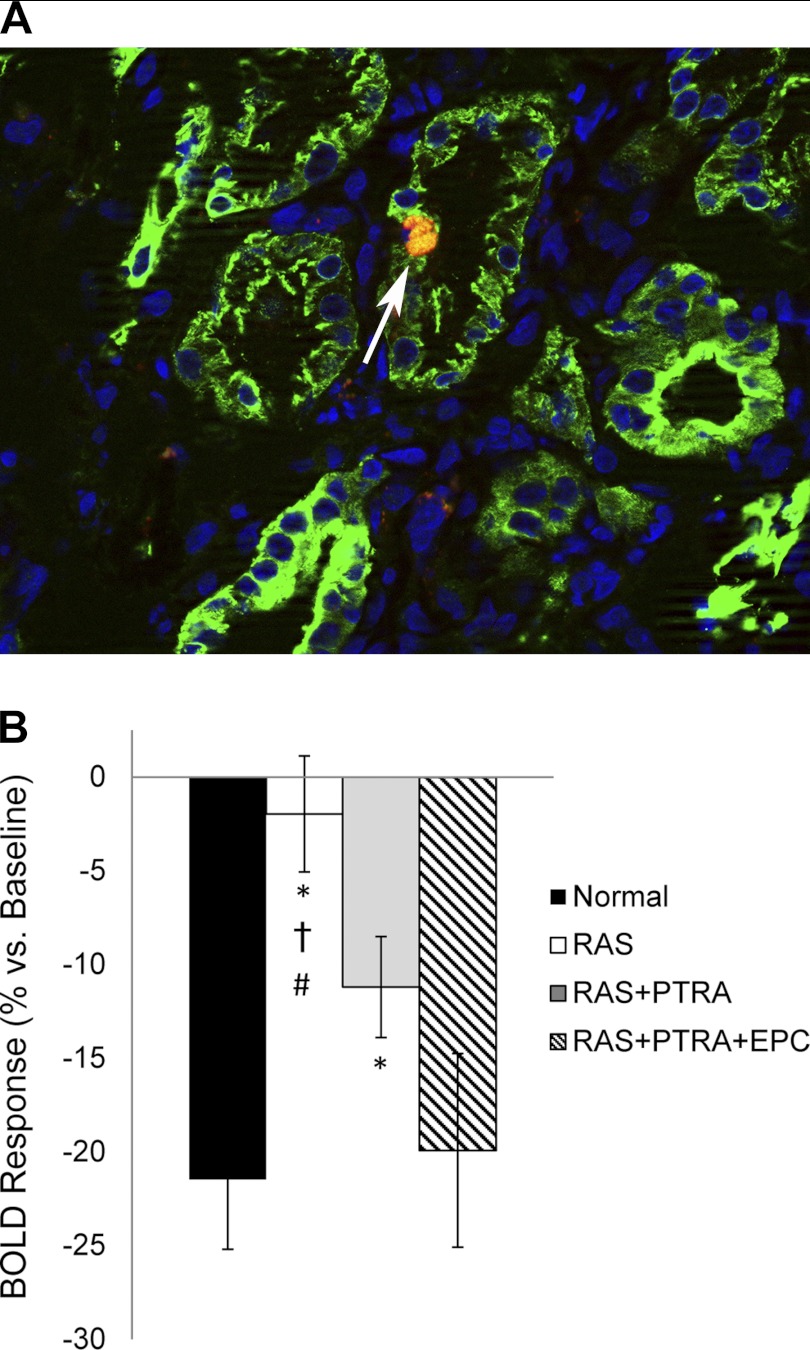
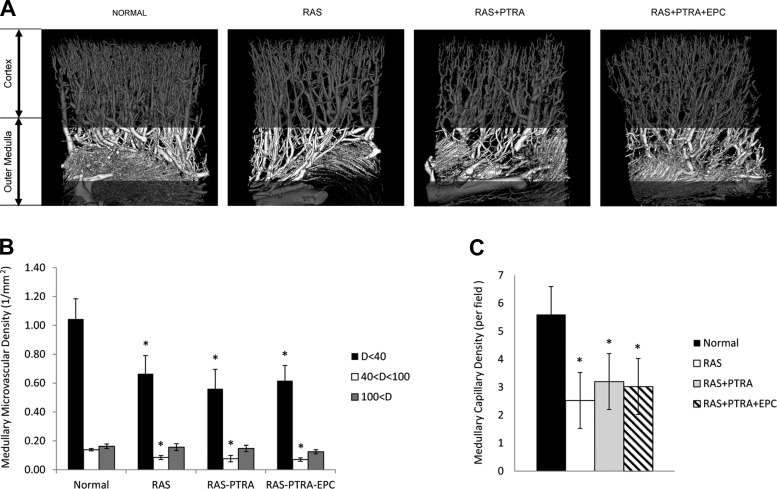
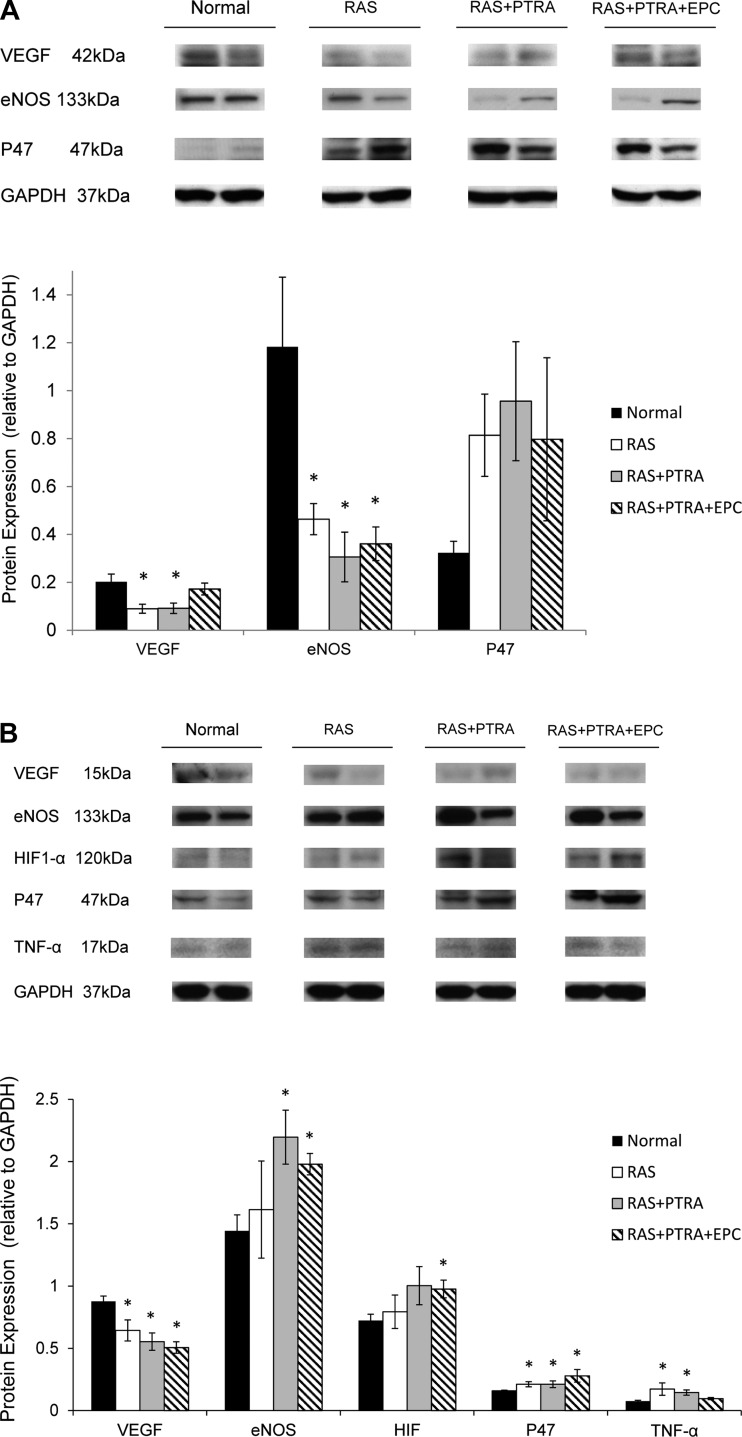
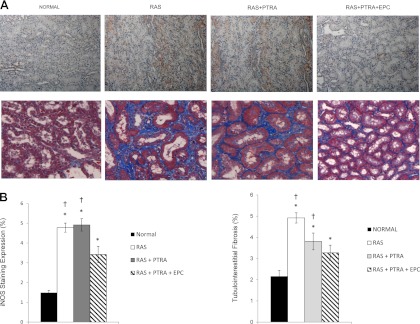
Renal artery stenosis (RAS) promotes microvascular rarefaction and fibrogenesis, which may eventuate in irreversible kidney injury. We have shown that percutaneous transluminal renal angioplasty (PTRA) or endothelial progenitor cells (EPC) improve renal cortical hemodynamics and function in the poststenotic kidney. The renal medulla is particularly sensitive to hypoxia, yet little is known about reversibility of medullary injury on restoration of renal blood flow. This study was designed to test the hypothesis that PTRA, with or without adjunct EPC delivery to the stenotic kidney, may improve medullary remodeling and tubular function. RAS was induced in 21 pigs using implantation of irritant coils, while another group served as normal controls (n = 7 each). Two RAS groups were then treated 6 wk later with PTRA or both PTRA and EPC. Four weeks later, medullary hemodynamics, microvascular architecture, and oxygen-dependent tubular function of the stenotic kidneys were examined using multidetector computed tomography, microcomputed tomography, and blood oxygenation level-dependent MRI, respectively. Medullary protein expression of vascular endothelial growth factor, endothelial nitric oxide synthase, hypoxia-inducible factor-1α, and NAD(P)H oxidase p47 were determined. All RAS groups showed decreased medullary vascular density and blood flow. However, in RAS+PTRA+EPC animals, EPC were engrafted in tubular structures, oxygen-dependent tubular function was normalized, and fibrosis attenuated, despite elevated expression of hypoxia-inducible factor-1α and sustained downregulation of vascular endothelial growth factor. In conclusion, EPC delivery, in addition to PTRA, restores medullary oxygen-dependent tubular function, despite impaired medullary blood and oxygen supply. These results support further development of cell-based therapy as an adjunct to revascularization of RAS.
Figures
References
-
- Bonelli FS, McKusick MA, Textor SC, Kos PB, Stanson AW, Johnson CM, Sheedy PF, 2nd, Welch TJ, Schirger A. Renal artery angioplasty: technical results and clinical outcome in 320 patients. Mayo Clin Proc 70: 1041–1052, 1995 - PubMed
-
- Brezis M, Rosen S. Hypoxia of the renal medulla–its implications for disease. N Engl J Med 332: 647–655, 1995 - PubMed
Publication types
MeSH terms
Substances
Grants and funding
LinkOut - more resources
Full Text Sources
Other Literature Sources
