


Genetic trade-offs and conditional neutrality contribute to local adaptation
- PMID: 22420446
- PMCID: PMC3492549
- DOI: 10.1111/j.1365-294X.2012.05522.x
Genetic trade-offs and conditional neutrality contribute to local adaptation
Abstract
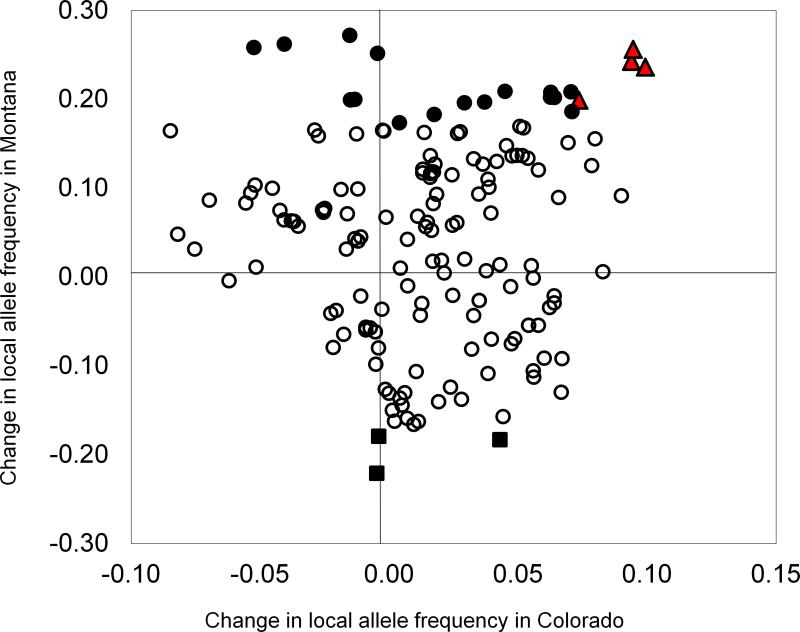
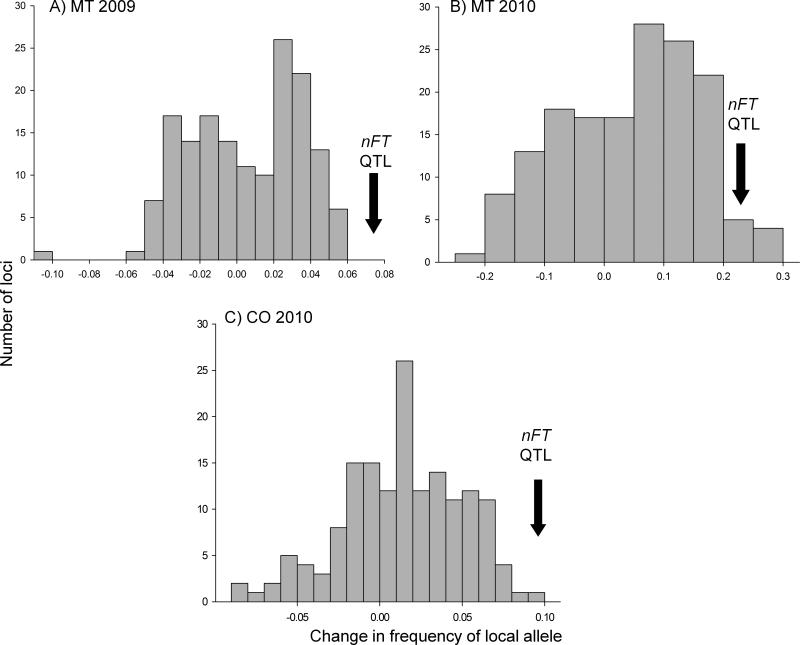
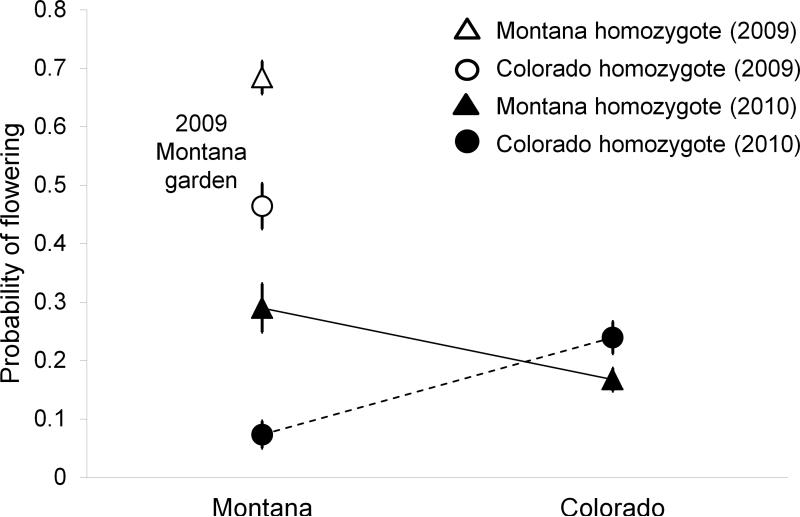
Divergent natural selection promotes local adaptation and can lead to reproductive isolation of populations in contrasting environments; however, the genetic basis of local adaptation remains largely unresolved in natural populations. Local adaptation might result from antagonistic pleiotropy, where alternate alleles are favoured in distinct habitats, and polymorphism is maintained by selection. Alternatively, under conditional neutrality some alleles may be favoured in one environment but neutral at other locations. Antagonistic pleiotropy maintains genetic variation across the landscape; however, there is a systematic bias against discovery of antagonistic pleiotropy because the fitness benefits of local alleles need to be significant in at least two environments. Here, we develop a generally applicable method to investigate polygenic local adaptation and identify loci that are the targets of selection. This approach evaluates allele frequency changes after selection at loci across the genome to distinguish antagonistic pleiotropy from conditional neutrality and deleterious variation. We investigate local adaptation at the qualitative trait loci (QTL) level in field experiments, in which we expose 177 F(6) recombinant inbred lines and parental lines of Boechera stricta (Brassicaceae) to their parental environments over two seasons. We demonstrate polygenic selection for native alleles in both environments, with 2.8% of the genome exhibiting antagonistic pleiotropy and 8% displaying conditional neutrality. Our study strongly supports antagonistic pleiotropy at one large-effect flowering phenology QTL (nFT): native homozygotes had significantly greater probabilities of flowering than foreign homozygotes in both parental environments. Such large-scale field studies are essential to elucidate the genetic basis of adaptation in natural populations.
© 2012 Blackwell Publishing Ltd.
Figures
References
-
- Barrett RDH, Rogers SM, Schluter D. Natural selection on a major armor gene in Threespine Stickleback. Science. 2008;322:255–257. - PubMed
-
- Böhlenius H, Huang T, Charbonnel-Campaa L, et al. CO/FT regulatory module controls timing of flowering and seasonal growth cessation in trees. Science. 2006;312:1040–1043. - PubMed
Publication types
MeSH terms
Grants and funding
LinkOut - more resources
Full Text Sources
Other Literature Sources
