The influence of implicit bias on treatment recommendations for 4 common pediatric conditions: pain, urinary tract infection, attention deficit hyperactivity disorder, and asthma
- PMID: 22420817
- PMCID: PMC3483921
- DOI: 10.2105/AJPH.2011.300621
The influence of implicit bias on treatment recommendations for 4 common pediatric conditions: pain, urinary tract infection, attention deficit hyperactivity disorder, and asthma
Abstract
Objectives: We examined the association between pediatricians' attitudes about race and treatment recommendations by patients' race.
Methods: We conducted an online survey of academic pediatricians (n = 86). We used 3 Implicit Association Tests to measure implicit attitudes and stereotypes about race. Dependent variables were recommendations for pain management, urinary tract infections, attention deficit hyperactivity disorder, and asthma, measured by case vignettes. We used correlational analysis to assess associations among measures and hierarchical multiple regression to measure the interactive effect of the attitude measures and patients' race on treatment recommendations.
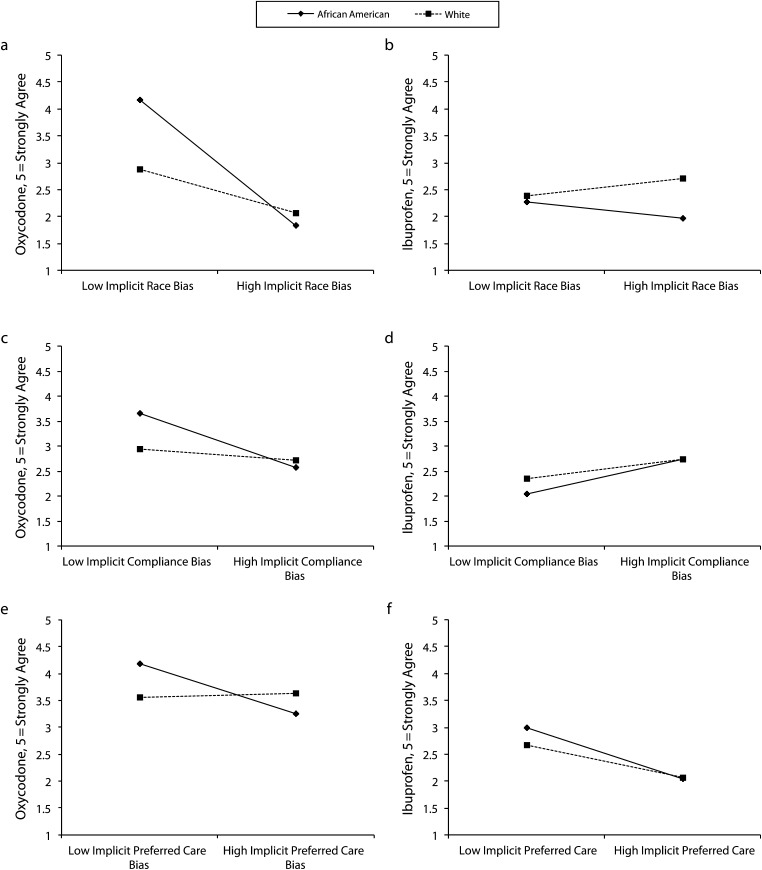
Results: Pediatricians' implicit (unconscious) attitudes and stereotypes were associated with treatment recommendations. The association between unconscious bias and patient's race was statistically significant for prescribing a narcotic medication for pain following surgery. As pediatricians' implicit pro-White bias increased, prescribing narcotic medication decreased for African American patients but not for the White patients. Self-reported attitudes about race were associated with some treatment recommendations.
Conclusions: Pediatricians' implicit attitudes about race affect pain management. There is a need to better understand the influence of physicians' unconscious beliefs about race on pain and other areas of care.
Figures
References
-
- Bloom B, Cohen RA, Freeman G. Summary health statistics for US children: National Health Interview Survey, 2009. Vital Health Stat 10. 2010;(247):1–82 - PubMed
-
- Flores G. Technical report—racial and ethnic disparities in the health and health care of children. Pediatrics. 2010;125(4):e979–e1020 - PubMed
-
- Cuffe SP, Moore CG, McKeown RE. Prevalence and correlates of ADHD symptoms in the National Health Interview Survey. J Atten Disord. 2005;9(2):392–401 - PubMed
-
- Shaikh N, Morone NE, Bost JE, Farrell MH. Prevalence of urinary tract infection in childhood: a meta-analysis. Pediatr Infect Dis J. 2008;27(4):302–308 - PubMed
-
- Smedley BD, Stith AY, Nelson AR. Unequal Treatment: Confronting Racial and Ethnic Disparities in Health Care. Washington, DC: National Academy Press; 2003 - PubMed
Publication types
MeSH terms
Substances
Grants and funding
LinkOut - more resources
Full Text Sources
Medical
Research Materials