A third gyrovirus species in human faeces
- PMID: 22422066
- PMCID: PMC3755516
- DOI: 10.1099/vir.0.041731-0
A third gyrovirus species in human faeces
Abstract
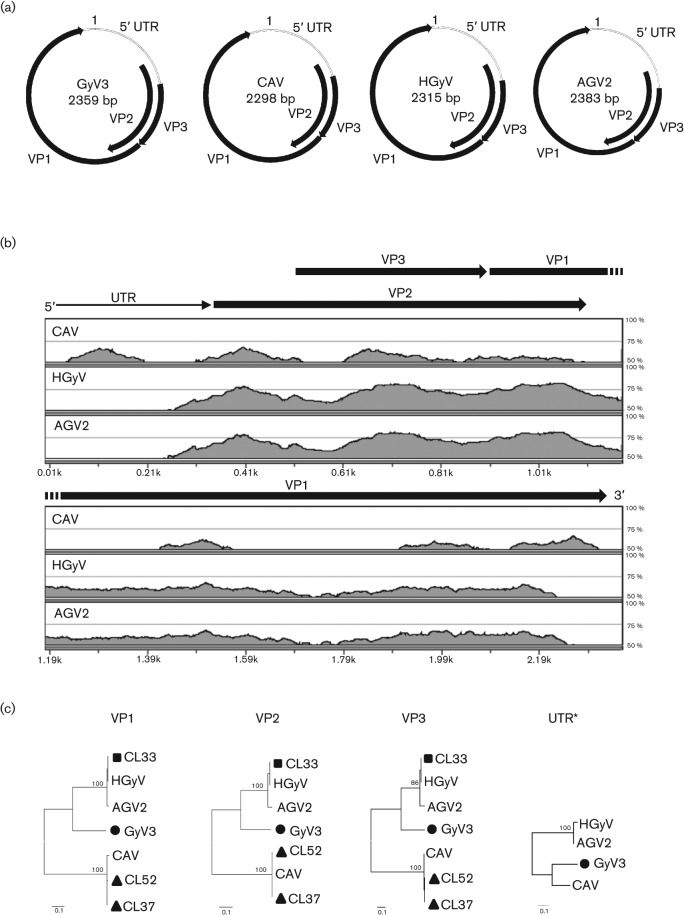
Until 2011 the genus Gyrovirus in the family Circoviridae consisted of a single virus (Chicken anemia virus or CAV) causing a common immunosuppressive disease in chickens when a second gyrovirus (HGyV) was reported on the skin of 4 % of healthy humans. HGyV is very closely related to a recently described chicken gyrovirus, AGV2, suggesting that they belong to the same viral species. During a viral metagenomic analysis of 100 human faeces from children with diarrhoea in Chile we identified multiple known human pathogens (adenoviruses, enteroviruses, astroviruses, sapoviruses, noroviruses, parechoviruses and rotaviruses) and a novel gyrovirus species we named GyV3 sharing <63 % similarity with other gyrovirus proteins with evidence of recombination with CAV in its UTR. Gyroviridae consensus PCR revealed a high prevalence of CAV DNA in diarrhoea and normal faeces from Chilean children and faeces of USA cats and dogs, which may reflect consumption of CAV-infected/vaccinated chickens. Whether GyV3 can infect humans and/or chickens requires further studies.
Figures
References
-
- Dos Santos H. F., Knak M. B., de Castro F. L., Slongo J., Ritterbusch G. A., Klein T. A., Esteves P. A., Silva A. D., Trevisol I. M. & other authors (2012). Variants of the recently discovered avian gyrovirus 2 are detected in Southern Brazil and The Netherlands. Vet Microbiol 155, 230–236 - PubMed
Publication types
MeSH terms
Associated data
- Actions
- Actions
- Actions
Grants and funding
LinkOut - more resources
Full Text Sources
Other Literature Sources
Medical
Miscellaneous